Yantai Food Guide: Shandong Seafood and Wine
Updated 31 October 2026 · reviewed by the China Food Way editorial team
My first morning in Yantai, I followed the fishing boats. They came in around seven, low and wide and painted blue, and they tied up along a harbour wall where women in rubber aprons were already transferring ice boxes to trucks. The air smelled of diesel, salt and scallion, which is an odd combination until you eat breakfast in this city and understand that the three are the local trinity. I bought a bag of grilled squid from a cart for about 10 yuan, watched the market clear, and walked into the old town with grease on my fingers. Yantai has been eating like this since it was a treaty port, and the habit has not been improved by tidiness.
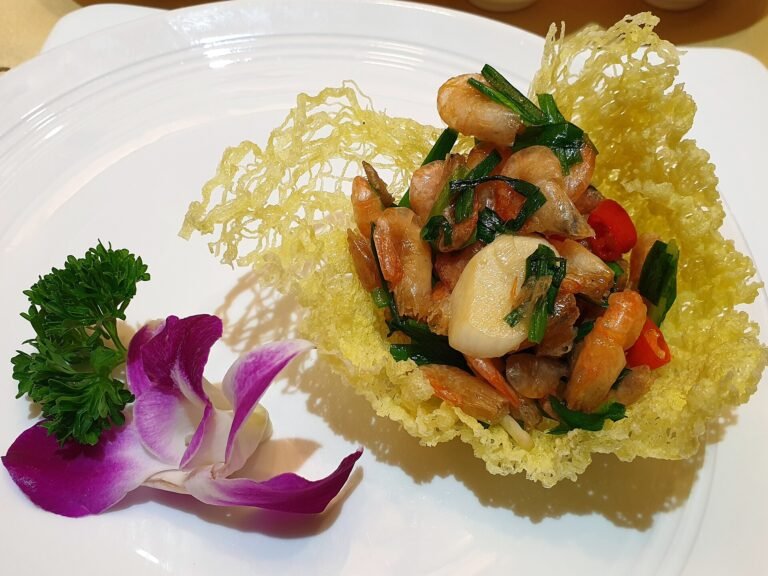
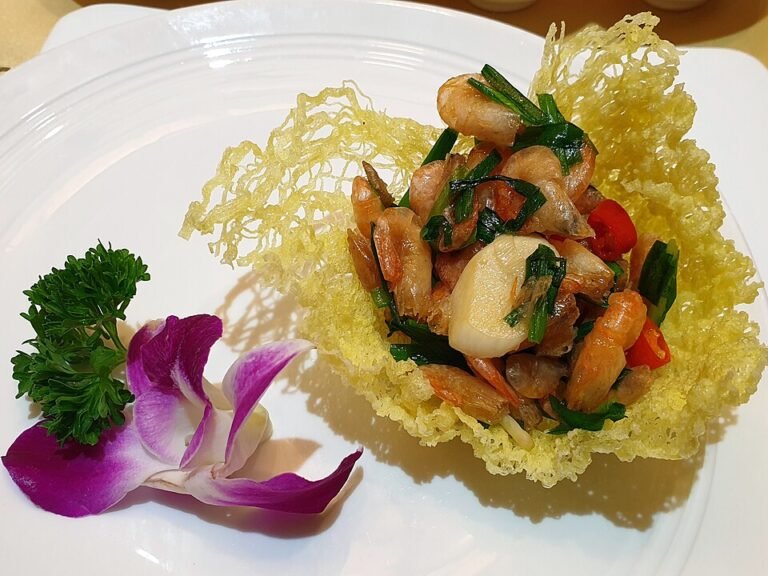
Yantai sits on the northern coast of the Shandong peninsula, facing the Yellow Sea and the Bohai Gulf, and it is one of the few cities in China where the sea sets the menu rather than merely decorating it. This is the heartland of coastal Shandong cooking, the regional tradition that produced most of what the rest of the country now thinks of as banquet food. The logic is simple and demanding: the ingredient is everything, the sauce is a supporting actor, and the cook’s job is to get out of the way. Scallion, ginger, soy and a hot wok do most of the work, and anything that needs heavy spicing is usually hiding a fish that is not fresh.

How do I buy and cook seafood at the Yantai morning market?
Buy by weight at the harbour stalls, then pay the market kitchen to cook it. Prawns run about 30 to 60 yuan a jin, scallops 10 to 20, and crabs in season considerably more; you point, they weigh, and the market’s own small kitchens will steam or stir-fry your choice for a fee. This is the honest way to eat here and costs a fraction of the sea-view restaurants. Go at seven when the boats land, before the best of the catch is gone. The cooking that results is the opposite of delicate — wok heat, scallion, a splash of soy, nothing hiding a fish that is not fresh. Bring a bag and small cash; cards are not welcome at the early stalls.
Coastal Shandong: The Sea Sets the Menu
Start at the morning market, because that is where the cooking decisions are made. Stalls along the harbour sell the day’s catch by weight: prawns at about 30 to 60 yuan a jin, scallops for about 10 to 20, crabs in season for considerably more, and a rotating cast of fish whose names change with the month. You buy, you point, and the market’s own small kitchens will cook what you have chosen for a fee. This is the honest way to eat seafood here, and it costs a fraction of the restaurants that have a sea view.
The cooking that results is the opposite of delicate. Wok heat, scallion, a splash of yellow wine and soy, and the dish is done in three minutes. Steamed fish is the purest test, and the method is the same one described in any guide to steamed Chinese fish: a whole fish, ginger and scallion, soy poured around rather than over, and a spoon of smoking oil at the table. The difference here is the fish itself. A grouper or a turbot pulled from cold water that morning does not need the sauce; the sauce is there to keep the plate honest.
Penglai Pavilion and the Immortality Coast
An hour and a half west of the city, on a headland that juts into the sea, sits the Penglai Pavilion, and the myth attached to it is one of the oldest in China: this is the place where the eight immortals crossed the sea, where the mirage of an impossible city appears on certain summer days, and where emperors came looking for the elixir of life. The pavilion itself is a reconstruction on a cliff above the water, and the crowds that climb to it are large and good-natured. The food reason to make the trip is a bowl of noodles.
Penglai thin noodles (penglai xiaomian 蓬莱小面) are a local breakfast tradition: wheat noodles as thin as wire, pulled by hand, served in a broth made from fish and small shellfish, with a slick of oil and a scatter of scallion. A bowl costs about 10 to 15 yuan, and the shops that make it properly open at dawn and close by mid-morning, exactly like the soup shops of any northern city. Eat a bowl sitting on a plastic stool, look out at the actual sea that the immortals supposedly crossed, and you will understand the local sense of humour about immortality: what matters is breakfast, and breakfast is noodles.
Is the Changyu winery worth a visit for non-experts?
Yes, if you like the story of China’s first modern winery more than a tasting trip. Founded in 1892, Changyu is the estate that started China’s commercial wine habit, and the old town cellars and museum make the history legible even if you cannot tell a cabernet from a shiraz. The on-site museum walks you through a century of bottles, labels and the French expertise the founders imported. The wines themselves are competent rather than thrilling, so treat it as a heritage stop, not a vineyard afternoon. Pair it with the city’s seafood — the local logic is that a cold white suits the scallion-forward cooking better than the reds the estate is prouder of. Allow two hours and book the cellar tour ahead in summer.
Changyu: China’s Oldest Wine Estate
Yantai is also the birthplace of the Chinese wine industry, and the reason is a combination of 1890s commercial ambition and a coastline that turned out to suit European vines. The Changyu estate, founded by a Zhangzhou-born merchant who made his money in Southeast Asia, still occupies its original site on the edge of the city, with the old cellar buildings, the wine culture museum and the surrounding vineyards. Entry to the museum costs about 50 yuan, and tastings in the visitor centre run roughly 30 to 50 yuan a flight depending on what you try.
It would be easy to mock the whole enterprise, and plenty of visitors do. The honest assessment is that Chinese wine culture is barely a century old, Changyu is the national reference point for it, and the estate’s better bottles have improved dramatically in the past two decades. The old cellar, with its barrels and its black-and-white photographs of the founding, is genuinely interesting. What to do with the wine is the local question, and the modern answer is the obvious one: a glass of chilled white with a plate of steamed prawns on the seafront is the best use of both products, and the pairing would have astonished the founders.
Scallion-Forward Cooking
The defining flavour of Shandong cooking is not soy, which the rest of the country also uses; it is scallion, and specifically the tall white Zhangqiu scallion, grown inland, that can reach past half a metre and turns sweet and silky when braised. The classic dish is sea cucumber braised with scallion (congshao haishen 葱烧海参): the sea cucumber is soft and nearly flavourless on its own, and the scallion oil it is cooked in becomes the entire sauce. It is a banquet dish, priced accordingly at about 100 to 200 yuan a portion, and it is the clearest expression of a cooking tradition in which the vegetable is the seasoning.
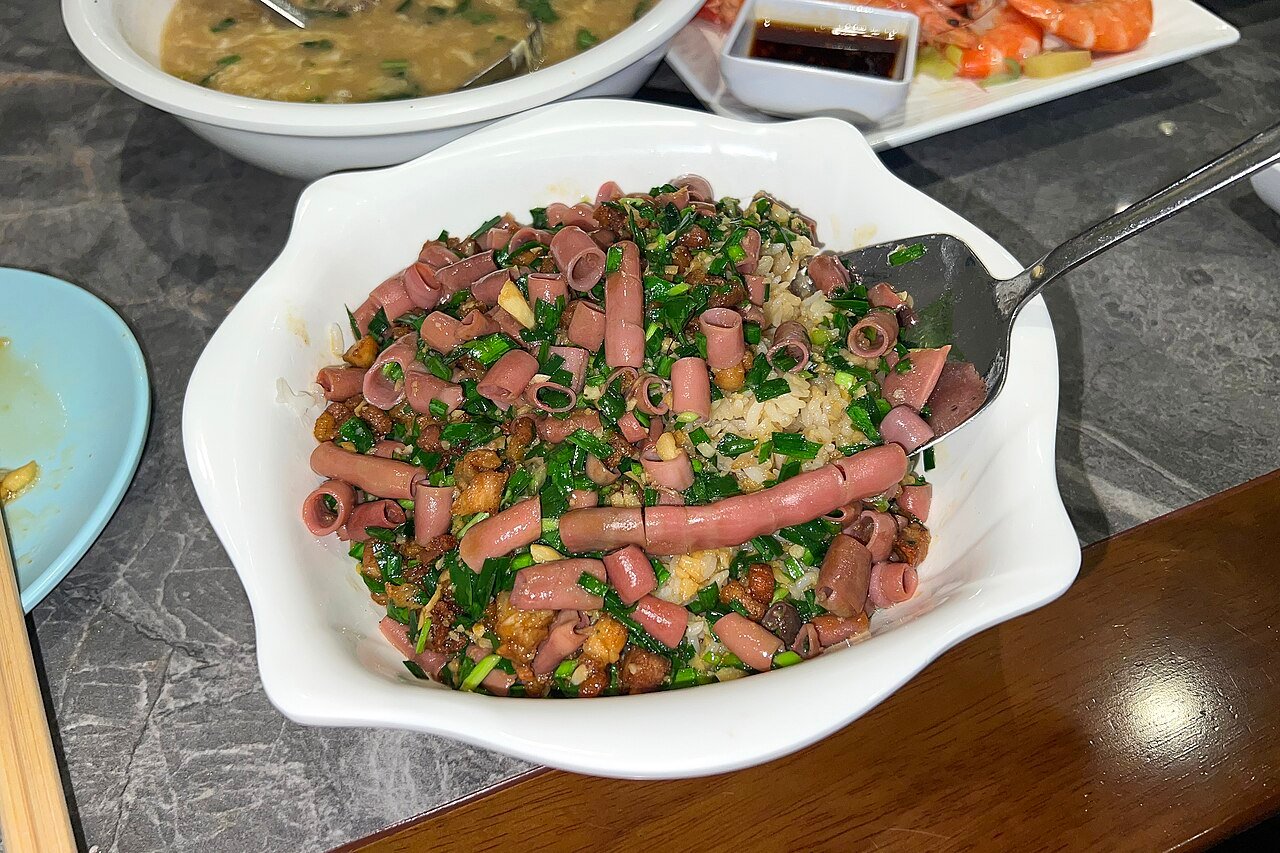
The same logic runs through the everyday kitchen. Scallion oil goes into noodles, scallion whites are stir-fried with seafood, and the humble scallion pancake, the technique behind the layered Chinese scallion pancake, is found on street corners across the city at about 5 to 10 yuan. If you eat one expensive dish in Shandong, eat the sea cucumber with scallion; if you eat one cheap dish, make it a scallion pancake from a market stall, hot, folded in paper, eaten walking.
What noodles and dumplings should I eat in Yantai?
The fish-stuffed dumplings and the wheat noodles with seafood broth are the local moves. Yantai sits in Shandong’s wheat belt, so the dumpling skins are sturdy and the fillings lean on the day’s catch — mackerel and shrimp dumplings are the ones to ask for, sweet from the sea and nowhere near the pork-and-cabbage default of the interior. The morning market also sells wheat noodles served in a light seafood broth with scallion, a plain bowl that shows the cook’s restraint. Eat them standing at a counter before ten; the dumpling shops that open early close when the rush ends. A plate of fish dumplings runs about fifteen yuan and makes a better breakfast than the hotel buffet.
Noodles, Dumplings and the Morning Market
The district of Fushan, on Yantai’s western edge, claims to be the home of Shandong hand-pulled noodles, and the local tradition of Fushan noodles (fushan damian 福山大面) carries dozens of named shapes, each with its own broth and topping. A bowl costs about 15 to 25 yuan, and the shops are unremarkable rooms with a noodle bench by the window where the pulling happens in full view. The point is the texture: the noodles are pulled to order, and a good bowl has a chew that no factory noodle can imitate.
Two more dishes complete the coastal set. Spanish mackerel dumplings (bayu jiaozi 鲅鱼饺子) are the local favourite: the fish is minced with pork fat and ginger, wrapped in a thin wheat skin, and boiled. A plate costs about 30 to 50 yuan and the filling is sweeter and lighter than pork. And menzi (焖子), a Yantai speciality, is a starch jelly cut into cubes, fried until it crusts, and served with sesame sauce, garlic and a shellfish sauce, at about 15 to 25 yuan a plate. It is the city’s most local snack, found nowhere else in this form, and it is what I would eat on a cold afternoon walking back from the harbour.
Coastal versus Inland: What the Sea Changes
The useful comparison in Shandong is between the coast and the interior. Inland, around Jinan and Qufu, the same regional tradition turns into the banquet cooking of the old Confucian mansions: heavier sauces, braised intestines, and the famous sweet-and-sour carp of the Yellow River, a dish whose technique echoes the sweet-and-sour method applied to whole fish. The coast does the opposite. Seafood arrives daily and needs no sauce, the scallion moves forward, and the plates get lighter as you get closer to the water.
Both belong to the same great tradition, laid out in any guide to Shandong cooking, which is one of the eight great cuisines of China and the ancestor of most of the others, since Beijing, Tianjin and the northeastern kitchens all borrowed their fundamentals from it. Yantai is where that tradition is easiest to taste in its original form: the market supplies the fish, the wok does almost nothing to it, and the scallion does the rest.
| Dish | Where to eat it | Rough price | Notes |
|---|---|---|---|
| Steamed fish, whole | Market kitchens and seafood houses | Priced by weight, from about 50 yuan | Ginger, scallion, soy; the freshness test |
| Sea cucumber braised with scallion | Banquet restaurants city-wide | About 100 to 200 yuan a portion | The classic Shandong dish; the scallion is the sauce |
| Fushan hand-pulled noodles | Noodle shops in the Fushan district | About 15 to 25 yuan a bowl | Dozens of named shapes; pulled to order |
| Spanish mackerel dumplings | Dumpling houses and market stalls | About 30 to 50 yuan a plate | Lighter and sweeter than pork |
| Menzi, fried starch jelly | Snack stalls across the old town | About 15 to 25 yuan a plate | A Yantai speciality, found nowhere else |
| Penglai thin noodles | Breakfast shops in Penglai town | About 10 to 15 yuan a bowl | Open at dawn; closed by mid-morning |
When is the best time of year to visit Yantai for food?
Autumn, when the crabs and scallops are at their peak and the heat lifts. The colder months from September to November are when the sea delivers its best: fat crabs, sweet scallops and prawns that have fed through the summer, so the morning market is at its most generous. Summer is pleasant but the catch is thinner and the tourists thicker. Winter is cold and quiet, good for the dumpling shops and a bottle of Changyu by the fire, but the harbour trade slows. Spring is the shoulder season — decent prices, lighter boats. Whatever the month, eat early and eat at the market; the sea-view restaurants charge for the view, not the fish.
Practical Notes
The seasons matter here more than in most of China. Seafood is at its best in spring and autumn, when the water is cold and the fish are firm; the grape and wine harvest runs September into October; and winter brings cold wind off the sea, which is the best weather for a bowl of hot noodle broth and the worst for standing at an open market. Getting to Yantai is easy: high-speed rail from Beijing takes about four and a half hours, and from Qingdao about an hour and a half. Budget about 150 yuan a day to eat well, more if you want the sea cucumber. Carry cash for the markets, bring a jacket in shoulder season, and set an alarm for the first morning, because the best food of the day is over by nine.
Frequently Asked Questions
What is Yantai’s most famous food? Coastal seafood cooked simply with scallion, ginger and wok heat, plus Fushan hand-pulled noodles and Spanish mackerel dumplings. If you eat one local speciality, make it menzi, the fried starch jelly.
Is Yantai really a wine town? Yes. The Changyu estate, founded in 1892, is the birthplace of the Chinese wine industry, and its museum and cellars are worth about 50 yuan of anyone’s time, with tastings on top.
What is menzi? A Yantai speciality of starch jelly cut into cubes, fried until crusted and served with sesame and shellfish sauces, at about 15 to 25 yuan a plate. It is found in this form nowhere else.
Is Penglai worth the trip from Yantai? Yes, for the cliff-top pavilion and the immortality myth, but eat first: Penglai thin noodles are a breakfast dish, and the shops close by mid-morning. The drive takes about an hour and a half.
What is the best season for seafood? Spring and autumn, when the cold water firms the fish. Summer brings the crowds and the heat; winter is for hot noodles and the wine cellars rather than open markets.
How does coastal Shandong differ from inland Shandong? The coast is lighter and seafood-led, with scallion doing the seasoning; inland cooking is heavier, with braises, sweet-and-sour carp and the banquet tradition of the Confucian mansions.
The Short Version
Yantai is coastal Shandong cooking at the source: morning markets supplying the fish, woks doing as little as possible, scallion carrying the flavour, and Fushan noodles and mackerel dumplings standing behind it. Take the trip to Penglai for the noodles, visit Changyu for the wine’s origin story, and eat your seafood where there is no view.