Zhejiang Cuisine: Tea, Wine and the Lake
Fact-checked and reviewed 31 October 2026 · China Food Way editorial team
The fish arrived whole, swimming in a pool of glossy vinegar sauce so dark it looked like tea, and it was pointed at the room like an accusation. I had ordered West Lake fish in vinegar — 西湖醋鱼 — in a restaurant beside the lake itself, on a trip I had built, absurdly, around the expectation that the dish’s fame was earned. The first bite was sour, the second sweeter, and the third revealed something I had not expected: underneath the crab-meat texture of the grass carp and the sugar-vinegar sauce, there was a genuinely strange and ancient flavour that I could not place and have not forgotten. The waiter watched me eat it with the expression of a man who has seen this reaction before. “It is not for everyone,” he said, which was generous of him, because what I was thinking was that this dish was older than the idea of liking it.
The Three Centres of Zhe Cuisine
Zhejiang cuisine — 浙菜 (zhe cai) — is the cooking of China’s eastern seaboard province, and it divides into three local styles that a Zhejiang cook will name before anything else. Hangzhou style, the most famous, is rich and sweet-savoury, built around the lake and the tea hills. Ningbo style, on the coast, is saltier and more austere, and shares with Shandong cooking an instinct for treating seafood as the centre of the meal rather than the accompaniment. Shaoxing style, inland along the canal, is the home of China’s most famous wine and of the “drunken” dishes that use it. The province’s geography forces this variety: within two hours’ drive you can move from tea hills to open sea to a canal town that has been trading since the Song dynasty.
All three belong to the Jiangnan food culture — the lower Yangtze world I describe in my Shanghai food guide — and they share its priorities: freshness over transformation, sweetness as a seasoning rather than a theme, and a preference for gentle cooking over aggressive heat. Like the other great traditions mapped in my overview of China’s eight cuisines, Zhe cuisine is a regional answer to a specific landscape, and it does not travel well as a concept — only as a plate.
Can I use an everyday green tea instead of Longjing for the shrimp dish?
A pan-fired Chinese green tea will do, provided it is not a steamed Japanese one. Longjing shrimp — longjing xia ren (龙井虾仁) — is built around a flat, nutty leaf that has been pressed in a dry wok; a steamed sencha tastes grassy and turns bitter in a hot pan. I use a decent gunpowder or a modest Dragon Well, rinse the leaves for ten seconds to soften them, and fold them in only at the very end so their scent survives. The prawns themselves need no more than ninety seconds over high heat. One caveat: supermarket ‘green tea’ bags are dust and will make the sauce muddy, so buy loose leaves.
Longjing Shrimp
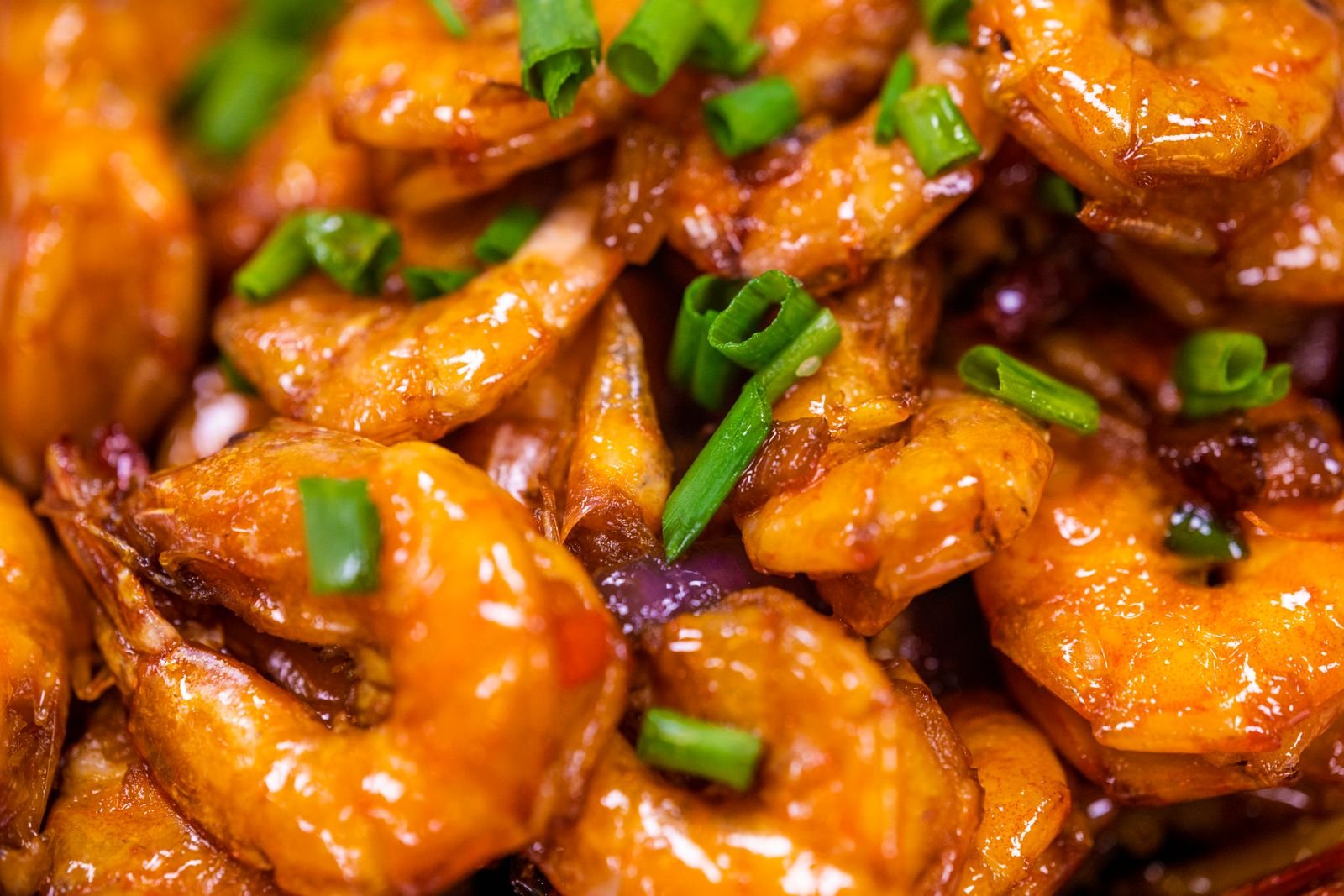
If Hangzhou has one dish that captures its temperament, it is 龙井虾仁 (longjing xia ren) — river shrimp stir-fried with the leaves of Longjing tea, the famous Dragon Well green tea grown on the hills west of the city. The shrimp are peeled, briefly marinated, and flashed in a hot wok with a splash of Shaoxing wine; the tea leaves, rinsed to soften them, go in at the very end so their fragrance survives. The dish is pale jade and faintly pink, and it tastes, at first, of almost nothing — then of tea, then of the clean sweetness of the shrimp themselves.
The dish is a useful lesson in what Zhe cooking is trying to do. It is not a flavour bomb; it is an argument that a perfect ingredient, handled for ninety seconds with two accompaniments, does not need more than that. The same discipline appears in the region’s treatment of fish — steamed whole, splashed with ginger, spring onion and hot oil at the table — and in its soups, which are clear and quick rather than long-braised. For a cook trained on the fermented depth of Sichuan, Zhe food can seem almost too quiet. The correct response is to listen harder.
West Lake Fish in Vinegar
The other Hangzhou classic is the one that divides visitors. The grass carp is traditionally kept in clear water for a day or two before cooking — the older texts say this purges the muddy taste — then poached, and dressed with a sauce of Zhenjiang black vinegar, sugar and a touch of soy, thickened just enough to glaze. The sauce is poured over at the table, and the fish is eaten with the sauce rather than in it.
Two things surprise people. The first is the sweetness: this is a genuinely sweet-sour dish, closer to a sweet-and-sour treatment than to anything in the vinegar-plate family, and it shares its logic with the sweet and sour pork recipe I work through elsewhere — sugar and vinegar in proportion, balanced against the protein rather than merely coating it. The second is the texture. Grass carp from the lake has a firmer, almost crab-like flesh, and the brief poaching keeps it intact in a way that surprises eaters used to flaky white fish. Whether the dish is delicious or merely historic is a legitimate debate; that it is unlike anything else in the Chinese repertoire is not.
Why are drunken dishes steeped in wine after cooking rather than simmered in it?
Because simmering drives off the aroma you are paying for. Add Shaoxing wine to a hot wok and most of its fragrance evaporates within a minute, leaving little more than sweetness and colour. The local method poaches the chicken, crab or aubergine first, then steeps it, covered, in wine with ginger and goji berries for several hours or overnight in the fridge. The alcohol stays in the flesh and the scent survives to the table. I learned this the hard way making drunken chicken in a pan: it tasted flat. Keep the steep cold or at room temperature, never boiling, and use a wine you would happily drink — a salty ‘cooking’ wine will undo the whole point.
Shaoxing Wine and the Drunken Dishes
Shaoxing, a canal town in the middle of the province, produces the rice wine that Chinese kitchens treat as the default cooking alcohol — the same amber liquid that appears in the marinades of stir-fried dishes across China and the sauces of a hundred other recipes. Its local cuisine turns the ingredient inward: drunken chicken (醉鸡), poached and steeped in wine with goji berries and ginger; drunken crab, raw and marinated; drunken aubergine, cold and startlingly good. The technique — cooking first, then steeping in the wine at room temperature or chilled — preserves the aroma in a way that adding wine to a hot pan never does.
Shaoxing wine is also the reason Zhejiang braises taste the way they do. The region’s red-braised pork — a cousin of the dish associated with Cantonese and Jiangsu kitchens — uses wine generously, along with rock sugar and dark soy, until the sauce reduces to a lacquer. It is the richest thing in a cuisine otherwise known for restraint, and it exists because the wine is local, cheap and good enough to drink.
Which Zhejiang dish is the safest order for someone who dislikes sweet sauces?
Order the Ningbo yellow croaker with pickled greens, or anything from the coastal side of the province. The Hangzhou classics that dominate tourist menus — West Lake fish in vinegar, Dongpo pork, the red braises — lean on rock sugar, but the Ningbo style is saltier and more austere, and it barely sweetens its fish. Longjing shrimp is another safe choice: pale, faintly of tea, almost no sugar at all. I would avoid the glossy sweet-and-sour ribs that visitor menus push, which owe more to the general Jiangnan taste for sugar than to anything local. One honest caveat: even ‘savoury’ Hangzhou kitchens add a spoon of sugar to finish a sauce, so say ‘less sugar’ and choose steamed or tea-scented dishes over glazed ones.
Signature Dishes
| Dish | What it is | What it teaches about the cuisine |
|---|---|---|
| 龙井虾仁 (Longjing shrimp) | River shrimp flash-fried with Longjing tea leaves | Restraint; the region’s most elegant plate |
| 西湖醋鱼 (West Lake fish in vinegar) | Poached grass carp, sweet-sour vinegar sauce | Zhe cooking’s oldest argument with itself |
| 东坡肉 (Dongpo pork) | Pork belly braised with wine and rock sugar until collapsing | The one rich dish; named after the Song poet Su Dongpo |
| 醉鸡 (Drunken chicken) | Poached chicken steeped in Shaoxing wine | Wine as a steeping medium, not just a seasoning |
| 宁波雪菜大黄鱼 (Ningbo yellow croaker with pickled greens) | Coastal fish stewed with the region’s salted pickles | The saltier, older coastal style |
| 荷叶粉蒸肉 (Lotus-leaf steamed pork) | Marinated pork, coated in rice flour, wrapped and steamed | The Jiangnan habit of cooking in leaves |
Notice what is missing: chilli, in any form. Zhe cuisine uses spice the way a minimalist uses colour — occasionally, deliberately, and never by accident. White pepper appears in soups; ginger and scallion do the aromatic work; fermented black bean paste appears in the coastal style. But the cuisine’s identity is bound up with freshness and tea, and anything that shouts over either is excluded on principle.
Zhe Cuisine and the Question of Freshness
Every Chinese coastal cuisine claims freshness, but Zhe and Cantonese pursue it differently, and the comparison is instructive. Cantonese cooking — the tradition I cover in my Cantonese cuisine guide — steams fish whole with almost nothing, and the dish is judged by the fish alone. Zhe cooking is more willing to add: a sauce, a splash of wine, a spoon of vinegar, a handful of tea. The fish is still the point, but the cook is permitted a sentence as well as a word.
Ningbo, the coastal city, sits at the far end of this spectrum — its yellow croaker and shellfish dishes are the most strongly flavoured in the province, and its pickled vegetables are a cuisine of their own. Hangzhou, the tourist capital, sits at the refined end. A visitor who eats in both cities within a week will understand that “Zhe cuisine” is a province’s name rather than a single tradition, in the same way that the food of Beijing is a collection of imported traditions rather than a local one.
What should I buy first if I want to cook Zhejiang food at home?
A bottle of Shaoxing wine you would drink, a green tea whose smell you like, and a whole fish — in that order. Those three habits cover most of the cuisine and none needs a specialist shop. Beyond them, the one purchase that changes results is a proper bamboo steamer, because Zhe cooking poaches and steams far more than it fries; a two-tier one costs roughly £12 in Britain and will handle a whole fish as well as buns. I would not bother stocking up on rock sugar or dark soy until you have cooked a few dishes, since the restraint is the point. The honest caveat is that outside China this food is usually labelled ‘Shanghai-style’ or ‘Jiangnan’, so read the dish names, not the menu heading.
Eating Zhe Cuisine Today
In Zhejiang itself, the split is easy to navigate: Hangzhou restaurants cluster around West Lake and serve the classics to a captive audience; Ningbo restaurants, in Shanghai’s Chinatowns too, serve the coastal food to people who know what a yellow croaker should taste like. Outside China, Zhe cuisine is the least represented of the great traditions, and when it appears it is usually as “Jiangnan” or “Shanghai-style” cooking — the sweet red braises and wine chicken that travellers have met already, stripped of their regional label.
If you want to cook it at home, the entry points are three: buy a bottle of Shaoxing wine you would drink, find a green tea you like the smell of, and poach a fish rather than frying it. Everything else follows from those three habits, and none of them requires a specialist shop.
Frequently Asked Questions
Is Zhejiang food sweet?
Gently, in places — Hangzhou’s sweet-sour sauces and red braises use rock sugar, and the region shares the Jiangnan taste for sweetness as a balance. But it is not a sweet cuisine overall; the coastal Ningbo style is salty rather than sweet, and the tea dishes are almost austere.
What is the difference between Zhe and Jiangsu cuisine?
They are neighbours and relatives — both Jiangnan, both sweet-savoury, both wine-friendly. Jiangsu’s formal tradition, Huaiyang, is built on knife work and banquets; Zhejiang’s is built on tea, wine and the lake. In practice the two overlap so heavily that most restaurants serve both.
Can I make West Lake fish in vinegar without grass carp?
You can substitute a firm white fish — sea bass or grouper — but the texture will be flakier and the dish less itself. The sauce is the easier half to reproduce: sugar, black vinegar, a touch of soy and ginger, thickened to a glaze.
Which Shaoxing wine should I buy?
A cooking-grade Shaoxing for braises, and a drinking-grade one for drunken dishes where the wine is the sauce. The drinking-grade is more expensive but it is the ingredient in that dish, not a background flavouring. My fermented pantry notes in the doubanjiang guide cover the same principle for pastes: when a fermented ingredient is the point, buy the good one.
Where can I try authentic Zhe cuisine?
Hangzhou and Ningbo, obviously, and Shanghai’s Jiangnan restaurants. In the West, look for menus mentioning Dongpo pork or drunken chicken — if a restaurant serves both well, its kitchen understands the region. For questions about specific dishes or sourcing, use my contact page.