Beef and Broccoli Recipe: The Real Method
Fact-checked and reviewed 31 October 2026 · China Food Way editorial team
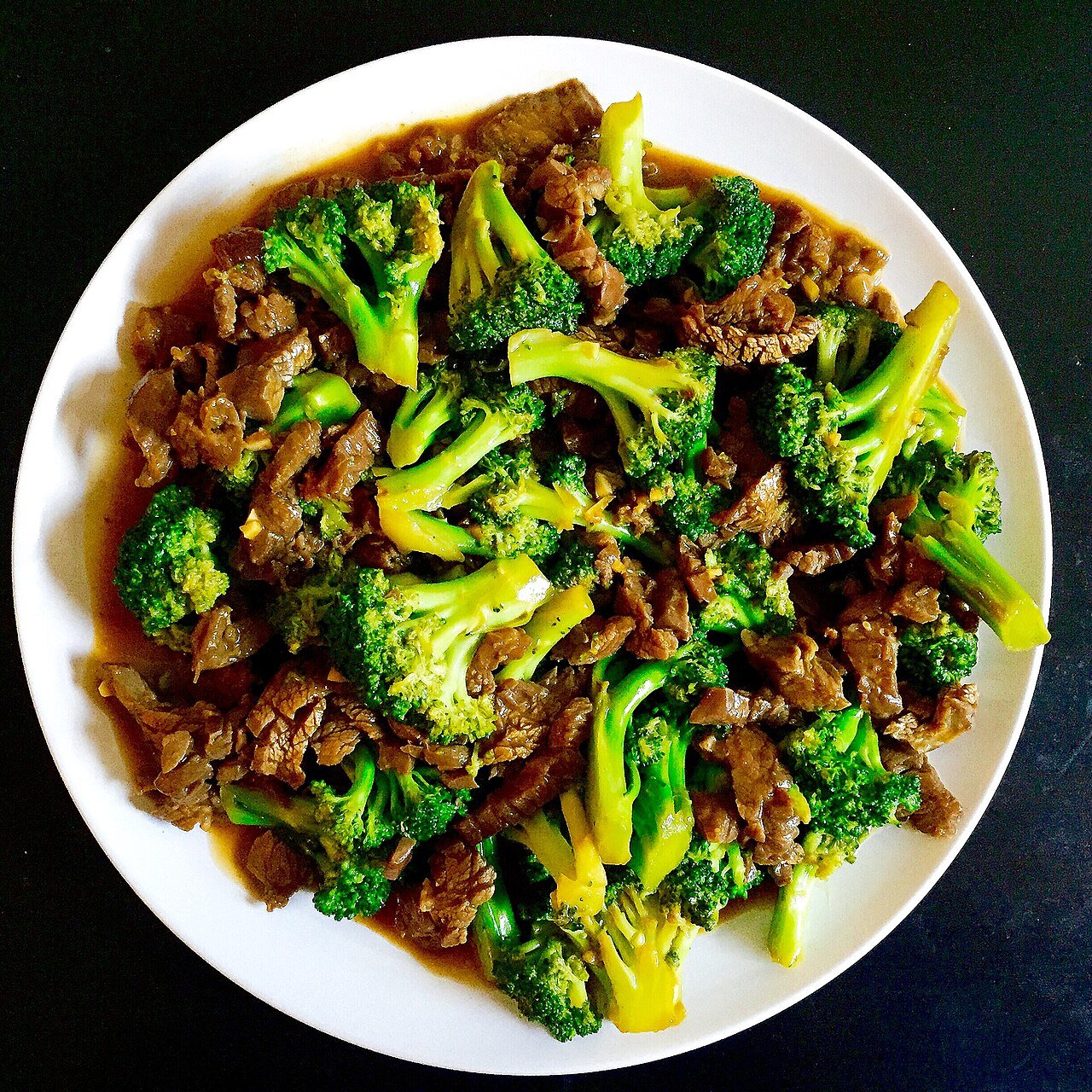
The first time I ordered beef and broccoli in China, the waiter asked me to describe it. I was in Guangzhou, in a dining room with plastic stools, a lazy Susan and a menu entirely in Chinese, and I said the words like a spell: beef, broccoli, brown sauce. He thought for a moment and offered 芥兰炒牛肉 — beef with gai lan — which is a real dish, an excellent dish, and not remotely what I meant. Then he said the thing I have since repeated to everyone who asks me about it: beef and broccoli, as the West knows it, does not exist in China. It is an American dish built out of Cantonese grammar, and knowing which parts are which is the difference between cooking it badly and cooking it beautifully.

That matters because beef and broccoli is almost certainly the most-ordered Chinese dish in the English-speaking world, and it is also the one Chinese cooks are most likely to shrug at. It is not fake, and it is not an insult — plenty of great food was invented by migrants working with unfamiliar ingredients. But the version most people meet is a shadow of what the technique can do: grey, chewy beef in a gluey brown sauce, swimming with overcooked broccoli. Every one of those failures is fixable, and none of the fixes are difficult. What follows is the version I cook at home, roughly twice a week, and the reasoning behind each step so you can adapt it rather than just follow it.
What is gai lan, and can I swap it for broccoli?
Gai lan is Chinese kale — long, dark green stems with small florets and a faint, pleasant bitterness — and yes, standard broccoli is exactly the swap this whole dish was built around. The American version replaced gai lan with the florets that migrants could buy, so using broccoli is not a compromise, it is the point. Whichever you choose, cut the stems on the diagonal and blanch them in salted water for ninety seconds before they meet the wok; that sets the colour and stops the stir-fry steaming into grey. Broccoli florets hold more water than gai lan stems, so shake them dry or the sauce thins. Either way, the vegetable should stay crisp enough to squeak.
A Dish Made in America, Out of Cantonese Parts
The scaffolding is genuinely Cantonese. Stir-frying sliced beef with a green vegetable in an oyster-sauce-based sauce is a standard move in Guangdong home cooking, and the cut-and-marinade technique behind it — slicing across the grain, coating the meat in starch, searing hard and fast — is exactly what a Cantonese wok cook does with 芥兰 or 菜心. If you have eaten in the Pearl River Delta, you have eaten the ancestor of this dish. The Cantonese stir-fry tradition prizes clean, bright flavours and a vegetable cooked to the exact second it turns sweet, and both instincts survive in a good beef and broccoli.
What is American is the fixed pairing with broccoli. Broccoli — 西兰花, “western blue flower” — only became a mainstream vegetable in China in recent decades and is still far less common there than gai lan or choy sum. In the United States it was cheap, available year-round, familiar to customers who did not want unfamiliar greens, and sufficiently virtuous-looking to make a plate of stir-fried beef read as a healthy choice. Chinese-American cooks reached for it because it did the job, and the dish calcified: beef, broccoli, brown sauce, white rice.
Two Americanisations are worth naming, because they are exactly what people complain about: the beef, sliced with the grain and thrown into a crowded wok until it turns grey and chewy, and the sauce, thickened far beyond any Cantonese norm because a glossy sauce travels well in a takeaway container. Neither is a flaw in Chinese cooking. Both are solutions to American problems — and once you see them as choices, you can make different ones.
What a Wok Is Actually Doing
Stir-frying is not sautéing in a bowl-shaped pan. A carbon-steel wok on a serious burner delivers far more heat than the food can absorb, which means the surface of the food dries and browns while the inside stays barely cooked. That is the entire game, and everything below is in service of it: thin slices, dry surfaces, small batches, and a sauce added at the end rather than at the start.
On a Western hob you will not reach restaurant output, so you compensate. Use carbon steel or cast iron rather than thin non-stick, and preheat it dry for two to three minutes over the highest setting until a flick of water vanishes instantly and the metal just begins to smoke — roughly 200°C and upward. Use a refined high-smoke-point oil: groundnut, rapeseed or sunflower, all around 230°C. Never untoasted sesame oil in the wok; it burns and turns bitter. And cook in batches — a domestic hob recovers a fraction of a commercial burner’s heat, so two batches of beef is physics, not fussiness.
The Shopping List
| Ingredient | Quantity (serves 3–4) | Notes |
|---|---|---|
| Beef — flank, skirt, or rump | 500g | Flank has the best flavour; skirt is more forgiving; rump is the budget option. Avoid pre-diced stewing beef. |
| Broccoli | 1 large head, about 400g florets | Trimmed to even 4cm florets, stems peeled and sliced |
| Oyster sauce | 3 tbsp | Vegetarian “stir-fry” mushroom sauce works too |
| Light soy sauce | 1 tbsp, plus 1 tbsp for the marinade | Not dark soy, not Japanese shoyu |
| Dark soy sauce | 1 tsp | For colour only; it is less salty than light soy |
| Shaoxing wine | 2 tsp, plus 2 tsp for the marinade | Dry sherry is an acceptable substitute |
| Chicken or beef stock | 150ml | Not water — this is where the sauce gets body |
| Caster sugar | 2 tsp | Rounds the saltiness; the dish should not taste sweet |
| Cornflour | 1 tsp (marinade) + 2 tsp (slurry) | Slurry mixed with 2 tbsp cold water |
| Bicarbonate of soda | ¾ tsp | The velveting agent |
| Ginger, garlic, spring onions | 1 tbsp sliced ginger, 3 cloves, 2 stalks | Slice ginger in coins; smash garlic rather than mincing |
| Groundnut or rapeseed oil | 2 tbsp, plus 1 tsp for blanching | High smoke point, neutral flavour |
How long should the beef sit in the marinade?
Fifteen to thirty minutes at room temperature, or up to two hours covered in the fridge, and no longer. The salt, soy, wine and cornflour need that window to draw moisture into the muscle and build the thin coating that protects it in the wok, but an overnight soak starts breaking the surface down into something mushy and soapy. I salt the sliced beef first and let it stand ten minutes before adding the wet ingredients, which seems fussy but gives a noticeably cleaner sear. Use a wide bowl so the slices lie flat rather than clumping. If you are in a genuine hurry, ten minutes still beats none. Bicarbonate of soda is optional, not the engine.
Velveting: Why Restaurant Beef Is Tender and Yours Isn’t
Velveting is the single technique that separates restaurant stir-fries from home ones, and it is almost absurdly simple. Bicarbonate of soda raises the pH on the surface of the meat, which stops the muscle proteins from seizing and squeezing out their own moisture when they hit heat. Cornflour and a little egg white then form a thin jacket that insulates the surface. The beef goes into the wok at 200°C and comes out pink-centred and juicy instead of grey and squeaky. If you have ever wondered why the beef in a takeaway box is soft in a way your own never is, this is ninety per cent of the answer.
Whisk ¾ teaspoon of bicarbonate of soda into 1 tablespoon of water, then add it to the sliced beef with 1 tablespoon of light soy sauce, 2 teaspoons of Shaoxing wine, 1 teaspoon of cornflour, 1 egg white and 1 tablespoon of oil. Mix by hand for a minute until every slice is coated and the liquid has been absorbed. Rest it in the fridge for 30 minutes minimum, up to overnight. For an overnight marinade, drop the bicarbonate to ½ teaspoon — the longer it sits, the more it works, and too much for too long gives the meat a faintly soapy, spongy texture that no amount of sauce will hide.
Restaurants often go further and “pass the beef through oil” — a pan held at 120–140°C, the beef swirled in it for 20 to 30 seconds and lifted out barely coloured. It is brilliant and it uses a litre of oil, which is why I do not do it at home. The marinade plus a genuinely hot wok gets close enough that I stopped bothering years ago.
Slicing, Before Anything Else
Put the beef in the freezer for 25 minutes before you cut it: firm-but-not-frozen meat slices cleanly, soft meat squirms into ragged wedges. Find the grain — the visible lines running through the muscle — and cut across it at a slight angle, aiming for slices about 3mm thick and 5cm long. That shortens the fibres mechanically, solving half the tenderness problem before you season anything.
How do I get a sauce that clings to the beef?
Use about one level teaspoon of cornflour per 100 ml of liquid, mixed to a slurry with twice its volume of cold water. That is enough to make the sauce cling to the beef in a thin gloss, not sit on the plate as a gel. Most home versions go wrong by the spoonful: a heaped tablespoon into a small pan gives you the gluey, stringy coating that sets solid as it cools. Add the slurry in two or three goes with the pan off a hard boil, stirring, and stop the moment it coats the back of a spoon — it keeps thickening as it sits. Oyster sauce already carries starch and sugar, so you need less than you think.
The Sauce, and Why Cornflour Glue Happens
A stir-fry sauce should coat, not smother. The failure mode is always the same: slurry goes into too much liquid, it stays thin, more goes in, and the result sets like paste on the way to the table. The fix is arithmetic. Two teaspoons of cornflour in two tablespoons of cold water is enough to lightly thicken 150ml of stock-based sauce — enough to coat a spoon and slowly run off it. If you want it thicker, boil it down further rather than reaching for more starch.
| Component | Amount | Job it does |
|---|---|---|
| Oyster sauce | 3 tbsp | Body, savoury depth, the signature gloss |
| Light soy sauce | 1 tbsp | Salt |
| Dark soy sauce | 1 tsp | Colour — the mahogany tint people expect |
| Shaoxing wine | 2 tsp | Aroma and a faint sweetness |
| Chicken stock | 150ml | Volume and savoury backbone; water makes a thin sauce |
| Caster sugar | 2 tsp | Balances the salt; not a sweetener |
| Cornflour slurry | 2 tsp + 2 tbsp water | Clings the sauce to the beef, added last |
| Toasted sesame oil, white pepper | ½ tsp, ¼ tsp | Added off the heat — both turn bitter if cooked hard |
Mix everything except the sesame oil, the white pepper and the slurry in a jug and leave it by the stove. Once the wok is hot, you will not have time to measure anything. If you want to understand what you are buying and why some bottles taste of caramel and others of the sea, read up on oyster sauce grades and how to choose one — it is the ingredient doing the most work here and the one most worth spending an extra pound on.
Dealing With the Broccoli
Broccoli and beef want very different amounts of cooking, and reconciling them is the structural problem of this dish. Blanching solves it: a large pan of water at a rolling boil with a teaspoon of salt and a teaspoon of oil, florets in, count 90 seconds. They should be bright, just tender at the stalk, still squeaky when you bite a stem. Into iced water for 30 seconds, then drain thoroughly. Wet broccoli hits hot oil, the temperature collapses, and you get steamed grey florets.
Cut the florets flat on the stalk side and roughly the same size, or the small ones overcook while the big ones stay raw. Peel the thick stems and slice them into coins — they are the sweetest part of the plant.
Method, Step by Step
- Prepare everything first. Beef marinated and rested, broccoli blanched and drained, sauce mixed in a jug, ginger sliced, garlic smashed, spring onions cut into 3cm lengths. Stir-frying is not a read-as-you-go activity.
- Heat the wok dry over maximum heat for two to three minutes, until a drop of water evaporates on contact and the metal smokes faintly. Add 1 tablespoon of oil and swirl it around the sides.
- Sear the beef in two batches. Lay half the slices in a single layer and leave them alone for 30 seconds before you touch them — that is how you get browning instead of steaming. Toss for another 20–30 seconds until just coloured but not cooked through, then lift out onto a plate. Repeat with the second batch and another tablespoon of oil.
- Aromatics. Lower the heat slightly, add the ginger and garlic, and stir for 20 seconds until fragrant. Do not let the garlic brown; bitter garlic ruins the whole pan and cannot be rescued.
- Deglaze. Pour the Shaoxing wine around the edge of the wok and let it hiss for five seconds. This is the moment the pan gives up everything stuck to it, which is where a lot of the flavour lives.
- Build the sauce. Add the mixed sauce ingredients and bring to a hard boil. Let it reduce for 60–90 seconds, until it has thickened slightly and smells sweet and savoury rather than raw.
- Thicken. Stir the slurry again — cornflour settles instantly — and pour it in slowly while stirring. Stop when the sauce coats a spoon; you can always add more, you cannot take it out.
- Finish. Return the beef and any resting juices, add the broccoli, and toss for 30–45 seconds over high heat until everything is glossy and the beef is just cooked through. Off the heat, stir in the sesame oil and white pepper, scatter the spring onions, and serve immediately.
Total cooking time from a hot wok to the table is about twelve minutes. The whole dish, including marinating and prep, is around fifty, and forty of those are unattended.
Mistakes and Fixes
- Tough, grey beef: almost certainly cut with the grain, or sliced too thick, or not velveted. Freeze for 25 minutes before slicing, cut across the grain at 3mm, and never skip the bicarbonate.
- Mushy, slightly soapy beef: too much bicarbonate for too long. Cap it at ¾ teaspoon per 500g for 30 minutes, or ½ teaspoon overnight.
- Sauce like wallpaper paste: too much cornflour added to too much liquid. Use 2 teaspoons for 150ml, and reduce the sauce by boiling before you thicken rather than adding more starch.
- Sauce thin and watery: you used water instead of stock, or you never let it reduce. Boil hard for another 60 seconds before reaching for the slurry.
- Broccoli grey and olive-coloured: blanched too long, or put into the wok wet. Ninety seconds, ice bath, drain properly.
- Everything steamed instead of seared: the wok was not hot enough, or you cooked all the beef at once. Preheat longer and work in batches.
- Bitter aftertaste: burnt garlic, or sesame oil added over high heat. Both go in briefly or off the heat.
Can I make this with chicken or tofu?
Yes to both, with one adjustment each. Chicken thigh sliced thin takes the same velveting marinade but needs only fifteen minutes in it, and it should be cooked a shade longer than beef to be safe. Firm tofu needs no velveting at all — press it, cube it, dust the cubes lightly with cornflour and shallow-fry them until the edges turn gold before they go near the sauce, or they dissolve into the broccoli. I have also made the whole dish with beef chow fun noodles underneath instead of rice, which turns it into a one-plate meal. Keep the sauce identical in every version; that is the part that makes the dish recognisable.
Two Variations Worth Trying
The first is the one that waiter in Guangzhou was reaching for: swap the broccoli for 400g of gai lan or choy sum, blanched for 45 seconds instead of 90. It is the dish’s ancestor and it tastes cleaner and greener than the broccoli version.
The second is a Sichuan-leaning riff for when I want heat rather than comfort: add 1 tablespoon of fermented chilli bean paste to the aromatics with a teaspoon of snipped dried chillies, and cut the oyster sauce to 2 tablespoons so the salt does not run away from you. Serve it with rice, or with a proper fried rice if you are feeding people who will not stop eating. The same beef and sauce also work almost unchanged over a simple chow mein, which is the fastest route to a one-pan supper.
Frequently Asked Questions
Is beef and broccoli actually Chinese? The technique is, the dish is not. Stir-frying marinated sliced beef with a green vegetable in oyster sauce is standard Cantonese home cooking; the fixed pairing with broccoli and the thick brown sauce is a Chinese-American development.
What cut of beef is best? Flank for flavour, skirt for forgiveness, rump if you are budgeting. Look for visible marbling and buy it whole — pre-diced beef takes the slicing decision out of your hands.
Can I velvet the beef without bicarbonate of soda? Yes, with egg white and cornflour alone, and it will still be better than no velveting at all. But the bicarbonate is what gives the distinctive softness, and ¾ teaspoon per 500g is well within professional norms.
Why does my sauce go gluey by the time I sit down? It is over-thickened with cornflour, which keeps setting as it cools. Use less starch and serve the dish the moment it leaves the wok.
Can I use frozen broccoli? Yes — thaw it completely, dry it well, and skip the blanching, since it has already been blanched before freezing. The texture is softer, so cut the final toss to 20 seconds.
How do I make it gluten-free? Swap both soy sauces for tamari, check that your oyster sauce is gluten-free (many are not), and use dry sherry instead of Shaoxing wine. Everything else is naturally gluten-free.
The Short Version
Slice 500g of flank thinly across the grain, velvet it for 30 minutes in bicarbonate of soda, soy, Shaoxing, cornflour and egg white, and blanch the broccoli for 90 seconds. Get the wok smoking hot, sear the beef in two batches without crowding it, and build the sauce from oyster sauce, soy, Shaoxing and stock rather than water, thickened at the very end with two teaspoons of cornflour and no more. Twelve minutes of cooking, and you will understand both why this dish conquered every Chinese restaurant in the English-speaking world and why the version they usually serve is a fraction of what it could be.