Dai Cuisine: Sour, Grilled and Herb-Heavy from Southern Yunnan
Last reviewed 31 October 2026 · China Food Way editorial team
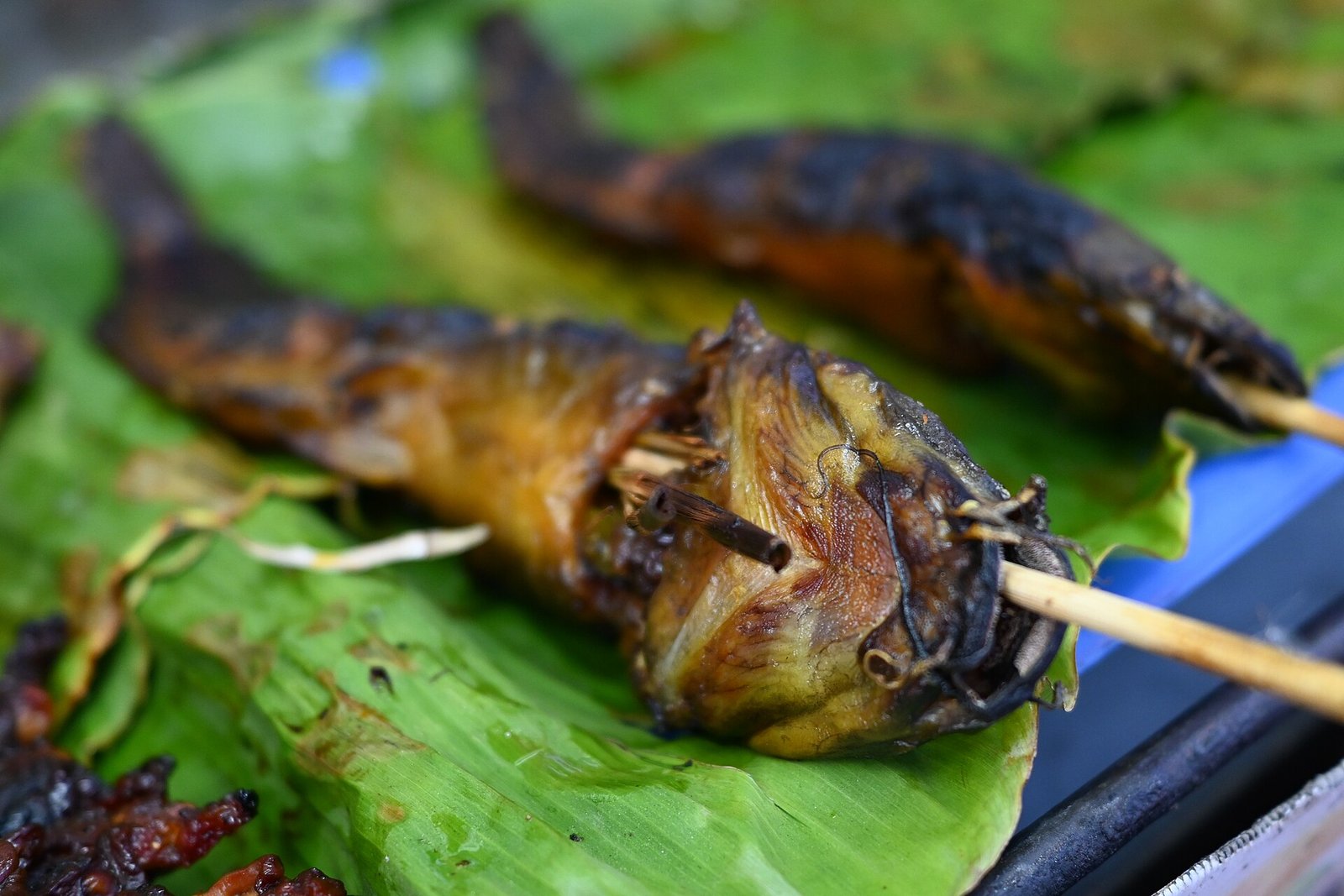
The first Dai meal I ate was served on a banana leaf, and I ate it with my hands because everyone else was. It was in a village outside Jinghong, the capital of Xishuangbanna, and the centrepiece was a river fish stuffed with lemongrass and chilli, wrapped in leaf and laid on embers until the leaf blackened and the flesh steamed in its own smoke. Around it sat little bowls of sour dipping sauce, a pile of fresh herbs you were meant to wrap around the meat, and a sticky rice packet you squeezed into a ball. Nothing on that leaf would have looked familiar to a cook from Beijing, and that is the whole point. The Dai are Tai people — the same family as the Thais and the Laotians — and their food belongs to the Mekong, not the Yellow River.
Where Dai Food Comes From
Dai country is the hot, wet, tropical tail of Yunnan, down where the Lancang river (the Mekong) slides into Laos and Myanmar. The climate grows rice three times a year, it grows citrus and pineapple, and it grows herbs in profusion — lemongrass, galangal, Vietnamese coriander, the leafy jin lien that tastes of nothing else on earth. Because the Dai sit on a river system shared with several countries, their larder is regional rather than national. When I crossed the border towns later and ate in northern Thailand, the fish sauce, the herbs, the sticky rice and the grilled skewers felt like the same kitchen with a different accent.
This corner of the province is the part of the cooking of Yunnan that barely resembles the rest of it. Yunnan’s famous mushroom and ham cooking comes from the cool highlands; Dai food comes from the steamy lowlands, and the two meet only in the market.
What gives Dai food its sour taste if not vinegar?
Dai sourness comes mainly from fermentation and fresh acid rather than the rice vinegar used up north, so the taste is brighter and almost fizzy. The pantry rests on a few staples: sour bamboo shoots, pickled mustard greens, and a fermented rice-water liquor called suan niang (酸湯) that doubles as a soup base. Lemons and the local small lime add sharpness raw, while tamarind-like pods appear in slower dishes. The honest caveat is that shop-bought ‘sour bamboo’ varies wildly; some tins are mushily mild, others aggressively funky, so taste before you tip a whole can in. If you cook at home, a spoonful of fresh lime juice plus a little unflavoured yoghurt gets you close to the fresh-sour edge without a three-day ferment.
The Souring Agents
If there is one flavour that defines Dai cooking, it is sour. Not the vinegar sour of a northern sweet-and-sour dish, but a bright, vegetal, almost fizzy sour that comes from fermentation and fresh acid together. The pantry of sour is built from a handful of ingredients.
| Souring agent | What it is | How it’s used |
|---|---|---|
| Sour bamboo shoots (酸笋) | Bamboo fermented in water until tart | Shredded into soups, stews, the famous sour fish broth |
| Tomato (番茄) | Used green and ripe | Crushed into dipping sauces and steam-braised fish |
| Sour papaya (酸木瓜) | A hard, sour fruit, not the tropical papaya | Sliced into salads and sour soups |
| Pickled vegetables | Cabbage and mustard green ferments | Side acidity for grilled meats |
The genius of the system is layering: a single grilled fish might carry fresh lime, fermented bamboo and a spoon of sour-savoury sauce at once, so the sourness never flattens into one note. Visitors who expect Chinese food to mean “soy and sesame” are wrong-footed immediately, and pleasantly so.
Why is the fish wrapped in leaves before it hits the fire?
Dai grilled fish is wrapped in banana or pandan leaves because the leaf steams the flesh in its own smoke while stopping it sticking to the embers and drying out. The leaf also traps the herb stuffing — lemongrass, galangal, Vietnamese coriander — pressed into slits in the fish, so the aromatics perfume the meat instead of burning away. Cook it seam-side down over medium charcoal for roughly twelve to fifteen minutes a side; the leaf blackens and the fish stays moist. The caveat: at home an oven set to 200°C works if you weigh the parcel down, but you lose the subtle smoke that an open fire gives. Skip the leaf entirely and you get a dried, flaky thing with none of the perfume that defines the dish.
Grilled Fish and the Herb Garden
The dish I remember best is xiang mao cao kao yu — lemongrass grilled fish. A whole river fish is slashed, packed with lemongrass, chilli, garlic and coriander, wrapped in banana leaf and grilled slowly. The leaf keeps the fish from drying and perfumes it; you unwrap it at the table and the steam hits your face. I have tried to reproduce it on a European grill at home and failed, because the banana leaf matters more than the recipe lets on, and because the herb bundle in a Xishuangbanna market is fresher than anything I can buy in a British supermarket.
Dai grilling is not the same as Sichuan or Xinjiang barbecue. It is gentler, leaf-wrapped, herb-stuffed, and the dipping powders — chilli, salt, toasted rice, sometimes a sour spice — are where the personality lives. You build the bite yourself, which is the Dai way of eating: the cook provides the parts, you provide the assembly.
The Sour Fish Soup and the Herb Pastes
Beyond the grill, the Dai pantry has two more moves worth knowing. The first is the sour fish soup — suan tang yu — a broth built on those fermented bamboo shoots, sharpened with tomato and fresh lime, and floated with chunks of river fish. It is the dish I order first now, because it tells you everything about a kitchen in one spoon: if the sour is clean and bright rather than tired and funky, the rest of the table will be good. The second is the family of nan mi — wet pastes of chilli, herbs and often shrimp or tomato, pounded in a mortar and used as a dip or a sauce. A Dai table rarely has one; it has three or four, each a different shade of heat and sour, and part of the fun is matching them to the meat or the herb you are holding.
These pastes are also the bridge to the rest of the meal. Where a Han cook might finish a dish with a splash of soy, a Dai cook finishes it with a spoon of nan mi, and the same paste that lifts grilled fish will also wake up a bowl of plain sticky rice. I learned this the hard way by under-saucing my first banana-leaf spread; the flavours were there but they sat flat until a grandmother at the next mat pushed a small bowl of emerald paste across and gestured. After that I treated the pastes as a course of their own.
Is pineapple rice actually sweet, or just savoury with fruit?
Pineapple rice is gently sweet but firmly savoury, not a dessert, because the fruit is cooked into glutinous rice with a little salt and turmeric rather than sugar. The pineapple’s acidity cuts the stickiness of the rice and keeps each mouthful from cloying, while the yellow colour comes from turmeric, not egg. It is shaped into the hollowed fruit shell and eaten with the hands alongside grilled meats, which is the Dai way. The caveat: use a barely ripe pineapple, because a super-sweet ripe one tips the balance into pudding territory and the dish loses its place on the table. At home, steam the rice first, fold through diced raw pineapple and warm briefly, and don’t overcook or the grains turn to paste.
Pineapple Rice and the Hand-Eaten Feast
The other dish every traveller photographs is pineapple rice. Sticky purple-black glutinous rice is steamed inside a hollowed pineapple with raisins and sugar, then brought to the table still in the fruit. It reads as a dessert but sits on the savoury table, and children love it as much as the tourists do. In a Dai home it arrives alongside the grilled meats, not after them.

The communal style is the part that surprises visitors most. A Dai feast is laid on a low table or directly on a mat, the dishes are shared, and you eat with your right hand, rolling sticky rice into a ball to scoop up meat and herbs. Forks and spoons are recent concessions to tourists; the traditional method is the hand, and nobody minds if you fumble it. I fumbled it for the first ten minutes and then stopped caring, which is roughly the right attitude.
Dai vs the Rest of Chinese Food
The contrast with mainstream Han Chinese cooking is worth being explicit about, because it explains why Dai food feels like a holiday from the rest of the country’s table.
| Dai (southern Yunnan) | Typical Han Chinese plate | |
|---|---|---|
| Core sourness | Fermented bamboo, fresh lime, sour fruit | Vinegar, rarely central |
| Starch | Sticky glutinous rice, eaten by hand | Steamed long-grain rice, with chopsticks |
| Protein style | Whole grilled fish, leaf-wrapped | Chopped stir-fry, braised cubes |
| Herb use | Large handfuls of fresh herbs as a vegetable | Herbs as seasoning, sparingly |
| Borders | Laos, Thailand, Myanmar | The Han heartland |
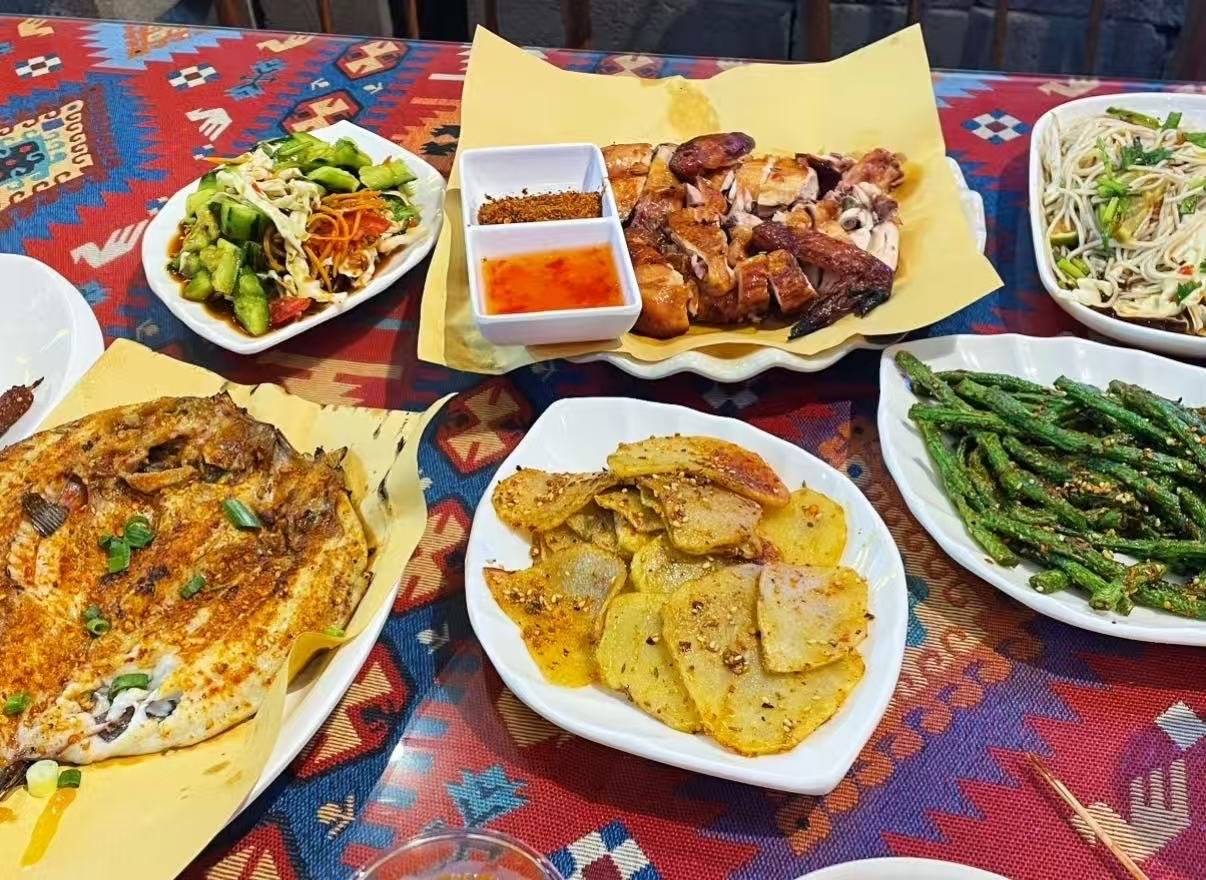
None of this is “Chinese food” in the takeaway sense, and that is precisely why China’s ethnic minority cuisines are worth travelling for. The Dai prove that “Chinese” was never one cuisine to begin with.
Can you find real Dai food outside Yunnan?
Outside Yunnan genuine Dai food is scarce, because the cuisine depends on herbs and souring agents that don’t travel well, so most ‘Thai’ restaurants stand in for it abroad. In big Chinese cities you will sometimes find a Yunnan (云南) restaurant with a Dai section on the menu, and those are your best bet; look for grilled fish, sour bamboo soup and pineapple rice listed together. The caveat: elsewhere the dishes get toned down and sweetened for local palates, so they taste closer to generic Southeast Asian food. If you want the real thing, Xishuangbanna and the border towns around Jinghong are where the herb garden is fresh and the sour notes are unapologetic. A Yunnan food trail through the province is the only reliable way to eat it properly.
Where to Eat Dai Food
Xishuangbanna is the heartland: Jinghong’s night market, the towns of Mengla and Menghai, and the Dai villages between them. The food gets better the further you leave the provincial capital, and the village feasts — often tied to temple festivals — are the real thing. Kunming, the provincial capital, has strong Dai restaurants too, and eating in Kunming will turn up a credible pineapple rice and grilled fish even if you never reach the south.
A practical note: Dai sourness is addictive but potent. The fermented bamboo shoots in particular have a smell that divides first-timers, a bit like the Belgian gueuze of the vegetable world. Try a little first.
Frequently Asked Questions
Is Dai food very spicy?
Often, but the heat is a supporting actor to the sour, not the lead. The chilli is there to lift the fermentation, and you can usually ask for less. The sour is non-negotiable; the spice is adjustable.
Is it the same as Thai food?
Cousins, not twins. They share sticky rice, herbs, grilling and fish sauce, but Dai food uses Chinese fermented bamboo and sour fruit in ways central Thai cooking does not, and it sits inside Chinese culinary life rather than outside it. As Wikipedia’s entry on the Dai people explains, the Dai are one Tai group among many spread across several countries.
Can vegetarians eat Dai food?
With effort. Much of it centres on fish and chicken, but the herb salads, the sticky rice, the sour vegetable sides and the grilled aubergine dips are plant-based by tradition. Tell the cook you avoid meat and you will still eat well.
What is the proper way to eat it?
Right hand, sticky rice ball, scoop and enjoy. Watch the person next to you for thirty seconds and you will have the technique. Chopsticks are available but they miss the point.
When is the best time to visit Xishuangbanna for food?
The warm months are best for herbs and fruit, but the temple festivals — often in spring — are when the full hand-eaten feast appears. Any season beats never going.
The Point
Dai cuisine is the clearest argument against the idea that China has a single national taste. It is sour where the rest is savoury, hand-eaten where the rest is chopstick-driven, and Mekong-born where the rest is Yangtze-born. The food of Guizhou runs in a similarly sour key just to the east, but the Dai version is its own tropical song. Eat it once with your hands and the rest of Chinese food suddenly sounds a semitone higher.