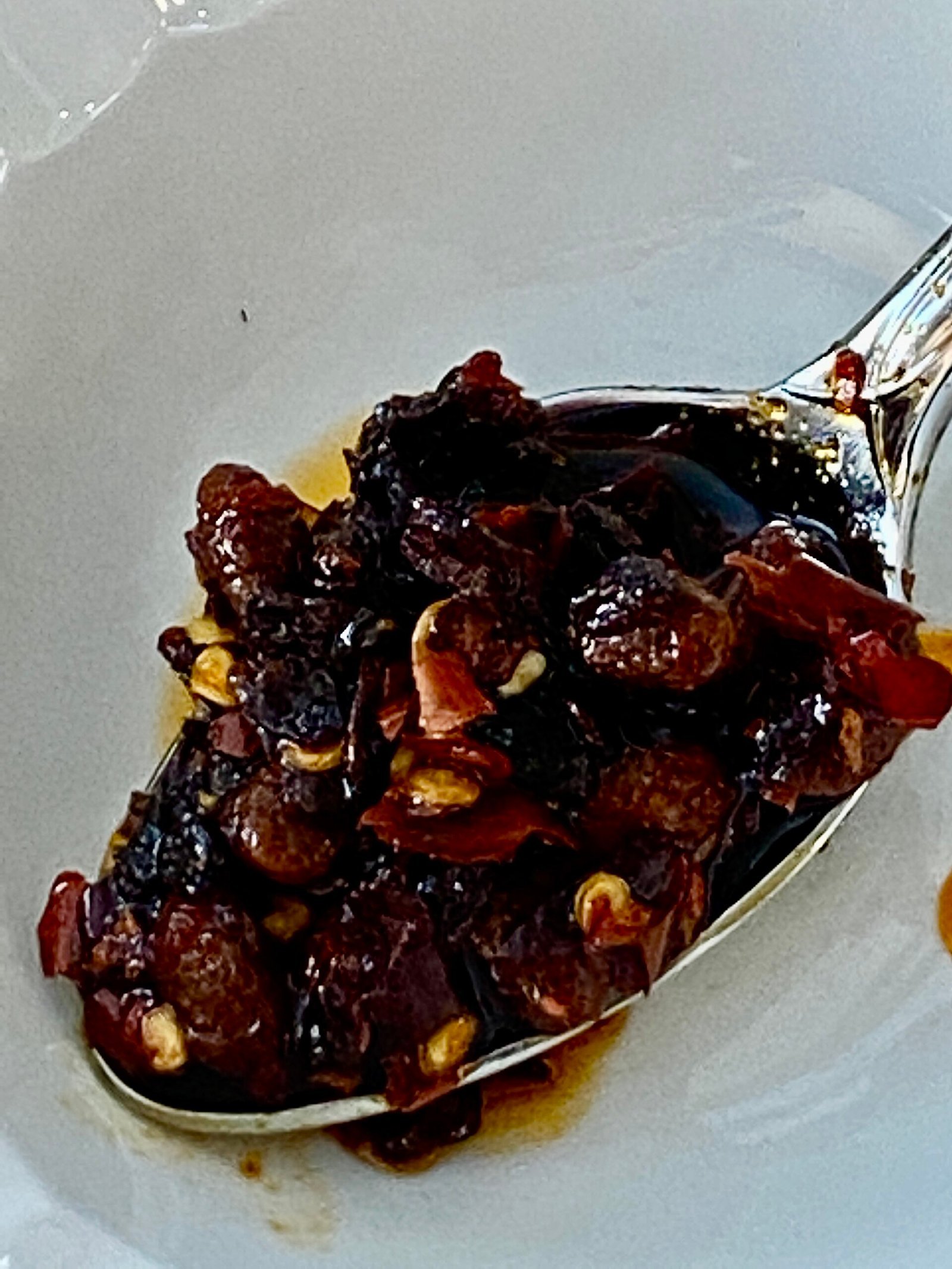
“Sesame in Chinese Cooking”
The stone mill behind the glass turned so slowly I assumed it had stopped. It was February in Beijing, minus six outside, and the little shopfront off Beixinqiao was warm enough to fog my glasses. Mr Zhao fed seed into the hopper with a bent tin can and every few minutes held out a plastic spoon of fresh oil to smell: hot, nutty, almost sweet, closer to warm peanut butter than to anything I would call an oil. I left with 500 ml in a recycled Sprite bottle for ¥38.
Sesame is used constantly in Chinese cooking and rarely discussed, and three things come from it that are not interchangeable. Seed, cheap and quiet. Oil, measured in teaspoons, never poured as a cooking medium. Paste, which arrives looking ruined and turns into the best sauce in northern China once you understand it.

Toasting Sesame Seed Properly
Seeds are the cheapest part of the story and the part most home seasonings get wrong. Raw sesame seed tastes of almost nothing, slightly grassy, faintly bitter. Toasted, it doubles in aroma in about four minutes.
I dry-toast in a shallow pan over medium-low heat, no oil, keeping the pan moving rather than stirring. Three signals tell you it is done: the warm smell, seed jumping in the pan by itself around four minutes, and a pinch that crushes rather than bends between your fingers. Pull it at pale gold, then tip it onto a cold plate, because thirty seconds of carryover heat takes pale gold to bitter.
Black seed behaves differently. White goes into paste and nearly every savoury garnish; black keeps its hull, tastes stronger and more mineral, and mostly turns up in sweets, black sesame soup, dumpling filling, Cantonese sesame rolls. I buy black seed in small bags because it stales faster once the vacuum pack is opened.
Storage matters more than people expect. Sesame is half fat by weight and it turns: a bag left open beside the hob over a British summer tastes of putty within two months. Mine lives in a sealed jar in the fridge from May.
Toasted seed works best late. Scattered over Kung Pao Chicken as it leaves the wok, a handful costs about ¥0.30. Any earlier and it softens and vanishes.
Sesame Oil Comes in Two Bottles
Walk into any supermarket in China and the sesame oil shelf has a price range wide enough to be suspicious: ¥12 for a bottle at one end, ¥45 for a smaller one at the other. They are not the same product.
The good one is 香油 (xiāngyóu) or 小磨香油, “small-mill fragrant oil”: seed toasted hard, around 180 to 200 °C, then stone-ground and pressed. It costs real money for a simple reason, you get about 40 jin of oil out of 100 jin of seed, and a stone mill works slowly.
The cheap end holds refined sesame oil, pale, thin, barely scented, sometimes cut with soya bean oil and labelled “sesame flavoured”. Restaurants buy it by the 5 litre drum for jobs where they want a hint of sesame without spending. It is not bad, just not the same thing, and dressing a cold dish with it is why homemade sesame sauce never tastes right.
Its smoke point sits low for cooking oil, around 170 °C unfiltered, so it scorches fast and takes everything you paid for with it. I add the last teaspoon to soup off the stove, to noodles already in the bowl, to dumpling fillings mixed cold. Some Cantonese cooks do drop it in for the last thirty seconds of a stir-fry.
I cover the presses and the labelling traps properly in Toasted Sesame Oil Guide, but one rule covers most of it: buy oil labelled 100% sesame, dark, sold in glass. If the label lists other oils first, keep walking.
Sesame was not always Chinese. As Wikipedia’s entry on sesame notes, the plant travelled east along the old trade routes, and even now its older Chinese name gives the journey away: 胡麻, “foreign sesame”, later shortened to 芝麻.
Sesame Paste Versus Tahini
Sesame paste is where cooks give up, and I understand why. Open 芝麻酱 (zhīmajiàng) for the first time and it looks broken: a slab of hard grey-brown paste under a slick of oil, impossible to spoon, nothing like the pourable tahini at the back of the British cupboard.
The difference is roast and hull. You can read all about chinese sesame paste elsewhere on this site; the short version is that it comes from roasted whole white seed, so it is darker, thicker, more bitter-edged and far more aromatic than tahini, which is usually raw and hulled, pale, runny and mild. Substitute it one to one and the dish goes flat; adding half a teaspoon of toasted sesame oil per tablespoon of tahini recovers most of it.
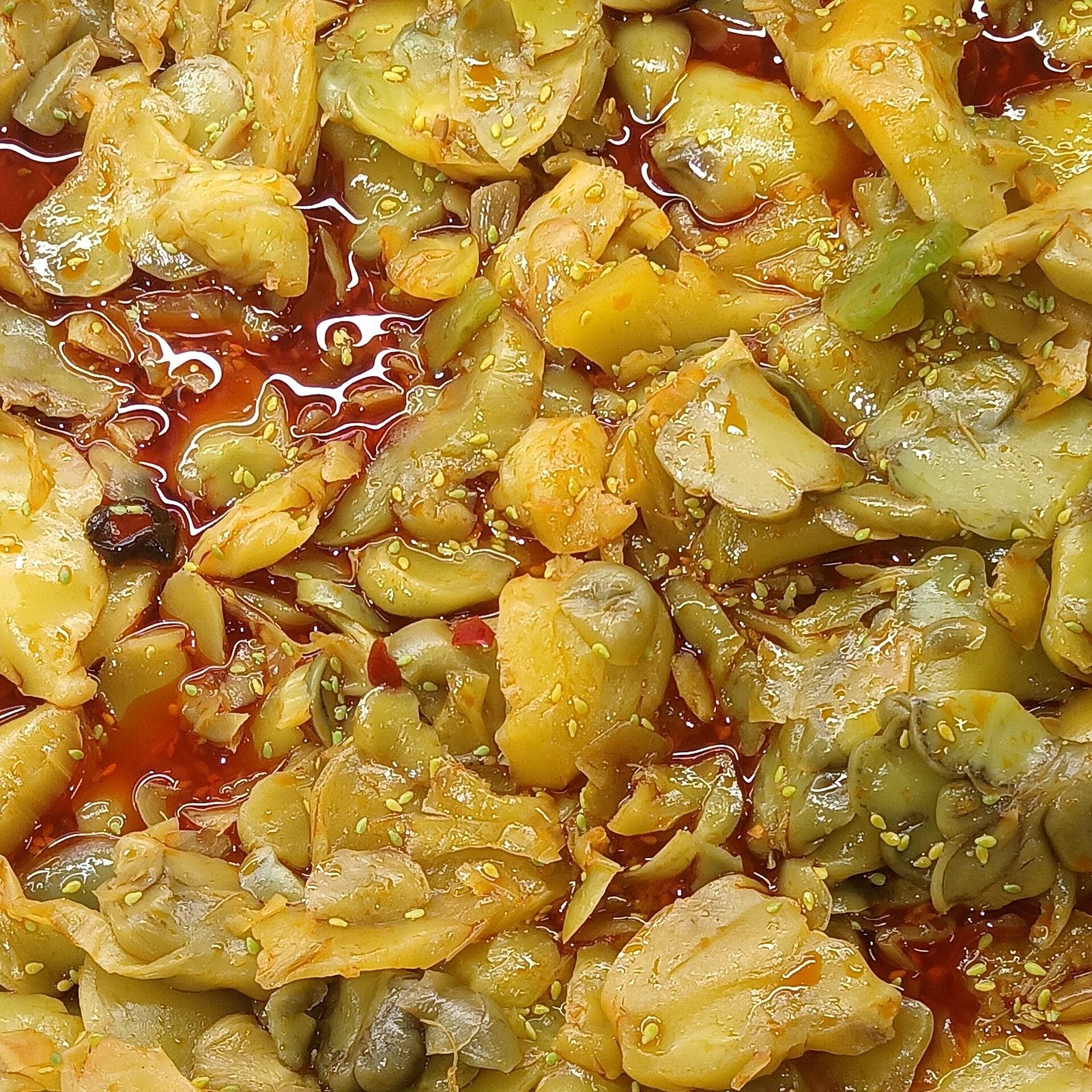
The loosening method is worth memorising, because there is a trap in it. Put two tablespoons of paste in a bowl and add warm water (around 40 °C, hot tap works) one tablespoon at a time, stirring in one direction. It seizes first. It always seizes, going stiffer and lumpier, and that is precisely the moment people decide it is ruined. Keep going, and by the third or fourth spoon it relaxes into something smooth that pours like double cream.
Cold water into cold paste is the one thing to avoid: it stays stubborn far longer and separates in the bowl within the hour.
What Each Form Actually Does
| Sesame seed | Toasted sesame oil | Sesame paste | |
|---|---|---|---|
| Chinese name | 芝麻 / 黑芝麻 | 香油, 小磨香油 | 芝麻酱 |
| Typical price in China | ¥12 to 20 per 250 g | ¥25 to 45 per 300 ml | ¥16 to 28 per 300 g jar |
| Main job | Texture and bursts of aroma | Aroma carried in fat | Body, richness, that “Beijing” taste |
| Added when | At the very end, or as garnish | Off the heat, always | Mixed cold, never into the hot pan |
| Disaster mode | Scorches in seconds past pale gold | Goes bitter if used as a cooking oil | Seizes if water is cold or added too fast |
| Classic dish | Scattered over stir-fries | Cold-dressed salads, wonton soup | Hot pot dip, Wuhan hot dry noodles |
The shortest summary I can give a new cook: if you can taste sesame before you eat it, you used the oil or the seed. If you taste it while you chew, you used the paste.
Prices, Storage and the Stale Bottle Problem
White seed runs ¥25 for 500 g in Beijing, £4.20 for 250 g in Manchester. Toasted oil ¥38 for 500 ml from Mr Zhao, £5.50 for 250 ml imported. Paste ¥22 a jar. None of it needs refrigeration before opening; all of it keeps better afterwards.
Oil spoils first. An opened bottle loses its top notes within three months at room temperature, so I decant into a dark bottle and keep it cold. Paste separates harder chilled but lasts six months once you stir the oil back down. Whole seed keeps a year sealed in the dark.
To test any of them, rub a drop between your palms and smell: fresh sesame is sweet and roasty, rancid sesame smells of putty and paint. There is no hiding it, and it is the one ingredient I bin without a second thought.
It also travels elsewhere in the cupboard. Much of the crunch in the jar I wrote about in how chili crisp is really done is sesame, which is why that condiment smells friendlier than plain chilli oil.
Where Sesame Lands on the Chinese Table
The north is where paste dominates, and Beijing is the capital of it. A proper 涮羊肉 hot pot meal comes with a bowl of loosened paste you doctor yourself at a sauce counter: paste, a cube of fermented tofu, a spoon of chive flower paste, a splash of the oil, chopped coriander. Everything else on that table, the lamb, the cabbage, the frozen tofu sheets, exists to carry it.
Wuhan is the other paste city. Hot dry noodles, 热干面, are alkaline noodles blanched, drained dry and tossed with paste loosened with sesame oil rather than water. My first bowl, from a stall near Jianghan Road, cost ¥6 and nearly choked me because I stirred too slowly.
Down the Yangtze the oil takes over. In Nanjing cold platters arrive dressed with little more than sesame oil, salt and sugar, and I kept running into that restraint while working on the Nanjing Food guide: pressed tofu threads, blanched greens, slivered kelp, three ingredients with the oil doing the heavy lifting.
Sichuan does both jobs, seed over cold dishes and thinned paste for dan dan noodles. Guangdong goes sweet: black sesame soup thickened with rice, eaten hot in winter, paste folded into steamed rolls.
At home, two combinations I rely on weekly. Cold blanched shoots tossed with sesame oil, chilli and salt take ten minutes and taste like something from a restaurant; I go into soaking and storage in Bamboo Shoots explained. And when the flat is empty, wedges of cold century egg with slivered ginger, black vinegar and a thread of the oil count as dinner; I wrote up everything you need to know about century egg for anyone still wary of those dark green yolks.
Frequently Asked Questions
Can I use tahini instead of Chinese sesame paste? Yes, one to one, though it will taste blander and paler. Add half a teaspoon of toasted sesame oil per tablespoon of tahini and loosen it with warm water the same way. You lose some of the bitterness that makes the northern version work, but most people will not notice.
Why did my sesame paste seize into a lump? Cold water added too fast, most likely. Keep adding warm water a tablespoon at a time, stirring one way, and it will relax after the third or fourth addition.
Should sesame oil go in hot or off the heat? Off the heat, with few exceptions. Unfiltered stone-milled oil smokes around 170 °C, so a hot wok burns off both the aroma and your money. Add it at the end or after plating.
White sesame or black sesame? White for savoury work and all paste; it is what a Chinese recipe means when it just says sesame seed. Black for sweets and anywhere you want the colour to read: sesame soup, dumpling filling, steamed rolls.
Is sesame safe for people with nut allergies? It is a seed rather than a nut, but sesame is a serious allergen in its own right and UK labelling has required it to be declared since 2021. If it is your allergen, none of the three forms is safe, and restaurant sauces are the trap. Check the specifics with a clinician rather than taking my word for it.
How do I stop sesame sticking to my teeth for hours? Toast it rather than using raw seed, then crush lightly in a mortar once cool. Cracked seed releases its oils; whole seed tends not to.