Chinese Five Spice Powder: Uses and Substitutes
Fact-checked and reviewed 31 October 2026 · China Food Way editorial team
The smell of my grandmother’s kitchen on a Sunday was, for most of my childhood, the smell of five spice powder. She used it the way other grandmothers use salt — a pinch in the roast duck, a whisper in the marinade, sometimes just a dusting on buttered toast when nobody was watching, a habit she never explained and I never questioned. It was only years later, standing over a wok with a jar of pre-ground powder that smelled like nothing at all, that I realised I had been eating a memory of five spice rather than five spice itself. The jar from the supermarket was a ghost. What she kept was a small cloth bag of whole spices that she toasted and ground herself, maybe once a month, in a mortar that had been in the family since before anyone could remember.
What Is Actually In It
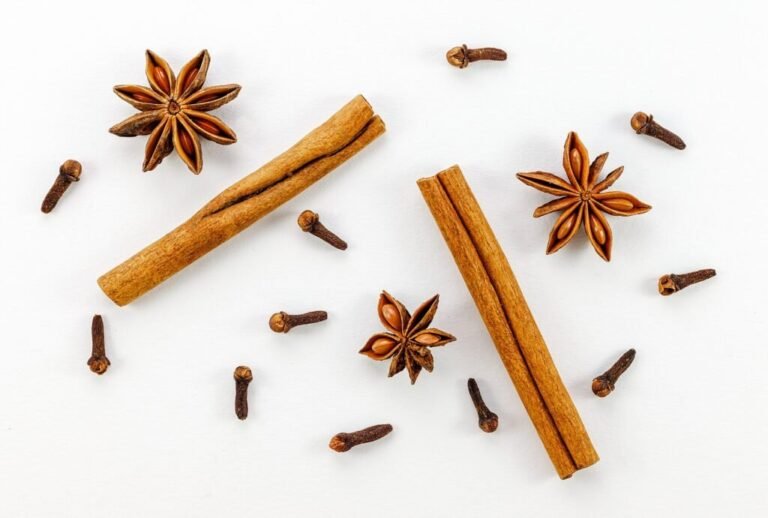
Chinese five spice powder is not, despite the name, a blend of five random spices. It is a balanced construction in which each ingredient represents one of the five flavours of Chinese cooking — sweet, sour, bitter, pungent and salty — and together they produce a powder that is warm, sweet, aromatic and faintly numbing. The classic formula:
| Spice | Chinese | Flavour role | Typical share |
|---|---|---|---|
| Star anise | 八角 | Sweet, dominant, licorice-like | Highest — the backbone |
| Cassia bark | 桂皮 | Sweet, warm, woody | High |
| Sichuan peppercorn | 花椒 | Pungent and numbing — the buzz | Low |
| Fennel seed | 小茴香 | Sweet-aniseed, rounding | Medium |
| Clove | 丁香 | Bitter, medicinal, powerful | Lowest — it bullies everything else |
Proportions vary by region and by household, and commercial blends almost always overdo the clove because it is cheap and smells impressive in the jar. If your five spice tastes predominantly of clove, you have bought a bad blend. The tell of a good one is that no single spice stands out; the powder reads as a single warm chord rather than five soloists.
The peppercorn is the ingredient most people miss. A small amount of hua jiao — I have written a full Sichuan peppercorn guide if you want the varieties — gives the blend its faint electric tingle, and it is the difference between five spice as a baking spice and five spice as a meat rub. Without it, you might as well be using mixed spice.

The Flavour Logic
Traditional Chinese cooking organises taste around five flavours, and five spice powder is the rare pantry item that contains all of them in balanced miniature. This is why it behaves less like a spice and more like a seasoning system. Added to a dish that already has soy sauce, sugar and vinegar, it does not introduce a foreign flavour so much as harmonise what is already there.
The practical consequence: five spice works best in dishes where you want depth without a clear “spice” identity. It is the reason roast duck, braised pork belly and red-cooked beef all taste complete in a way that is hard to pin down. You rarely say “ah, star anise.” You say “this tastes like something.”
How to Use It
With red meat. Rub it on pork belly or duck with salt and a little sugar, then roast. This is the classic Cantonese application, where the powder’s sweetness plays against the soy-glaze and the fat. Use roughly half a teaspoon per 500g of meat — enough to notice, not enough to identify.
In marinades. Five spice plus soy sauce, Shaoxing wine, garlic and ginger is the standard template for char siu and for braised dishes. The powder survives long cooking well, unlike more fragile aromatics.
In braises and master stocks. A muslin bag of five spice with star anise, cassia and fennel goes into any 卤水 (master stock), where it steams gently for hours and lends background warmth to eggs, tofu and meat alike.
With chicken. A tiny amount — a quarter teaspoon — in a salt-and-sugar rub for roast chicken gives a Cantonese-style 盐焗 flavour. More than that and it tastes medicinal.
Where it does not belong. Delicate white fish, leafy greens, and anything where freshness is the point. Cantonese steamed fish is a masterpiece of restraint, and five spice would be a vandal in that kitchen. The cuisine behind my mapo tofu recipe uses spice aggressively too, but notice that it reaches for chili and peppercorn rather than a blended powder — Sichuan builds its complexity from separate ingredients, not a premix.

Is it worth grinding five spice at home?
Yes, if you cook with it often, because freshly ground powder tastes of spice and shop powder often tastes of dust. The method is simple: toast whole star anise, cassia, fennel seed, Sichuan peppercorn and clove in a dry pan until fragrant, cool, then grind to a fine powder in a spice grinder. Toast first and the aroma jumps; skip it and you get a flat, woody blend. The real advantage is control — you can pull back the clove, which commercial makers overdo because it is cheap and smells strong in the jar. Make small batches, enough for a month, and store them airtight away from light. The upfront cost of whole spices is low and the difference in the bowl is large.
Making Your Own
Toast the whole spices dry in a heavy pan over medium heat until they smell fragrant — star anise first, since it takes longest, then cassia, then fennel, then the peppercorn, then clove for the last thirty seconds. Cool completely. Grind in a spice grinder or mortar to a fine powder, then sift out the woody fragments of cassia and the hard seeds.
Store in an airtight jar away from light. Whole spices keep for a year or more; the ground powder loses roughly half its aroma within a month. This is the single strongest argument for grinding your own in small batches — a jar of powder made today will outperform anything you buy, and it costs a fraction of the price.
What can I use if I run out of five spice?
If you have none, build the nearest approximation from what you likely own: a pinch of ground star anise plus a smaller pinch of cinnamon gets you most of the sweet-aromatic base, with a trace of ground clove if you have it. That echoes the blend without the numbing peppercorn note, so the result reads ‘warm spice’ rather than true five spice. For a dish where the blend is a background whisper — a marinade, a braise — this stands in fine. Where it is the headline flavour, nothing substitutes cleanly, and you are better off buying a fresh jar than pretending. Avoid pumpkin-pie spice: the nutmeg and ginger in it push the dish firmly off the map. A single star anise dropped into a braise is often enough to signal the right idea.
Substitutes
If you are out of five spice, the closest DIY blend is equal parts ground cinnamon and ground aniseed or fennel, plus a pinch each of ground clove and black pepper. It will not have the numbing quality unless you add a little ground Sichuan pepper, so do that if you can. Chinese five spice is not replaceable by allspice, garam masala or mixed spice — all of those contain cinnamon plus other things, but none of them contain hua jiao, and the buzz is the point.
For a genuinely different direction, a pinch of 十三香 (shisanxiang, “thirteen spices”) is a common Chinese substitute, though it is louder and less refined.
Why does my five spice taste soapy or bitter?
Almost always it is the clove. Clove is the smallest share of a good blend but the loudest voice, and commercial powders load it up because it is cheap and impressive-smelling in the jar; too much and the powder turns medicinal, even soapy. The second culprit is age — pre-ground spice loses its sweet top notes within months and what remains is the bitter, woody back end. If your blend tastes mainly of clove, buy a better one or grind your own with the clove cut to a near-whisper. The third mistake is cooking it hard and long, which drives off the aromatics and leaves the harsh ones; bloom it briefly in oil or add late. A balanced five spice should read as one warm chord, not as any single spice shouting.
What Not To Do
The most common failure is overuse. Five spice is a spice blend, not a sauce; a heavy hand turns pork into a dessert that went wrong. The second most common failure is using stale powder, which tastes of dusty clove and makes people conclude they dislike the blend. The third is treating it as an exotic specialty when it is, in practice, one of the most useful jars in the Chinese pantry — a shortcut to the kind of depth that would otherwise take an hour of braising to build.
Do different parts of China use five spice differently?
Yes, the same blend plays different roles as you move around the country. In Cantonese cooking it seasons roasted meats — the red lacquer on char siu and the cure on roast duck both lean on it — and it appears in sweet baked goods. Further north, in Shandong and Beijing, it shows up in braised dishes and in the spiced salts rubbed on meats. Sichuan uses it sparingly, since mala heat already dominates the palate, while Fujian folds it into red-braised and wine-lees cooking. The powder is shared, but the hand that wields it is regional: southern cooks reach for it with sugar and roast; northern cooks with salt and slow heat. Knowing the local habit tells you whether to use it as a glaze or a braise base.
Five Spice Across the Regions
Different Chinese kitchens reach for five spice in noticeably different ways. Cantonese cooks, working in the clearest expression of the blend, use it with roast goose, char siu and master stocks, where its sweetness flatters glaze and fat. In the Jiangnan region around Shanghai, a pinch goes into red-braised dishes alongside rock sugar and soy, deepening the sauce without announcing itself. Fujian cooks use it more sparingly, usually in braised soups and with red yeast rice. And in the northwest — Lanzhou, Xi’an and the Muslim-cuisine belt — the warm spice tradition overlaps with cumin and chili, so five spice appears in lamb braises and hand-pulled noodle broths, playing against the cumin rather than competing with it.
What this regional tour tells you is that five spice is a working ingredient, not a regional curiosity. If you keep one jar of whole spices in your kitchen for Chinese cooking, make it this one — the components last a year, the blend takes ten minutes to make, and it will quietly improve everything you braise, roast or grill.
Frequently Asked Questions
Is five spice powder used in Chinese food the same as in Western baking?
No. Western “five spice” usually refers to pumpkin-pie-style blends heavy on cinnamon, ginger and nutmeg. Chinese five spice always contains star anise and usually hua jiao, and it is a savoury seasoning despite its sweetness.
How much should I use?
As a rule, half a teaspoon per 500g of meat or per large pot of braise. For marinades, a quarter teaspoon. You can always add; you cannot subtract.
Does it expire?
It does not spoil, but it fades. Ground powder is at its best for about a month, acceptable for three, and a memory of itself after six. If it smells faint and dusty rather than sharp and sweet, toast a fresh batch.
Can I use it in vegetarian cooking?
It is excellent with tofu, mushrooms and roasted root vegetables — anywhere you would use soy sauce and a little sweetness. A dusting on roasted cauliflower with sesame oil is one of the simplest good things you can do with it.
Five spice is the quietest of the Chinese pantry staples and one of the most useful. If you want the wider map of what else lives in a Chinese kitchen, my overview of the eight great cuisines explains how regional kitchens put these spices to work, and my dumpling guide is a good place to practise folding with a five-spice pork filling. When you are ready to taste how a professional kitchen handles the blend, tell us what you would like to eat and we will plan a China food trip around it.