How to Visit Leifeng Pagoda Without the Crowds
Leifeng Pagoda draws something like three million visitors a year, yet I once had the top-floor viewing window almost entirely to myself for a full ten minutes. The trick was not a secret entrance or a bribe; it was showing up at the right moment and knowing which queue to join. Most people pile in at midday or just before sunset, so the early afternoon, when the coaches are at lunch, is strangely empty. Here is how to use that.
Why this pagoda is so crowded
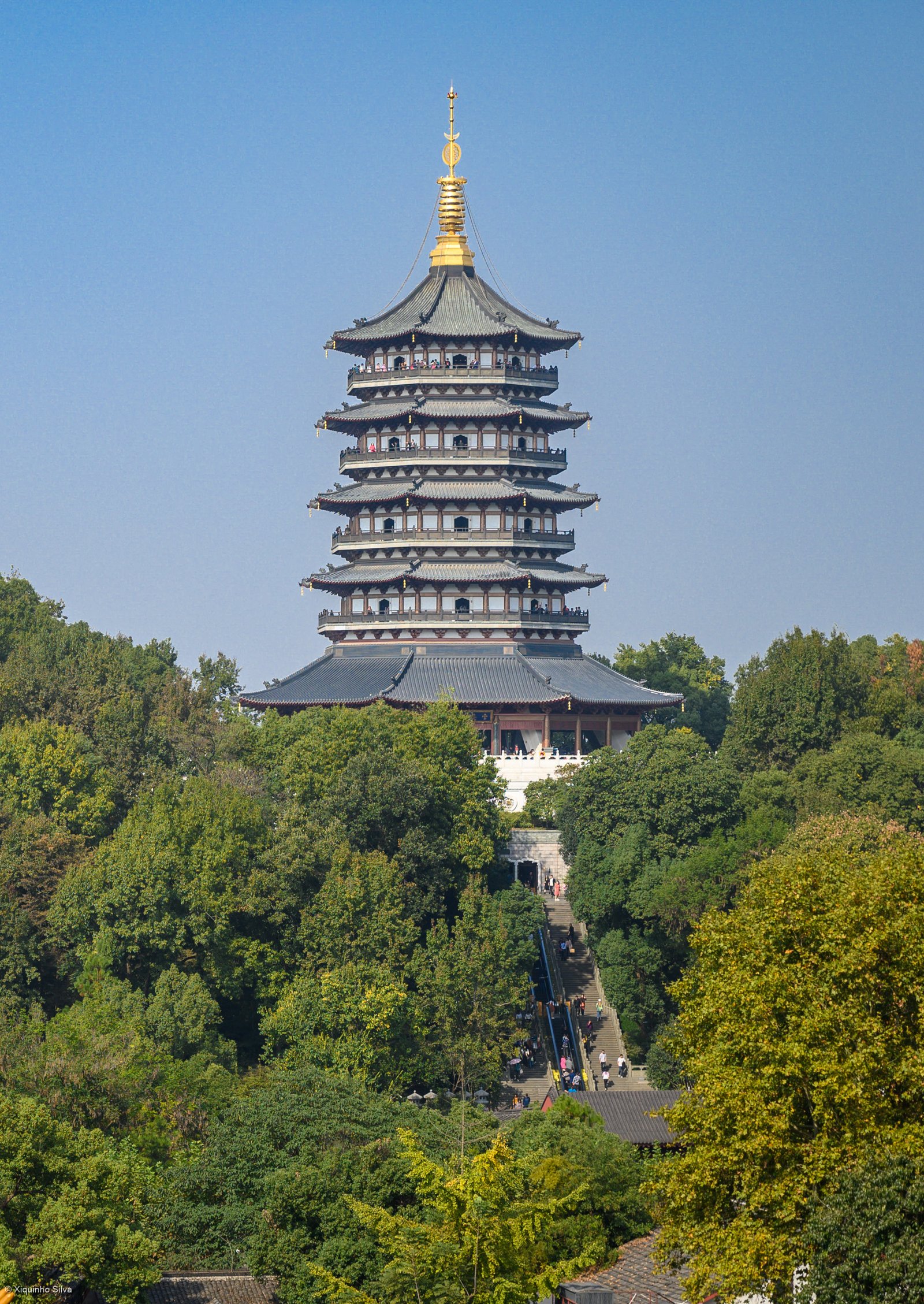
The pagoda sits on the south shore of West Lake and is tied to the “Legend of the White Snake,” one of China’s best-known folk tales, in which a demon-subduing pagoda traps a transformed snake spirit. That story alone pulls school groups, tour buses and families who may not care about architecture but want the photo. The current structure is a 2002 rebuild on the original Song-dynasty foundations, which, as Wikipedia notes, were preserved as a ruin inside the new base; you can read more about Leifeng Tower and its long history there. So you are really visiting two things: a legend and a reconstructed tower wrapped around an archaeological core.
The White Snake story matters more than it sounds for your visit, because it shapes where people stand and what they photograph. The tale has a happy-ish modern ending in most opera versions, and the pagoda is treated almost as a character in the city’s imagination rather than just a building. If you know the story before you go, the crowds make more sense, and the displays inside the tower land harder.
The crowd-avoidance strategy
Timing is everything. The pagoda opens in the morning, and the first and last hours get the worst of it because tour itineraries cluster there. The dead zone is roughly 1pm to 3pm on a weekday, when groups are eating and the light is flat. You trade pretty photographs for elbow room, which is a fair swap if your goal is to actually look around. I have tested this on three separate visits now, and the early-afternoon lull has held every time, even in peak season, as long as it is a weekday.
| Visit window | Crowd | Light | Verdict |
|---|---|---|---|
| Opening (08:00–09:30) | High | Soft | Good for photos, busy |
| Late morning | Very high | Harsh | Avoid |
| Early afternoon (13:00–15:00) | Low | Flat | Best for space |
| Sunset (17:00–close) | Very high | Golden | Prettiest, packed |
If you want both space and light, do the interior in the early afternoon and return to the lakeside below for sunset without climbing again.
Tickets and opening hours
There is a single entry ticket for the pagoda, and prices shift by season, so I will not quote an exact figure that may be wrong by the time you read this; check the official site before you go. The site has step-free access via a lift to the viewing deck, which is unusual for a Chinese heritage tower and makes it manageable if you travel with older relatives. Last entry is usually an hour before closing, and they do clear the top deck promptly, so don’t cut it fine.
Getting there
From the west or south shore of West Lake, the pagoda is a 15–25 minute walk or a short taxi ride. Many visitors combine it with a loop of the lake’s southern end. I prefer to walk the causeway in the cool morning, reach the pagoda by early afternoon, and then drift back to the water for sunset. Buses stop nearby, but the walk is flat and pleasant.
What you actually see inside and on top
The base preserves the original brick ruins under protective glass, which I found more moving than the shiny floors above. Lifts and stairs take you to several display levels with carved scenes from the White Snake story, then to the open top deck. From there the lake spreads out below you, with the city behind and the hills across the water. On a clear day you can trace the causeways you walked earlier. The view is the real reward, and it is why the sunset crush happens.
Spend a few minutes on the carved reliefs rather than rushing to the top. The panels retell the White Snake opera in sequence, and reading them in order turns the climb into a small story rather than a photo stop. The top deck has coin-operated telescopes, which are worth a few coins if you want to pick out the far shoreline. On a hazy day the view is softer but still lovely; on a clear winter morning it can be startlingly sharp.
Pairing the pagoda with West Lake
Leifeng works best as a punctuation mark on a West Lake day rather than a standalone errand. Do the lake in the morning, the pagoda interior when it is quiet, then watch the sun drop from the shore. The pagoda also lights up at night, and while the interior is closed, the exterior glow reflected in the water is worth a lakeside stroll after dinner.
A natural loop is to walk the Su Causeway early, hire a boat mid-morning, eat lunch on the south shore, slip into Leifeng in the empty early afternoon, then return to the water for sunset. That sequence uses the crowds’ own rhythm against them and keeps you off the busy paths at the worst times. If you only have one afternoon, do the pagoda first and the lakeside walk last, so you finish with the light rather than fighting it.
Practical tips for the climb
Wear shoes with grip; the upper floors are polished stone and can be slick after rain. Carry water in summer, because the top deck has little shade and the climb warms you up. The on-site shop sells cold drinks but at a markup, so I top up at a lakeside vendor first. If you use the lift, step aside at the top to let others disembark, since the deck gets congested quickly at peak times. None of this is complicated, but the people who look flustered are almost always the ones who arrived at the worst hour with no plan.
Other towers, towns and sights to consider
If Leifeng sparks an interest in Chinese towers and old towns, a few related stops are worth building into a wider trip.
For a very different kind of vertical structure, Canton Tower Guide covers Guangzhou’s soaring modern broadcast tower, useful if your route runs through the south and you want the contrast between a 1,000-year-old pagoda and a 21st-century one.
If you are also doing Beijing, Badaling Great Wall is the most visited section of the wall and shares Leifeng’s crowd problem, so the same early-or-late logic applies.
For a calmer imperial green space, all about beihai park describes a lakeside garden in the capital where you can breathe after the big sights.
If pagodas are your thing specifically, Big Wild Goose Pagoda in Xi’an is the famous Tang-dynasty tower and a natural pairing if you travel between Hangzhou and the northwest.
Families often wedge in a cute stop, and Chengdu Panda Base explained lays out how to see the pandas at their most active, best done early for the same reason Leifeng is best off-peak.
Old streets reward the same slow approach, and everything you need to know about ciqikou walks through Chongqing’s riverside old town, where arriving before the crowds changes the feel completely.
For a desert surprise far from Hangzhou’s greenery, how crescent lake dunhuang is really done covers the oasis lake pinned in sand dunes, a stark opposite to West Lake’s tame shores.
And if you want to settle somewhere characterful for a few nights, my notes on dali old town describe the Yunnan town on Erhai’s edge where the pace drops and the pagoda-hunting can wait.
| Sight | Type | Crowd tactic |
|---|---|---|
| Leifeng Pagoda | Lake pagoda | Early afternoon |
| Canton Tower | Modern tower | Evenings |
| Badaling Wall | Mountain wall | Early or late |
| Big Wild Goose Pagoda | Tang pagoda | Morning |
| Dali Old Town | Old town | Off-season |
Frequently Asked Questions
What is the best time to visit Leifeng Pagoda? Early afternoon on a weekday is the quietest window. For photos, go at opening or just before sunset, accepting the crowds.
Is the pagoda original or rebuilt? The current tower was rebuilt in 2002 on the original Song-dynasty foundations, which you can see preserved inside the base.
Can you see West Lake from the top? Yes. The open top deck gives a wide view over the lake, the causeways and the surrounding hills, which is the main reason to climb.
How long does a visit take? Allow 45–90 minutes including the queue. A quiet early-afternoon visit can be done in under an hour; a busy one takes longer.
Is there a lift? Yes, there is step-free access to the viewing deck, which helps travellers with limited mobility or young children.
Should I visit at night? The interior closes, but the lit pagoda reflected in the lake makes a pleasant after-dinner walk along the shore.