Why Xining Deserves More Than a Day Trip
The first time I visited Xining I nearly wasted the whole trip. I landed at Caojiabao Airport, took the shuttle into the city, and booked a hostel bed thinking I would see the centre for a morning before catching the train west. What I had not reckoned with was the altitude: at 2,275 metres the steps up to my guesthouse left me breathless, and the bright plateau light gave me a headache by noon. Xining is the capital of Qinghai and the gateway to the Tibetan plateau, and most travellers treat it as a fuel stop on the way to somewhere else. That is the mistake I want you to avoid.
As Wikipedia notes, Xining sits on the eastern edge of the Tibetan plateau and has been a Han, Hui, Tibetan and Tu meeting point for centuries. That mix is the whole point of staying longer. The city’s food, its mosques and its monasteries only make sense once you slow down and let the altitude settle.
Why a Day Trip Falls Short
A single day in Xining lets you tick the Dongguan Mosque and maybe a bowl of noodles. It does not let you reach Qinghai Lake, which is a two-hour drive each way, or spend a quiet hour at Ta’er Monastery before the tour buses arrive. I met a couple from Chongqing who had done exactly the day-trip version, and they admitted they had seen almost nothing they came for.
The city rewards a slower rhythm. Mornings are for the mosques and the Muslim quarter; afternoons are for the Tibetan temples on the outskirts; evenings are for the night market near the centre. If you only have one day you will spend it in transit rather than in the place, and the plateau air will have worn you out before you find your footing.
Getting There and Around
Xining Caojiabao International Airport has direct flights from Beijing, Chengdu, Xi’an and a handful of other hubs. From the terminal a shuttle bus runs to the city centre in about 40 minutes and costs around RMB 20. The railway station is central and is the start of the line towards Lhasa, which means the sleeper train west is a real option if you are continuing on. If your route started on the coast, my notes on Dalian show how different China’s port cities feel from this high, dry capital.
Inside the city, buses are cheap at RMB 1 to 2 but confusing for non-Chinese speakers, and taxis start at RMB 8. I found the ride-hailing apps more reliable once I had saved my destination in Chinese characters, because showing the driver a pinned map settled any confusion. For Qinghai Lake and the surrounding towns, the easiest route is a shared car or a small-group tour arranged through your guesthouse, which also handles the seasonal road conditions.
Book the Lhasa sleeper well ahead if that is your next leg, because the upper-berth beds sell out in summer. I reserved mine a week early and still took what was left; a friend who walked up on the day was sent to the waiting list. The station’s signage is in Chinese and English, which helps more than you would expect this far west.
A Route That Actually Works
Spend your first day low and easy. Walk the broad central boulevards only as a way to orient yourself, then head to the Dongguan Mosque for the late-afternoon prayer crowd and the surrounding halal eateries. The mosque’s courtyard is free to enter outside prayer times, and the surrounding streets are where the city’s Hui character is most visible.
Day two should be Ta’er Monastery, 25 kilometres south-west, reached by bus 909 from the main station for roughly RMB 5. Give it a full morning; the butter-sculpture hall alone is worth the trip, and the walk through the surrounding village has stalls selling dried yak cheese. Day three is the lake, and Beijing might feel a world away, but the planning discipline is the same wherever you travel in China.
If you would rather see a different kind of plateau town, Changchun and the north-east sit at a completely different altitude and climate, which is a useful reminder that “cold” in China means very different things by region. Keep Xining as your high point and work downwards in elevation as you move on.

What to Eat
Xining’s kitchen is half Hui Muslim, half Tibetan, and the result is hearty. Hand-pulled beef noodles (niurou lamian) cost RMB 12 to 18 a bowl and are eaten standing at a counter, watched by regulars who have been coming for years. Yak meat, either grilled or in a hotpot, runs RMB 60 to 120 for a meal, and the local yoghurt is sold in little bowls with a dusting of sugar.
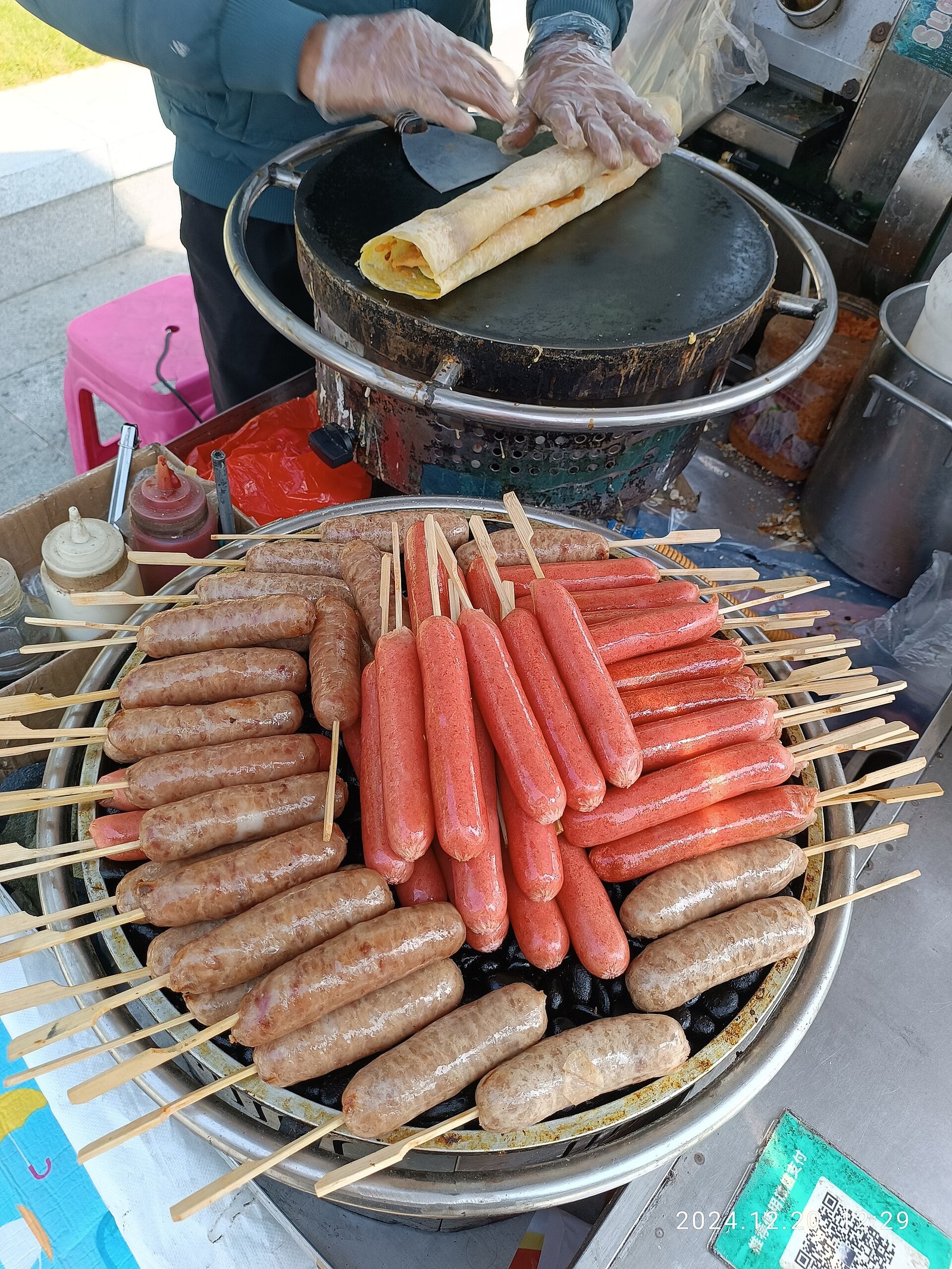
The Muslim quarter near the central mosque is where I ate best. Try the roasted lamb skewers (yangrou chuan) at RMB 3 to 5 each and the round flatbread cooked against the oven wall until it blisters. If you want a break from meat, the vegetable-filled buns from the Tibetan stalls are filling and cheap, and a pot of butter tea will warm you faster than any coffee.
Markets are where the plateau pantry becomes obvious. Dried yak meat, barley flour and bricks of butter tea sit alongside the fruit brought up from lower provinces, and a small bag of dried berries makes a good trail snack for the lake day. I bought too much and regretted nothing, because the prices were a fraction of what I later saw in airport shops.
Where to Stay
Hostels near the centre start at RMB 80 for a dorm and RMB 180 for a private room. Mid-range hotels around the main square run RMB 300 to 500 a night and are worth it for the heating, which you will want even in summer at this altitude. I once stayed in a budget place without proper insulation and the cold woke me at 5am.
If you are continuing to Tibet or the lake, pick somewhere close to the railway station. The Chengde Travel Guide covers a very different imperial town, but the lesson is the same: stay near where you will leave from, because an early departure is easier when the station is a short walk away.
For a longer stay, the areas near the university have cheaper local eateries and a calmer feel than the main square. I moved there for my last two nights and paid less for a better room, with a noodle shop downstairs that opened before I did. It is a good base if Qinghai Lake is only part of a wider plateau plan.
Day Trip Versus a Proper Stay
The table below is the honest version of what you get either way, based on what I saw and what fellow travellers told me.
| Option | Time needed | What you’ll see | Rough cost | My verdict |
|---|---|---|---|---|
| Day trip only | 1 day | Mosque, one meal, centre | RMB 100 to 200 | Not enough |
| 2 to 3 nights | 2 to 3 days | Mosque, Ta’er, lake day trip | RMB 800 to 1,500 | The sweet spot |
| A week | 6 to 7 days | Above plus nearby towns, slower pace | RMB 2,500 plus | Best if you love plateau air |
A Mistake Worth Avoiding
Most people underestimate the altitude. They fly in from sea level, skip the rest day, and climb straight onto a bus to the lake at 3,200 metres. The headache and sleepless night that follow are avoidable: take your first day easy, drink water, and skip the alcohol. Check the official site before you go for the latest on permits and any seasonal road closures, because the plateau weather changes plans quickly.
The other mistake is timing. Winter here is brutal and many lake roads close; summer, from June to August, is cool and busy, and May or September are my favourites for empty roads and decent weather. If you are building a wider trip, Chengdu explained sits at much lower elevation and makes a good warm-up stop before the plateau, while all about Changsha gives you a humid, lowland contrast to plan around.
Frequently Asked Questions
Is Xining safe for foreign travellers? Yes. The city is used to visitors on the way to Tibet and the lake, and standard precautions apply. I never felt uncomfortable walking the centre after dark.
What is the best month to visit? June to August is the classic window, with cool days and the lake at its bluest. May and September are quieter and still pleasant, with fewer tour groups on the road.
Do I need a permit for Qinghai Lake? The lake shore itself is open to visitors, though certain Tibetan areas nearby may need permits, so check the official site before you go. The standard tourist shore is straightforward to reach by shared car.
How many days should I plan for? Three full days covers the city, Ta’er Monastery and a lake day trip without rushing. Two is the minimum if you must keep moving, but you will miss the slower streets.
What should I pack that I might forget? A warm layer even in summer, lip balm for the dry air, and any altitude medication you trust. Sunscreen matters more here than at lower elevations because the UV is strong.
Can I reach Xining by train from other cities? Yes. There are direct trains and flights from major hubs, and the station is the jumping-off point for the line towards Lhasa. If you have read how Dali is really done, you will know the trick is always to arrive a day early and let your body adjust.