China Visa Guide: Types, Applications and the 144-Hour Transit Rule
Last reviewed 31 October 2026 · China Food Way editorial team
“Do I need a visa?” the man at the next desk asked the clerk. “That depends,” she said, without looking up. “Where are you flying from, and are you coming back through China, or on to somewhere else?” He wasn’t sure. She slid a form across the counter and told him to read the transit rules first. That exchange sums up why people get confused: the answer is almost never a simple yes or no, and the detail that changes everything is your route.
I’ve stood in that queue and in a few others, and the short version is this. Most visitors need a visa, applied for before travel. A smaller group can enter without one under the 144-hour transit rule, but only if their itinerary fits a specific shape. The rest of this guide walks through both, and tells you what to do first.
Which visa type covers a food-focused trip through several cities?
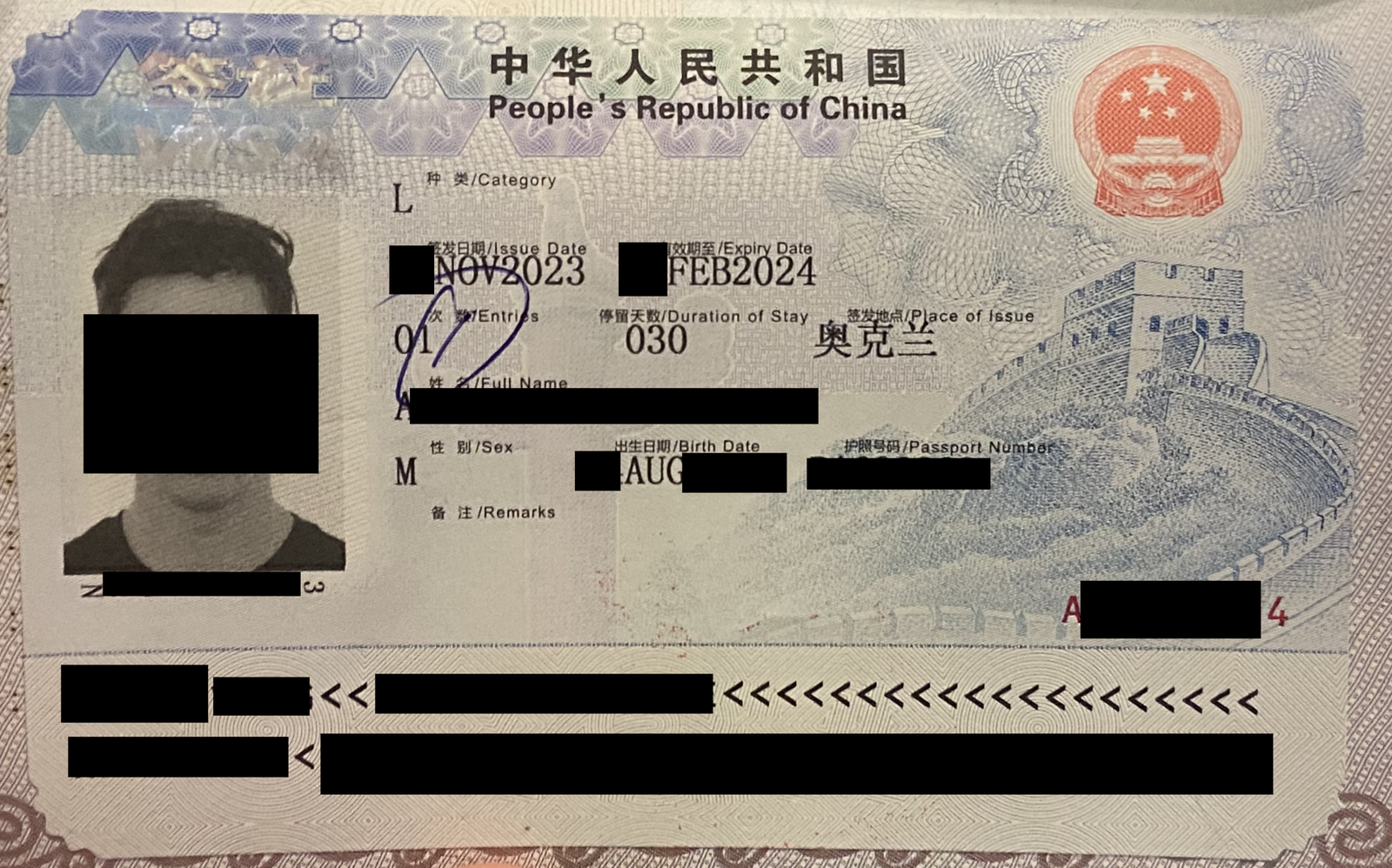
A standard L (tourism) visa covers a multi-city food trip, because it permits ordinary travel and sightseeing with no business justification required. I have used the same 30–90 day L visa for crawling night markets from Chengdu to Xi’an, and no official ever asked what I ate. The M business visa would only matter if a Chinese company invited you, and the Q2 family visa needs a relative resident in China. For a holiday built around eating, the L is the right and simplest choice; just list the cities in your itinerary on the form so the consulate sees a coherent plan. The X or Z visas are for study and work and irrelevant here.
The main visa types
China runs a letter-and-number system, and the letter tells you the purpose. The table below covers the ones a traveller is likely to meet. Durations and entry counts vary by nationality and by what the consulate grants, so treat the numbers as typical rather than guaranteed, and confirm on the official site before you apply.
| Type | Purpose | Typical stay | Notes |
|---|---|---|---|
| L | Tourism | 30–90 days | The standard visitor visa; single, double, or multiple entry |
| M | Business | 30–90 days | For trade and commercial visits; needs an invitation |
| Q2 | Visiting relatives | 30–180 days | For Chinese citizens’ family members abroad |
| X1 / X2 | Study | Long / short | X1 is for courses over 180 days and needs a residence permit |
| Z | Work | Tied to contract | Requires an employer-sponsored permit, not a tourist plan |
| F | Exchange or visit | Varies | Academic, cultural, or non-commercial visits |
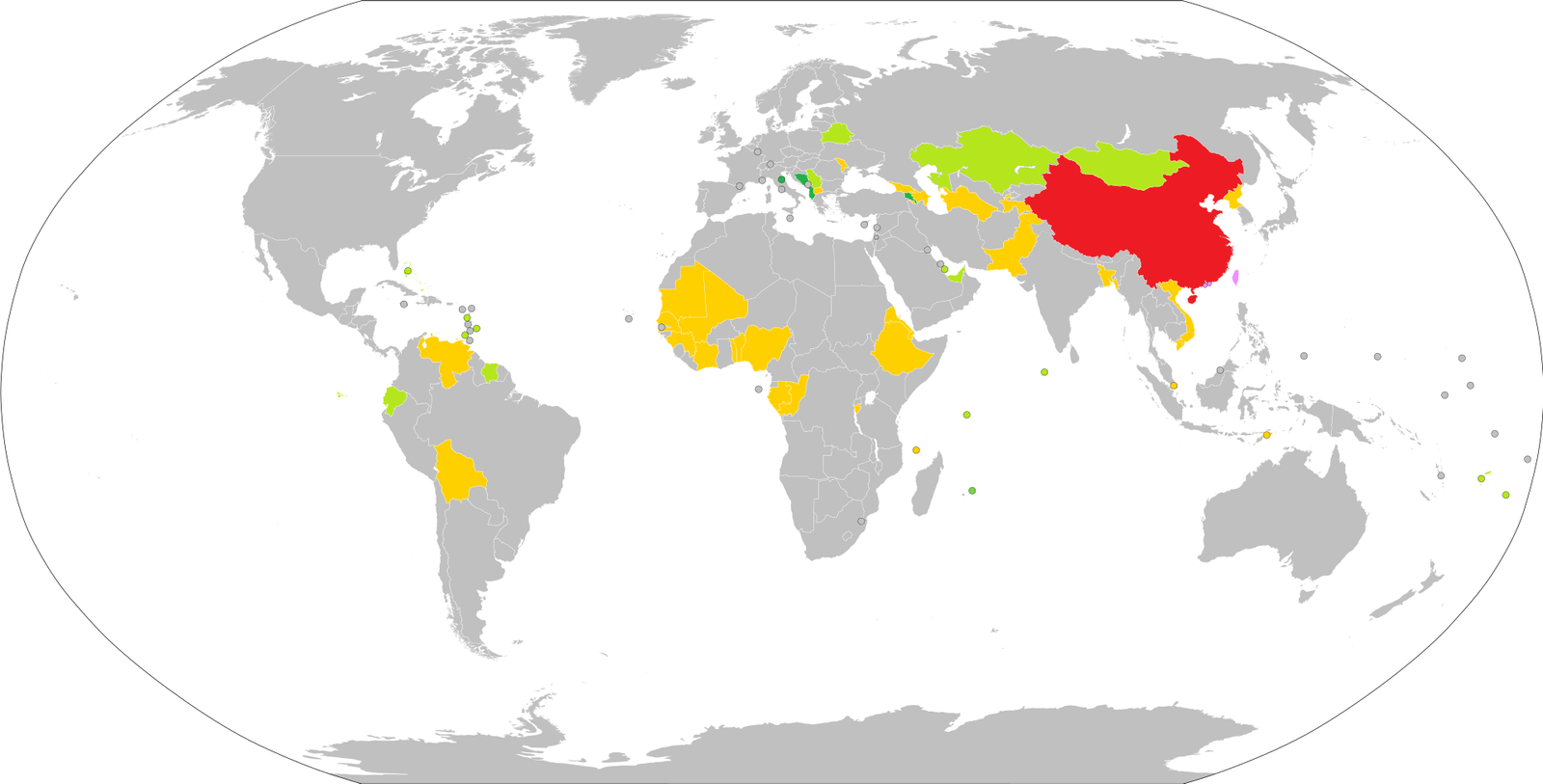
For a holiday, the L visa is the one you want. It’s the simplest to justify, because all you need is a rough itinerary and the bookings to back it. The Wikipedia page on Visa policy of China lays out the eligibility lists country by country, which is worth a read because the details shift.
Can I apply for a Chinese visa by post or must I visit in person?
Most applicants must now use a visa centre and usually attend in person or post documents through an authorised agent, as direct embassy lodgement has largely ended. I booked a slot at a city centre visa centre, handed over my passport, photo, and itinerary, and collected it four working days later for a standard fee of around £110–150 depending on the service. Some centres accept postal applications via a courier agent if you live far from a city, but they will not process a photo taken on your phone. The practical move is to check the centre covering your postcode first, because each one lists its own rules and refused walk-ins are common.
How to apply
In most countries you no longer apply at the embassy directly. You apply through a Chinese Visa Application Service Centre, a separate office that handles the paperwork and biometric data. The centre’s website lets you fill the form online, book a slot, and check the fee schedule. Fees vary sharply by nationality because they follow reciprocity, so a multi-entry visa for one passport can cost several times what it costs another; check your own centre’s table rather than trusting a friend’s figure.
The document list is mostly predictable. You need a passport with at least six months’ validity and a couple of blank pages, a completed form, a recent photo against a plain background, a flight booking, a hotel booking or an invitation letter, and often a bank statement or proof of employment. Processing runs about four working days for the standard service, with express and rush options if you pay more. The mistake is to cut the photo or the itinerary corners; a rejected form costs you a return visit and the better part of a day.
Photo specs are where applications stall. The requirement is usually a recent colour shot, head-and-shoulders, against a plain light background, roughly 33 by 48 millimetres, and printed on proper photo paper rather than a home printout. If your usual passport photo is the wrong size, the centre’s own booth is the easiest fix. For an L visa you don’t need an invitation letter from a Chinese contact; a believable flight booking and a hotel reservation are enough, and a short cover note saying you’re travelling for leisure smooths the desk. An M or Z visa is different and will expect a Chinese company or employer’s paperwork, so don’t assume one template fits all.
Which airports actually offer the 144-hour visa-free transit?
The 144-hour transit rule currently applies at major hubs including Beijing, Shanghai, Guangzhou, Chengdu, and Xi’an, but only when you arrive from one country and depart to a different one. I used it through Shanghai Pudong: flew in from Tokyo, flew out to London, and stayed three days on a stamped transit permit with no visa fee. The trap is the third-country rule — a round trip from the UK with China as the only stop does not qualify, and neither does leaving through the same city you entered if it breaks the onward-ticket logic. Confirm the list before booking, because eligible ports change and smaller airports are excluded.
The 144-hour transit rule
This is the rule that surprises people, and it is easy to misread. In short, nationals of a set of countries can enter China without a visa if they are in transit: they arrive on an international flight, hold a confirmed onward ticket to a third country or region within 144 hours, and enter and leave through designated ports. The catch that trips up the unwary is the “third country” part. Flying London to Beijing to Tokyo qualifies; flying London to Beijing and straight back to London does not, because you haven’t genuinely transited onwards.
The rule also ties you to a region. Enter through Beijing and you generally stay within Beijing, Tianjin, and Hebei; enter through Shanghai and the Yangtze delta area applies. You can’t wander the whole country on a transit waiver. Ports and eligible nationalities shift, so confirm the current list and the permitted area on the official immigration site before you book, and don’t treat a blog post from two years ago as gospel. For the transit angle, China Layover 144 Hour goes deeper into the practical routing.
What is the most common reason a Chinese visa application gets delayed?
The most common delay is a vague or contradictory itinerary, where the listed cities, hotels, and flight dates do not line up. I once wrote ‘Chengdu’ on the form but booked a hotel in Chongqing, and the centre sent it back for correction, costing me a week. The fix is to book at least the first two nights’ accommodation and match every city name to a real booking reference before you apply. A second frequent error is a passport with under six months’ validity or fewer than two blank pages, which consulates reject outright. Photocopy everything and double-check dates, because a single mismatch stalls the whole file.
Common mistakes
The first is assuming visa-free when you aren’t. China has rolled out short-stay exemptions for a few nationalities at a few ports, but they are easy to misread, and turning up without the right paperwork means a denied boarding at check-in, not a friendly chat on arrival. The second is the photo: specs are fussy about size and background, and a phone snapshot gets rejected. The third is timing, applying a week before departure and hoping for express when the centre is busy.
Another error is over-thinking the itinerary. You don’t need a day-by-day plan sealed in blood; you need plausible bookings that match your route. And finally, people forget that the visa is stuck in the passport you travel on. A renewed passport after applying means starting again. Once the paperwork is sorted, China Backpacking walks through the cheaper, slower way to travel the country, which is where a multi-entry visa starts to earn its keep.
What’s changed and what to check
China’s entry rules moved a great deal in recent years, and they will keep moving. Visa-free pilot schemes, the length of transit waivers, and the list of eligible ports have all shifted within the last couple of years. None of this is stable enough to memorise, which is exactly why every figure above is framed as “check before you go.” The safe habit is to confirm three things a month out: the visa type you need, the current fee for your nationality, and whether any transit waiver now covers your route. If any of those look different from what you expected, build in extra lead time.
After you land
Two things catch first-timers on arrival. One is accommodation registration: hotels do it for you as part of check-in, but if you stay with friends or in private lodgings, you’re expected to register at the local police station within twenty-four hours. The other is payments and maps. Set up Alipay’s tourist version before you fly so you can pay by QR code, and load an offline map, because the usual Western apps don’t work reliably on the ground.
A China Food Tour is the obvious reward once you’re through the formalities, and the food alone justifies the paperwork. Getting between cities is simpler than people fear: all about china high speed rail explains how to book the trains that link almost every destination worth visiting, and they are punctual in a way that spoils you for every other railway.
For the gaps the trains don’t fill, everything you need to know about china transportation covers the buses, metros, and domestic flights that round out a real itinerary. If you want to come home with more than photos, a proper take on china shopping points you at the markets and malls where the bargains actually are, and where a little preparation stops you overpaying.
Frequently Asked Questions
Do I need a visa if I’m only changing planes? If you stay airside and don’t pass immigration, no. If you want to leave the airport during a long layover, the 144-hour transit rule may let you, provided your route qualifies.
How far ahead should I apply? A month is comfortable. The standard service is about four working days, but centres get busy before holidays, so don’t cut it to the wire.
Can I extend a tourist visa once I’m in China? Sometimes, through the local entry-exit bureau, but it is not guaranteed and shouldn’t be your plan. Arrive with the stay you need.
Is the 144-hour rule the same as visa-free entry? Not quite. It’s a transit waiver with conditions, not open visa-free travel. The conditions, the ports, and the eligible nationalities all matter, so read the current list.
What if my application is refused? You’re told the reason and can reapply, but a refused application eats time. Get the documents right the first time rather than gambling on a quick turnaround.
Do I need a return ticket for a tourist visa? You need onward or return travel evidence as part of the application. A confirmed booking is normally enough; you don’t have to have flown it yet.