Maltose: The Sticky Chinese Sugar
The first time I tried to glaze char siu at home I did what seemed sensible: warmed a jar of honey, brushed it over the pork, and slid the tray under a hot grill. Ninety seconds later the kitchen smelled of burnt caramel and the strips came out speckled black, with a sweetness that clawed at the back of the throat. A Cantonese butcher in Manchester listened to this and said, in the flat tone of someone diagnosing a familiar fault, “You used honey. Use maltose.” Then he described the substance the way people describe a difficult relative: stiff, pale, impossible to spoon cold, and the only thing that gives you the shine you were after.
What Maltose Actually Is
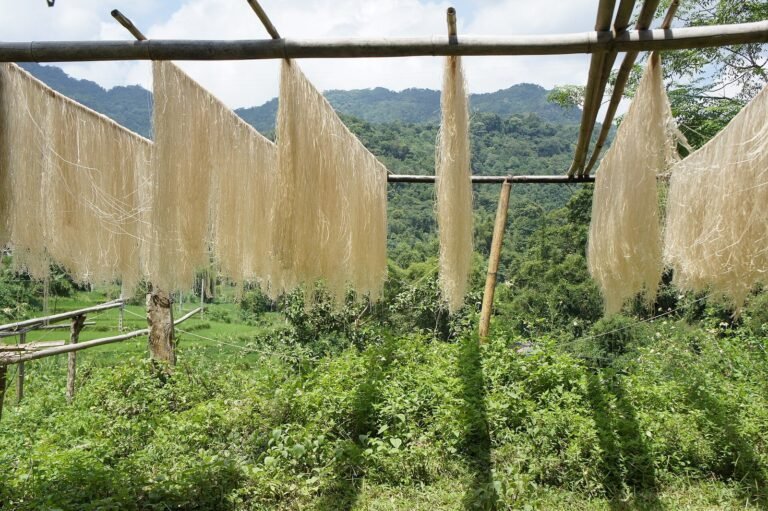
麦芽糖 (màiyá táng) is sugar made from starch rather than from cane. As Wikipedia’s page on maltose explains, maltose is a disaccharide built from two glucose units, and it appears wherever the enzyme amylase starts cutting starch apart — which is why chewed bread turns sweet. Chinese makers have run that reaction on purpose for a very long time: steamed glutinous rice is held with ground sprouted wheat (麦芽, “grain sprout” — usually wheat, sometimes barley, though most tub labels never say) at roughly 60°C for several hours, the amylase chews the starch into maltose, and the liquid is strained and boiled down into a thick amber paste. Cooled, that is the stuff that bends a spoon.
Two properties matter in a kitchen. The first is sweetness: maltose is generally reckoned to be somewhere between a third and a half as sweet as table sugar, so you can put plenty of sugar on meat for the sake of colour without the dish tasting like a dessert. The second is that it is hygroscopic and slow to crystallise, so it stays tacky and glossy rather than drying into a gritty bloom. It is a finishing sugar, not a baking sugar.
How It Compares to the Other Syrups
The names in this family get used interchangeably in English, which is how people buy the wrong jar.
| What it is | Relative sweetness | What it does under heat | |
|---|---|---|---|
| Maltose (麦芽糖) | Starch converted by malt enzymes | Low — roughly a third to a half of sugar | Browns steadily, stays glossy, resists crystallising |
| Barley malt syrup | Same idea, brewed from barley | Low, with a malty flavour | Browns well but tastes of malt and is thinner |
| Glucose syrup | Starch broken all the way to glucose | Low, rather flat | Browns, but sets tacky and adds no character |
| Honey | Nectar sugars, high in fructose | High | Browns fast and burns easily; adds floral flavour |
| Corn syrup | Corn starch, mostly glucose | Low to moderate | Mild browning, thin glaze, minimal flavour |
The practical upshot: maltose wins on colour-per-unit-of-sweetness. Everything else either tastes of something or browns before the meat is cooked through.
Why It Makes Roast Pork and Peking Duck Shine
Cantonese roasters do not brush maltose on neat. They dilute it into what is often called 皮水, “skin water”: a spoonful of syrup loosened with hot water, sometimes with a splash of rice vinegar or Shaoxing wine, painted over skin that has already been scalded and patted dry. The meat then air-dries — a fan in front of it, or a night on a rack in the fridge — before it meets serious heat. What happens in the oven is two separate things. The sugar browns, caramelising and joining the Maillard reactions at the surface for that mahogany-red colour. And the syrup film dries into a lacquer that blisters as the water under it turns to steam, which is where crackling comes from.
Because maltose is only half as sweet as honey, you can paint on enough of it to do both jobs without wrecking the seasoning. Honey, full of fructose, browns at a lower temperature and goes from amber to acrid in the time it takes to answer the door. I have repeated my original mistake twice since, both times with honey, and the verdict was the same.
For Peking duck the process is longer: air is pumped between skin and fat, the bird is scalded, washed, and hung to dry for a day or more. My home version used a fridge shelf and a desk fan for nine hours, and the result was honest but patchy: deep red on the breast, pale under the legs where the syrup had pooled. Drying time, not sugar, was the variable I had underdone. Pork is more forgiving — two hours on a rack gives you most of the crackle.
The Handling Problem, Because There Is One
Maltose at room temperature has the consistency of cold toffee, and pretending otherwise is how you end up with a spoon welded to a jar. What works:
- Stand the closed tub in hot (not boiling) water for five to ten minutes. It loosens without cooking.
- Wet or oil the spoon before you dip it. Maltose slides off a damp spoon and clings stubbornly to a dry one.
- Never add cold water to hot syrup — it seizes into pale lumps. Hot water only.
- Clean up with hot water immediately. Dried maltose needs chiselling.
- Leftover diluted wash keeps a week in the fridge; the undiluted jar needs no refrigeration and keeps for years.
A small trick I picked up from that butcher: a splash of my notes on chinese black vinegar in the wash. The acid helps the skin dry and blister, and at that dilution you cannot taste it.
Substitutes, Ranked Honestly
Sometimes there is no Chinese grocer within reach. Barley malt syrup from a homebrew shop is the closest relative — same enzyme chemistry, browns well, but thinner and distinctly malty, so use it where that flavour will not fight the dish. Golden syrup is a decent second: an invert syrup, sweeter than maltose but stable and glossy, which I have used on pork belly with a lower oven and a longer bake. Honey works if you accept the trade — drop the oven or the grill distance by a notch and cut any other sugar in the marinade, since it will brown a minute faster than you expect. Corn syrup and glucose syrup give colour of a sort and a glaze that stays sticky rather than crisp.
Where maltose is the wrong choice is just as useful to know. In a long braise the sweetener is nearly always all about rock sugar, not maltose, because the syrup would make the sauce gluey. In a stir-fry with a sweet-sour 荔枝口 balance — Kung Pao Chicken being the classic case — plain white sugar does the job in seconds. And nothing savoury wants a spoonful of it: the depth in how chinese black bean sauce is really done comes from fermentation, and the crunch in everything you need to know about chili crisp comes from frying. Maltose has none of the mineral complexity of a preserved egg either — see Century Egg explained. Even in banquet braises built around Bamboo Shoots Guide, cooks reach for crystals rather than syrup.
The Street Sweets Built On It
Maltose’s other life is as candy, and this is where its refusal to crystallise really pays. 叮叮糖, the hard white maltose slab of Chengdu, is chipped off with a small chisel and hammer by street sellers — the pair of them clacking is the “ding ding” — and it shatters cleanly instead of going soft. 糖葱薄饼 from the Chaozhou end of Guangdong is maltose pulled and folded into a porous white tube that looks like a spring onion, then rolled in a thin pancake with crushed sesame and coriander. 龙须糖, dragon’s beard candy, is the showpiece: a ball of maltose worked on a board of toasted flour until it becomes thousands of threads wrapped around a peanut and sesame filling. Sucrose would set long before you finished pulling.
The best-known appearance of all is ritual rather than snack. 糖瓜 or 关东糖, sticky maltose candy, is set out for the Kitchen God on the twenty-third or twenty-fourth of the twelfth lunar month, on the theory that a mouth glued shut — or sweetened — produces a more flattering report to heaven. I have bought these in a Beijing hutong before New Year, fifteen or twenty yuan a bag, and they taste of toasted grain and jaw exercise. The sweet bowls that belong to Nanjing Food — taro in osmanthus syrup, glutinous rice lotus root — are rock sugar territory, and the difference is obvious once you look for it.
Buying and Storing It
In a Chinese supermarket, look for 麦芽糖 on a plastic tub or a squat tin, near the sweet bean pastes and the sesame oil; five hundred grams runs to roughly £3.50 to £5 in Britain, ¥20 to ¥30 in China. Japanese mizuame and Korean mullyeot are related starch syrups but thinner and sweeter, usually potato-based — treat them as substitutes. Storage is almost a non-subject: lid on, cupboard, and it outlasts several governments. Do not refrigerate the jar, which only makes it harder; do refrigerate anything you have diluted with water.
Frequently Asked Questions
Is maltose the same as malt syrup? Not quite. Chinese maltose is usually made from glutinous rice and wheat malt, boiled down to a very stiff, pale, low-sweetness paste; Western barley malt syrup is made from barley, is thinner and darker and tastes of malt. They behave similarly under heat, so it is the best substitute, though not an identical swap.
Can I use honey instead of maltose for char siu? Yes, with adjustments. Honey is far sweeter and browns at a lower temperature, so use about two-thirds of the amount, cut any other sugar in the marinade, and give the meat more distance from the heat. You will get a darker glaze that tastes faintly of honey.
Why is my maltose glaze sticky instead of crisp? Usually a drying problem, not a sugar problem. The skin has to be dry before it roasts — pat it, air-dry it on a rack in the fridge for hours, or put a fan in front of it. Wet skin steams under the sugar and sets tacky.
Is maltose vegan and gluten-free? It is vegan: no animal products are involved. Gluten is the awkward one — if the malt was sprouted barley, trace gluten is possible. Wheat malt is the more common source in Chinese brands, though labels rarely say which, so cooking for someone with coeliac disease, use a substitute you can verify.
How do I measure maltose without making a mess? Warm the jar in hot water, then dip a spoon you have just run under the tap or wiped with oil. The syrup releases cleanly from a wet or oiled spoon, so you can level it off roughly.
Does it need to be used up quickly once opened? No. It is a very concentrated sugar solution, hostile to bacteria; an opened tub keeps for years in a cupboard. The thing to watch is a diluted wash — once water is added, refrigerate it and use it within a week, since it can ferment.