

Bamboo Fungus: The Lacy Mushroom for Soup
I very nearly threw away my first packet of bamboo fungus. I had bought it from a Chinese supermarket on a whim — a small vacuum pack of pale, ghostly tubes with netted skirts — and when I tore it open in my kitchen, the smell hit me straight away: damp forest floor, old mushrooms, the back of a fridge that has been ignored for a month. My flatmate walked past and said, “something’s gone off.” I stood there holding a packet of perfectly good fungus, genuinely wondering if the shop had sold me rubbish.
It had not. The smell is the ingredient. And twenty minutes later, after a rinse and a soak in cold water, it had all but vanished, leaving soft, squeaky, faintly sweet tubes that turned one of the best clear soups I have ever made. That first-packet panic is so common among people trying zhu sun for the first time that I want to deal with it head-on before anything else in this guide.
First, what it is not
The name trips everyone. Bamboo fungus — zhu sun, written 竹荪 — is not a bamboo shoot and it is not snow fungus. It is not related to bamboo at all; it is a mushroom, the fruiting body of a fungus in the stinkhorn family, and the “bamboo” comes from where it traditionally grows and was cultivated, in the leaf litter of bamboo groves in the south and south-west of China. Botanically it is Phallus indusiatus, as Wikipedia’s entry on the species explains, famous for the delicate lace skirt — the indusium — that hangs from its cap.
Snow fungus is a white jelly mushroom used mostly in sweet desserts; bamboo shoots are the young stems of an actual bamboo plant, a crunchy vegetable. Neither of them behaves like this. If you want the vegetable, I have written all about bamboo shoots in a separate guide; this article is only about the fungus. The three get confused constantly, so here is the comparison I wish I had had on day one:
| Bamboo fungus (zhu sun) | Snow fungus (yin er) | Bamboo shoot (sun) | |
|---|---|---|---|
| What it is | A gilled fungus with a lacy veil | A white jelly fungus | The young stem of bamboo, a vegetable |
| Dried form | Hollow pale tubes with net skirts | Flat, pale-yellow, coral-like masses | Sliced or whole, hard and straw-coloured |
| Soaking | 20–30 minutes, cold water | 1–2 hours | Several hours, or sold fresh |
| Typical role | Clear savoury soups, banquets | Sweet soups, desserts | Stir-fries, braises, soups |
| Texture | Squeaky, slippery, faint crunch | Gelatinous, soft | Firm, crisp |
What the dried product actually looks like
You will almost always meet bamboo fungus dried, sold in sealed packets of thirty to fifty grams in Chinese supermarkets and online. Each piece is a hollow, pale tube three to ten centimetres long, with the netted skirt gathered around one end. Quality varies more with handling than with price: look for whole tubes with intact skirts rather than a bag of torn fragments. That said, broken pieces cook identically and cost half as much — I use them for weekday soups and keep the whole ones for when presentation matters.
Colour is worth a word. Some packets are dazzlingly white because they have been treated; a natural cream or light biscuit colour is completely normal and, in my experience, usually means less processing. A strong chemical or sulphur smell, as opposed to the mushroomy smell described above, is the thing to avoid.
About that smell — honestly
Let me go back to the smell, because it is the reason most first-time buyers give up. Dried bamboo fungus smells mushroomy, earthy and slightly sour before it is soaked — a fair number of people find it genuinely off-putting, and my flatmate was not being dramatic. Cooks in China know this; it is simply treated as part of the dried-mushroom family, alongside the far friendlier shiitake. If you have ever rehydrated dried shiitake, the process feels familiar, and my notes on Dried Shiitake Mushrooms explained cover that soaking logic in more depth.
Soaking removes nearly all of it. Rinse, soak in cold water, and the kitchen stops smelling like a forest. If the water still smells after the first soak, change it and soak a little longer. In years of cooking this ingredient I have never had the smell survive into the finished soup.
Trimming and soaking, step by step
The prep is short but there are two cuts people miss.
First, the base: each tube has a closed, slightly darker root end. Cut off the last centimetre. Second, the top: some pieces have a closed, greenish cap where the veil attaches — trim that too if it is sealed or discoloured. Both ends are the source of most of the stubborn smell.
Then soak. Cold water, twenty to thirty minutes, until the tube is supple and the skirt has opened. A teaspoon of salt per litre of water is a common trick and does seem to help draw out the smell faster; I use it in winter when the tubes are extra dry. Change the water once if you can still detect any odour.
One genuine mistake to pass on: do not soak overnight. I did this once, absent-mindedly, and the veils shredded into sad threads by morning. Twenty to thirty minutes is not a minimum, it is the entire requirement.
The classic: bamboo fungus and chicken soup
Now the dish itself. Across China, bamboo fungus lives in clear soups, and the benchmark version is bamboo fungus and chicken soup — the kind of thing a Cantonese family simmering soup for the weekend and a Fujian banquet kitchen plating a formal dinner both produce. The Fujian version tends towards pale, almost water-clear broths with precise, clean flavour; if that approach interests you, I go further into it in my piece on Fujian Cuisine. In Guangzhou, the fungus shows up in the slow-simmered soups the city is famous for; my Guangzhou Food guide has more on that soup culture.
At home, here is what works for me. Put half a chicken, chopped, into a pot with 1.2 litres of cold water. Bring it just to a boil, skim, then drop the heat so the surface barely trembles — around a gentle simmer, never a roll — and cook for an hour and a half. Skim again. Salt only, no soy sauce; this is a clear soup and anything cloudy or dark ruins the point. In the last ten minutes, add the trimmed, soaked bamboo fungus, a small handful of goji berries, and nothing else.
The timing matters more than the recipe. Bamboo fungus is a delicate thing and long boiling turns the skirt into mush; ten to fifteen minutes in the broth is the whole window. It goes in last, always.
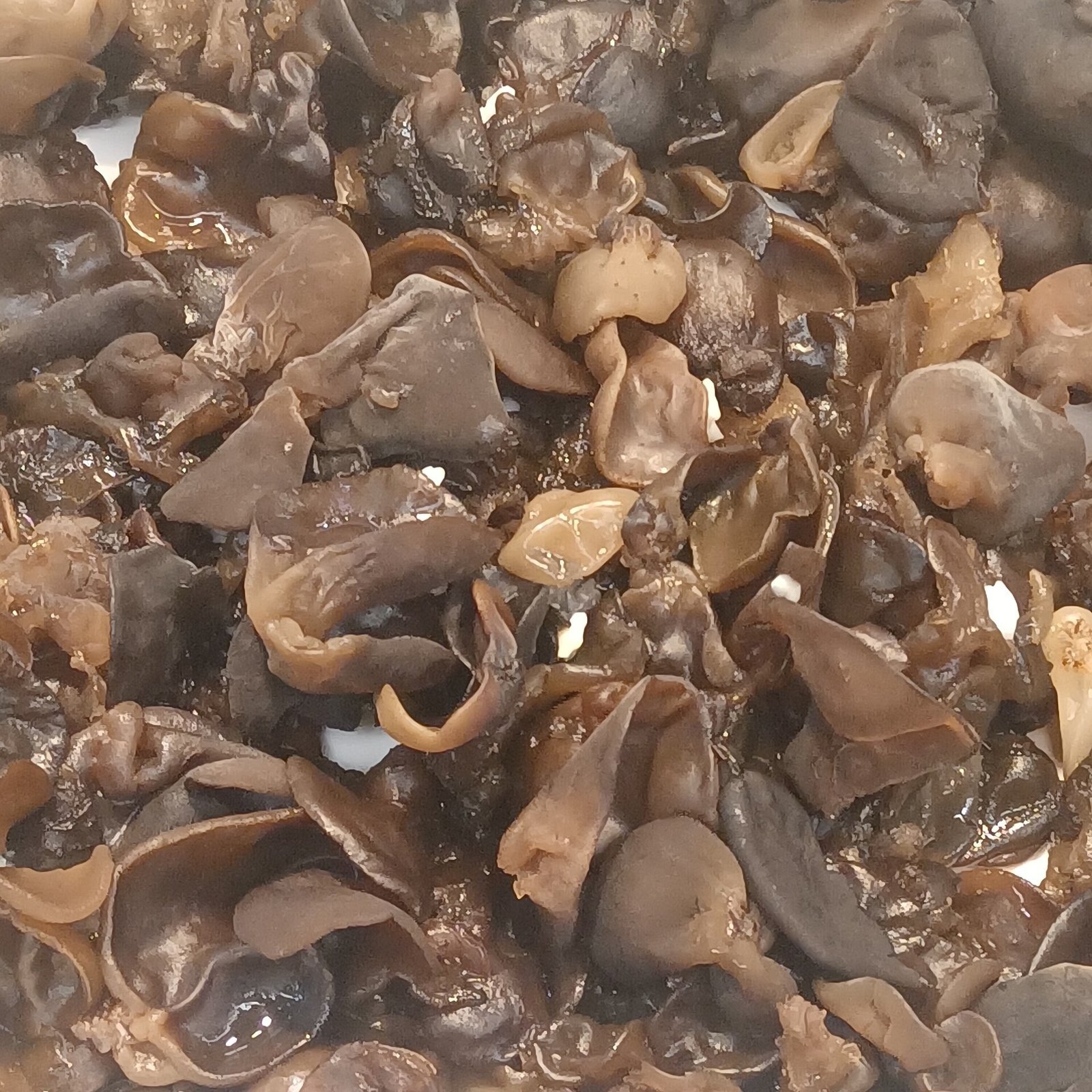
Texture, not flavour
Here is the thing that surprises people most: bamboo fungus barely tastes of anything. There is a faint, pleasant woody note, and otherwise the flavour is neutral — which sounds like a criticism until you understand its actual job. This is a textural ingredient, and at banquets it is deployed exactly for that reason: the tube is squeaky and slightly crunchy at the bite, the skirt is slippery and translucent, and between them they give a clear soup a point of interest that nothing else provides.
It is also a sponge. The hollow tube and the open net both drink the broth around them, so whatever the soup tastes like, the fungus tastes like that, with texture attached. This is why it belongs with rich, carefully built stocks rather than thin water: a broth deepened with dried shrimp and scallops — the whole craft of which I cover in everything you need to know about dried shrimp scallops — rewards the fungus enormously, because every bite arrives pre-loaded with that depth.
The flip side is pairing. Loud, aggressive flavours fight it. Dried chillies and the whole art behind the Dried Chili Guide are the opposite end of the Chinese pantry — heat that announces itself — and I would never put the two together. The same goes for pungent condiments at the table; even my notes on chili crisp, which I adore on noodles, have no business anywhere near this soup. If you want a flavour contrast for a banquet menu, the texture-first logic here rhymes more with ingredients like century egg, which I unpack in how century egg is really done — another ingredient where the point is what it feels like, not what it shouts.

Buying and storing
Buy from Chinese grocers, Chinese online grocers, or larger supermarkets with a serious dried-goods aisle. Prices range from cheap broken fragments to expensive whole-skill grades; for learning, buy the cheap bag first and see if you like the ingredient at all. Check the pack date if there is one, avoid any packet with visible dampness, and give the ingredient list a glance — plain dried fungus is what you want.
Stored sealed in a cool, dry cupboard, dried bamboo fungus keeps for a year or more without complaint. Once soaked, it keeps two days in the fridge in fresh water, changed daily, but the texture is noticeably better on day one, so I soak only what the soup needs and keep the dry packet sealed for next time.
Frequently Asked Questions
Is bamboo fungus actually a mushroom? Yes. It is the fruiting body of Phallus indusiatus, a fungus in the stinkhorn family, prized for the lacy veil rather than any bamboo connection. The “bamboo” in the name refers to the groves where it traditionally grows.
Why does my bamboo fungus smell bad before soaking? That earthy, sour, mushroomy smell is normal for the dried product and almost entirely disappears after rinsing and a 20–30 minute soak. If it still smells after soaking, change the water and soak again — and trim the root end and any closed cap, which hold most of the odour.
Can I put bamboo fungus straight into the soup without soaking? No. Dried, it is tough and strongly flavoured, and it will not rehydrate properly in the short time it should spend in broth. Always trim and soak first, then add it for the final ten to fifteen minutes of cooking.
Can I use bamboo fungus in a vegetarian soup? Absolutely. It is a classic addition to Buddhist vegetarian banquet cooking. Build a deep stock from dried shiitake and soybeans, and treat the fungus exactly as you would in chicken soup — it will drink whatever broth you give it.
How long should bamboo fungus be boiled? Ten to fifteen minutes, added near the end. Long simmering destroys the skirt’s delicate structure, and the texture is the entire reason the ingredient exists.


