Sweet Bean Sauce (Tian Mian Jiang): Beijing’s Quiet Base Note
“Thick, sweet, a bit of fermented bite. Not that plum stuff.” That was the whole answer I got in a small noodle shop off Gulou Dajie in Beijing when I asked what made his zhajiang taste different from the jar I’d bought at the supermarket. He tapped the pot with his ladle and gave me a spoonful straight. Dark, mellow, almost malty, with a savoury hum underneath. Sweet bean sauce, tian mian jiang — and it tasted nothing like the thin, sugary substitute I had at home.
It isn’t made from beans at all
The name misleads everyone. Sweet bean sauce sounds like it should be cousin to black bean sauce or yellow soybean paste, but tian mian jiang (甜面酱, literally “sweet flour sauce”) is a fermented paste of wheat flour and water. As Wikipedia’s entry on Tianmianjiang describes, the traditional process steams or boils the flour into a dough, then ferments it with the mould Aspergillus oryzae and salt, producing a dark brown paste that is far sweeter than any soybean paste because the starches break down into simple sugars.
That’s the whole trick. Fermentation eats the starch and hands back sugar, plus a scatter of amino acids that give the savoury depth. Flour, water, salt, time. Four ingredients, and one of them is patience.
The confusion is understandable. In English, everything dark and spoonable from a Chinese pantry gets filed under “bean sauce” or worse, “hoisin”. But this paste belongs to the same family as northern China’s flour-based pastes — huang jiang, the yellow soybean paste of Shandong and Hebei, shares the same mould and much of the same technique. Sweet bean sauce is essentially the wheat-flour sibling: same process, sweeter result, and in Beijing it’s the one that made it onto the national menu.
How it differs from the pastes you already own
If you cook Chinese food with any regularity, you probably have hoisin in the fridge door. Keep it — but don’t use it here. Hoisin is a blended, seasoned sauce built on fermented soybean paste plus sugar, garlic, five spice and starch thickeners. Sweet bean sauce is a single fermented product, closer to a miso than a BBQ sauce, and its sweetness comes from fermentation rather than from added sugar.
The same goes for fermented black beans, which are a different creature entirely — whole black soybeans salted and aged, punchy and salty, the backbone of sauces like the one in my notes on all about chinese black bean sauce. Fermented bean curd is another neighbour again, softer and funkier; I covered it separately in my notes on fermented bean curd.
| Tian mian jiang | Hoisin sauce | Fermented black bean sauce | |
|---|---|---|---|
| Base ingredient | Fermented wheat flour | Fermented soybeans + seasonings | Salted fermented black soybeans |
| Sweetness | Mellow, from fermentation | High, from added sugar | Low |
| Salt level | Moderate | Moderate to high | High |
| Texture | Thick paste, grainy edge | Smooth, pourable | Rough, loose sauce |
| Typical use | Zhajiangmian, duck pancakes | Glazes, dipping, stir-fry finishes | Steamed ribs, clams, mapo-style dishes |
One warning from experience: jarred sweet bean sauces vary wildly between brands. Some are nearly authentic, some are basically hoisin wearing a different label. Check the ingredient list — genuine ones lead with wheat flour and list fermentation, not a syrup.
The sweet-savoury balance, and why it matters
Taste it raw and it’s confusing: sweet first, then a slow saltiness, then something almost like dried mushroom. In cooking, that order flips. Fried in hot oil, the sugars caramelise slightly and the fermented notes toast, which is why the paste is almost never added raw in northern cooking — it gets a minute in the wok with scallion first.
This balance is why Beijing cooks treat it as a base note rather than a condiment. It doesn’t shout. It rounds out a braise, deepens a sauce, and gives dishes that settled, brown-savoury backbone you taste in good northern food without being able to name it. Where Sichuan builds tension — the numbing-and-hot logic of dishes like Kung Pao Chicken — Beijing cooking builds width and warmth. Tian mian jiang is a big part of that width.
It’s also gentler than it looks. A spoonful folded into a stir-fry sauce gives sweetness and body without the jagged edge of sugar added straight, because the salt in the paste keeps the sweetness in check. If a sauce of yours tastes flat and sugar won’t fix it, sweet bean sauce often will.
Zhajiangmian: the paste’s home ground
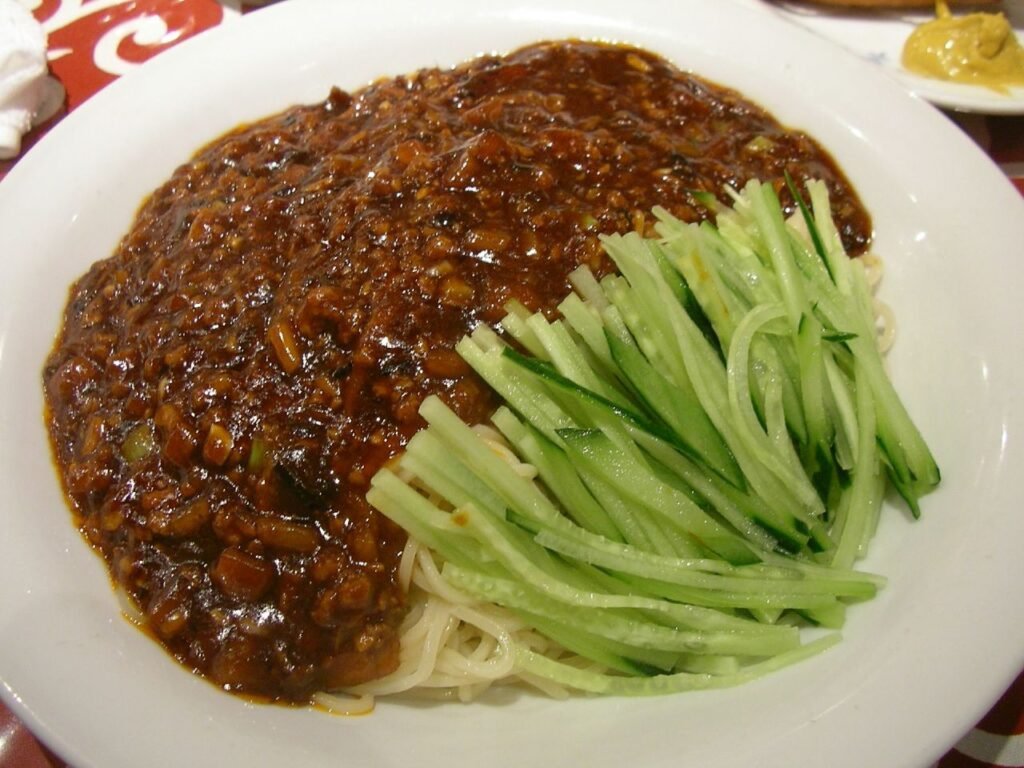
The signature dish is zhajiangmian, noodles with fried sauce, and Beijing’s version is the one to know. The cook fries ground pork slowly in oil with scallion and ginger until the fat renders clear, adds a generous amount of sweet bean sauce (often mixed with a little yellow soybean paste for extra salt), and lets the whole thing burble for twenty minutes or more until the oil separates and floats on top. That floating red oil layer is the sign it’s done.
You spoon it over fresh noodles and top with slaw-style shreds: cucumber, radish, bean sprouts, celery. The cold crisp vegetables against the warm dense sauce is the point. Order it in Beijing and the sauce sits in the middle with the vegetables arranged around it like spokes — you do the mixing.
My first attempt at home failed for a boring reason: I rushed it. Five minutes of frying gives you pork in paste; forty minutes of patient simmering gives you zhajiang. The paste needs time to fry through and let the oil come out the other side. There’s no shortcut, just a lower heat and a podcast.
Outside Beijing, the same dish changes personality — every province guards its own zhajiang, and travelling south you’ll meet entirely different noodle cultures, as I found wandering through Nanjing Food on a damp April week. But the Beijing one is the version that owns the paste.
The sauce pot beside the duck
Peking duck is the other famous carrier. The traditional service brings thin pancakes, scallion brushes, cucumber sticks, and a small dish of sweet bean sauce — not hoisin, though overseas restaurants substitute hoisin so often that many people now believe hoisin is authentic. The sauce goes on the pancake first, a thin swipe, then duck skin, then duck meat, then vegetables, then you roll and eat.
The same pancake logic works at home with leftover roast chicken or even crisp pork belly. Brush thin, layer thin. The sauce should be a whisper, not a filling.
Jajang: the same paste, a different life
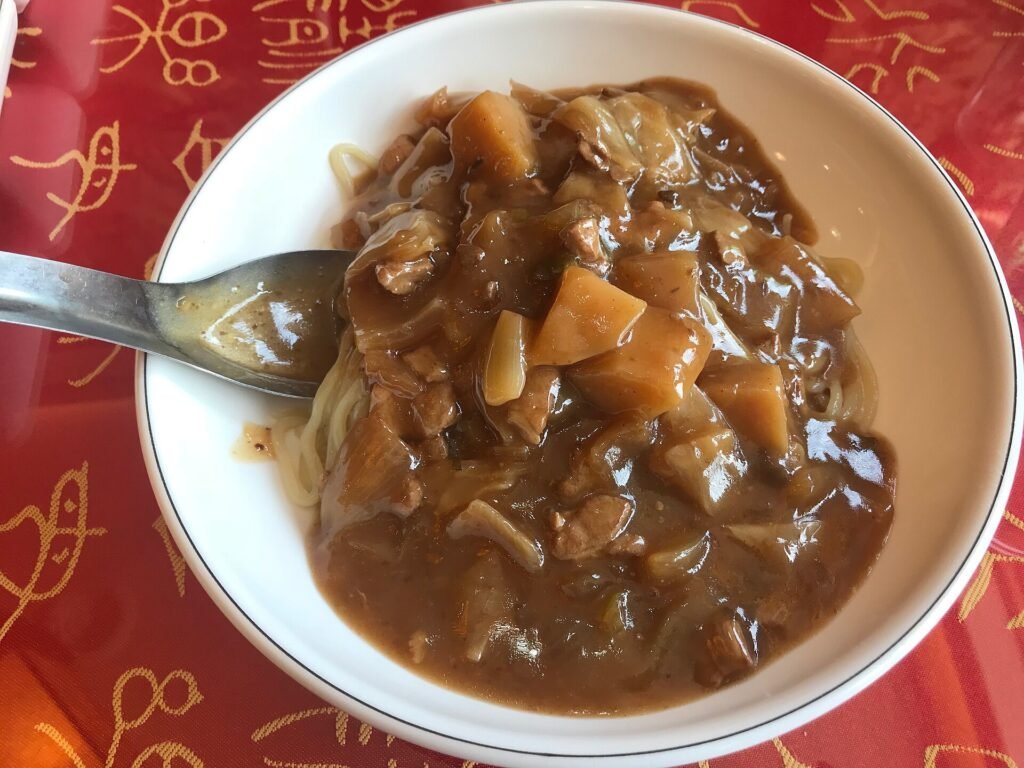
Here’s the odd historical footnote: Korea’s beloved jajangmyeon descends from this paste. Chinese migrant workers in Incheon’s ports in the late nineteenth century brought zhajiangmian with them; over the decades, Korean versions swapped in a darker, roasted paste (chunjang, fried in more oil until almost black), added caramel and onion, and the dish drifted into something locals now treat as Korean comfort food. So glossy black jajangmyeon and Beijing zhajiangmian are cousins, not twins — same ancestor, divergent evolution.
If you can’t find tian mian jiang but your shop stocks chunjang, it will work for zhajiangmian in a pinch, though you should fry it longer and expect a darker, bolder result. The reverse isn’t true: sweet bean sauce makes a pale, mild jajang that will disappoint anyone expecting the Korean version.
Buying, storing, substituting — and three ways I actually use it
Where to find it: any Chinese supermarket with a northern Chinese clientele will stock it; look for labels reading tian mian jiang, sweet flour sauce, or sweet bean sauce. Better brands come in ceramic jars. Korean shops sell chunjang, the fried-cousin option.
Storage is unglamorous: refrigerate after opening, keep the surface clean, and it lasts months. Like all fermented pastes it actually improves slightly in the first weeks after opening, the flavours knitting together. A film of dark oil on top is normal; stir it back in.
Substitutes, honestly ranked:
- Hoisin thinned with a little water and a pinch of salt — closest easy swap, though sweeter and spicier.
- A mix of miso (white or yellow) with a teaspoon of sugar — right fermentation family, wrong grain, decent result in cooked dishes.
- Chunjang, fried in oil for several minutes first — best for zhajiangmian specifically.
What doesn’t work: black bean sauce (too salty), or fruit-based sauces (no fermentation, no depth — everything you need to know about chinese plum sauce covers that brighter family, and Chinese Sweet Chilli Sauce Guide its fresher cousin), or plain sugar plus soy. The fermented mellowness is the whole character, and none of those fake it.
As for cooking with it, three habits cover most of my usage.
Noodle sauce, obviously — the zhajiang method above, roughly two parts paste to one part ground pork by volume, fried low and slow.
Beijing-style stir-fry base: for pork slices with scallion (jing jiang rou si), fry the paste briefly with ginger, add the pork, and finish with a mountain of raw shredded scallion on top. The paste is the entire sauce; no soy needed.
Duck-pancake standby: thin it with a teaspoon of hot water and a drop of sesame oil for spreading. Related pantry logic applies — thick nutty pastes have their own handling rules, which I went into in how chinese sesame paste is really done, and the same “loosen slightly, never drown it” instinct holds here. And if you bake or thicken with Chinese pantry staples elsewhere, Chinese Glutinous Rice Flour explained is the reference for its particular, sticky cousin on the flour shelf.
Frequently Asked Questions
Is sweet bean sauce the same as hoisin? No. Hoisin is a seasoned blended sauce based on fermented soybean paste with added sugar, garlic and spices. Tian mian jiang is a single fermented wheat flour product, milder and with sweetness that comes from fermentation rather than added sugar. Overseas restaurants often substitute hoisin for it on duck pancakes, which is where the confusion started.
Does it contain gluten? Yes. The base ingredient is wheat flour, so it is not suitable for coeliacs, and even brands that label themselves gluten-free soy sauce alternatives won’t help here.
Is sweet bean sauce spicy? Not at all. It contains no chilli. It’s sweet and savoury with a gentle fermented tang — if you want heat on your duck pancakes, you add it separately.
Can I make it at home? A true version needs an Aspergillus fermentation over weeks, which most home kitchens can’t manage safely. A workable shortcut: fry white miso with a little sugar and a splash of Shaoxing wine until dark and thick. It won’t be authentic, but it holds up in cooked dishes.
Why is my zhajiang sauce bitter or flat? Bitterness usually means the paste scorched — fry it in oil over low heat, never dry in a hot wok. Flatness usually means undercooking: the paste needs its twenty-plus minutes of simmering with the pork for the flavours to round out.
What’s the difference between tian mian jiang and huang jiang? Huang jiang is the yellow soybean paste of Shandong — similar fermentation technique but made from soybeans, so it’s saltier and far less sweet. Beijing cooks often use the two together in zhajiang, splitting the difference.