Oyster Mushrooms: The Weeknight Mushroom of Chinese Home Cooking
Let me make an unfashionable claim: the best mushroom in a Chinese kitchen costs about six yuan for half a kilo, and it isn’t the shiitake, the matsutake, or anything else with a fan club. It is the oyster mushroom — 平菇 (píng gū), the flat mushroom — the grey, fan-shaped fungus piled high at every greengrocer in China. First, a clarification that matters more than you’d think: I am talking about the fungus, not the shellfish, and not the dark sauce named after it. Different things entirely; if you came here for the condiment, my notes on all about oyster sauce are elsewhere, and the mushroom will still be here when you get back.
Why do I rate it above its pricier cousins? Because everything expensive about mushrooms is mostly aroma, and aroma is fragile. What the oyster mushroom offers instead is texture, water-handling and an umami depth that survives high heat in a wok — which is exactly what home cooking needs on a Tuesday night. As Wikipedia’s entry on Pleurotus ostreatus notes, it is one of the most widely cultivated mushrooms in the world, and in China it is grown in staggering quantities on straw and sawdust, which is why it is always cheap and always fresh. Cheap and fresh is a rare combination. Respect it.
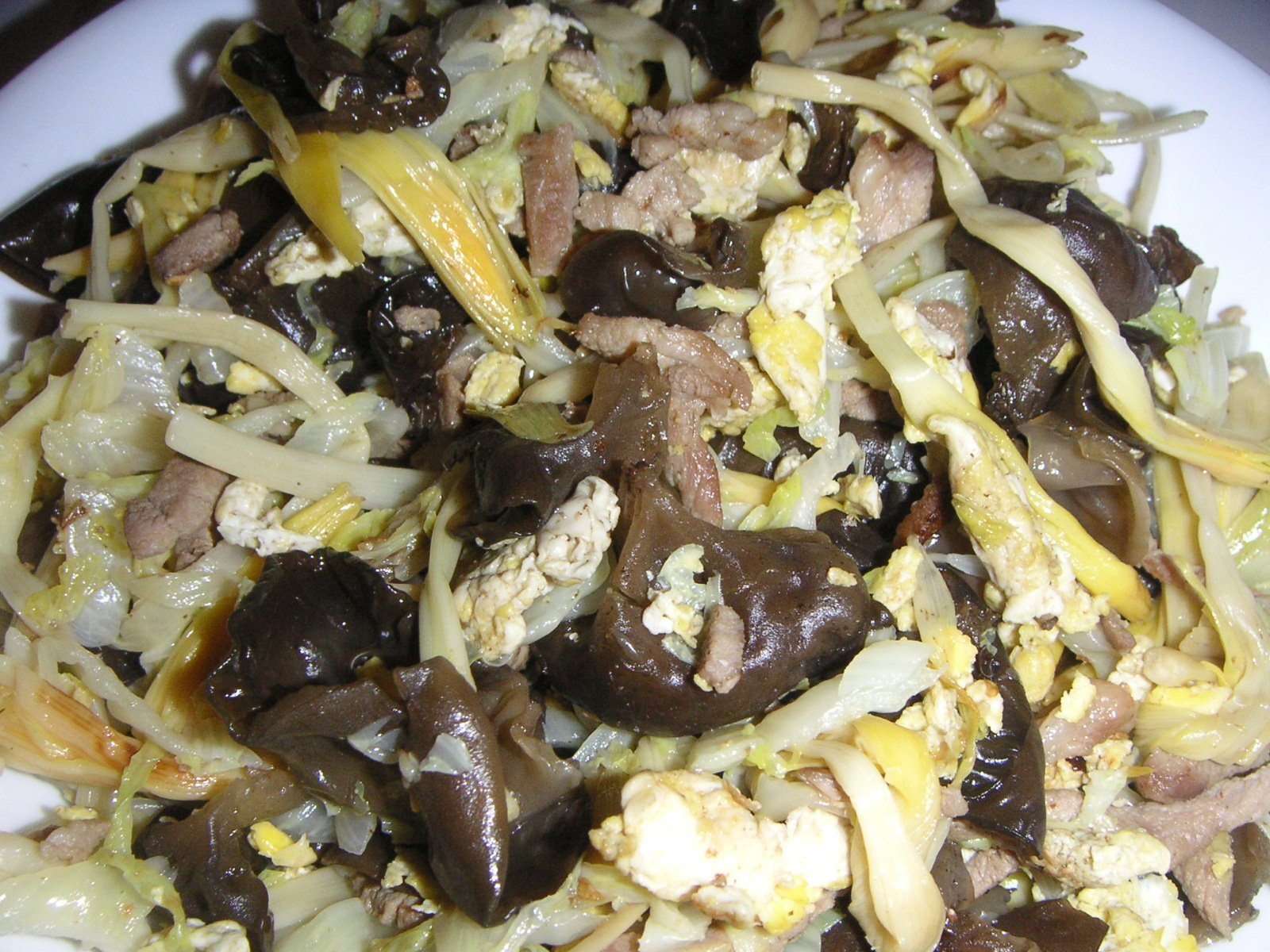
How Chinese Cooks Actually Buy Them
At the stall, you don’t pick individual mushrooms. You buy a whole cluster — the bricks of overlapping grey fans, sometimes the size of two fists — and you look for three things. Dry caps, not slimy ones. Firm, unbroken edges with no brown bruising. And a smell that is clean and faintly sweet, like cucumber or anise, never sour. Sliminess means the cluster has been sitting around misting itself for days, and no amount of cooking fixes that.
At home, do not wash them under the tap. They are sponges with gills, and waterlogged mushrooms are the single most common reason home versions turn out limp. If there is visible debris, wipe it off with a damp cloth. Otherwise, cook them as they are. Stored in a paper bag in the fridge, a good cluster keeps four or five days; in plastic it sweats and slimes in two.
Tear, Never Slice
Here is the rule that surprises people: nobody slices oyster mushrooms in a Chinese home kitchen. You tear them along their natural growth lines into strips about a centimetre wide, following the cap’s fan shape down and discarding the tough, woody base of the stem. My mother-in-law, who has cooked this mushroom perhaps ten thousand times, does it with one hand while talking on the phone.
The tearing matters for a physical reason. A knife gives you a clean, sealed edge; tearing gives you a ragged, fibrous one, and a ragged edge has more surface area for the Maillard reaction to work on, and more cracks for sauce to cling to. Sliced oyster mushrooms slide around the pan looking pale and apologetic. Torn ones brown, crisp and grab flavour.
The Dry-Pan Trick: Fixing the Water Problem
Oyster mushrooms are roughly 90% water, and that water is the enemy of a good sear. The fix takes four minutes and no oil: put a dry, preferably cast-iron pan over a medium-high flame — around 200°C if you have an infrared thermometer, though eyeballing it is fine — drop in the torn mushrooms, and press them with a spatula. Within a minute they will start squeaking and releasing visible water. Keep going. The water steams off, the pan dries again, and somewhere around minute three or four the mushrooms collapse, darken at the edges, and begin to smell nutty and almost meaty.
Only now do you add oil — a tablespoon of neutral oil, a pinch of salt — and give them one more minute to crisp. I learned this the hard way: oiling the pan first just poaches the mushrooms in their own juice, leaving grey, rubbery strips. The dry-pan version transforms them. The technique is identical to the one I use for the mushrooms that go alongside my Kung Pao Chicken, and once you’ve done it a few times you’ll never go back to the wet method.
Stir-Fried with Garlic Greens: The Everyday Version
The default weeknight treatment is a two-minute affair. To your dry-seared mushrooms add a spoonful of minced garlic and the white parts of spring onions, tossed in hot oil for twenty seconds, then the green parts, a splash of light soy, a pinch of sugar, and done. Total time from tearing to plate: about eleven minutes, most of it the searing.
Two upgrades are worth knowing. First, a version with fermented black beans and a little dried chilli, which turns the dish into something you’d happily order in a Hunan restaurant — if you’ve read how chinese black bean sauce is really done, you’ll know the beans want rinsing and twenty minutes of soaking before they go anywhere near the wok. Second, a finishing spoonful of chilli oil with its crisp sediment, stirred in off the heat; there is a longer story in everything you need to know about chili crisp, but the short version is that the coarse, garlic-heavy kind suits mushrooms better than the smooth ones.
The one technical warning: oyster mushrooms release liquid again once salted, so salt late. Seasoning them at the start gives you a braise by accident.
Braised and Clay-Pot: The Slow Side
For all my talk of weeknight speed, the mushroom’s other great role is in slow, saucy dishes. Braised oyster mushrooms — 烩平菇 — follow the same pattern as a home-style braise of anything: sear, then add stock, soy, a little dark soy for colour, and let it reduce until the sauce coats a spoon. A piece of star anise and a thumb of ginger make it proper. Ten to fifteen minutes of simmering gives the mushroom a texture that is genuinely meaty, dense and yielding rather than springy.
This is where it earns the title of cheapest meat substitute in a Chinese kitchen. A braise built on 400 grams of oyster mushrooms, a handful of rehydrated shiitake for depth, and some tofu skin feeds four people and costs less than a single pork chop. Add blanched winter bamboo shoots in season — the pairing is classic, and my Bamboo Shoots Guide covers how to handle the fresh ones — and you have a dish that would not be out of place at a banquet table.
Clay-pot versions go further: the mushrooms are layered with glass noodles, tofu and greens in an earthenware pot with a shallow pool of seasoned stock, and brought to the table still bubbling. On a trip through Jiangsu a few years ago, eating my way through Nanjing Food duck-heavy and noodle-deep, the meal I still think about most was a humble mushroom clay pot in a backstreet canteen — the mushrooms had absorbed the stock’s salt and the pot’s smoky edge, and cost about fifteen yuan.
Deep-Fried: The Restaurant Trick You Can Do at Home
Chinese restaurants know something about oyster mushrooms that home cooks discover late: torn and fried, they behave like battered fish. Coat the torn strips in a thin batter of plain flour and cornflour, about two tablespoons to one, plus cold soda water, and fry at 180°C for two to three minutes until pale gold. The result shatters, then gives way to something juicy and meaty.
The classic dressing is five-spice salt — salt toasted in a dry pan with a teaspoon of five-spice powder — but I prefer a dipping sauce of black vinegar with slivers of raw garlic, sharp enough to cut the oil. If you’ve read my notes on chinese black vinegar, you’ll know why the Chinkiang style, malty and faintly smoky, works where sharper Western vinegars just sting. Fry in two batches, never crowd the oil, and eat immediately: fried mushrooms wait for nobody.
The Cold-Dish Bonus
One last use that rounds out the repertoire. Blanch torn mushrooms for ninety seconds in boiling water, drain and press them gently, then dress them cold — soy, a little sugar, sesame oil, a scatter of coriander. This is the summer version of the mushroom, sitting exactly where the chilled starters sit in a Chinese meal. It sits happily next to a century egg dressed in the same way; Century Egg explained properly is a whole other article, but the two share a plate beautifully, the mushroom’s chew against the egg’s jelly. Total cost: under three yuan.
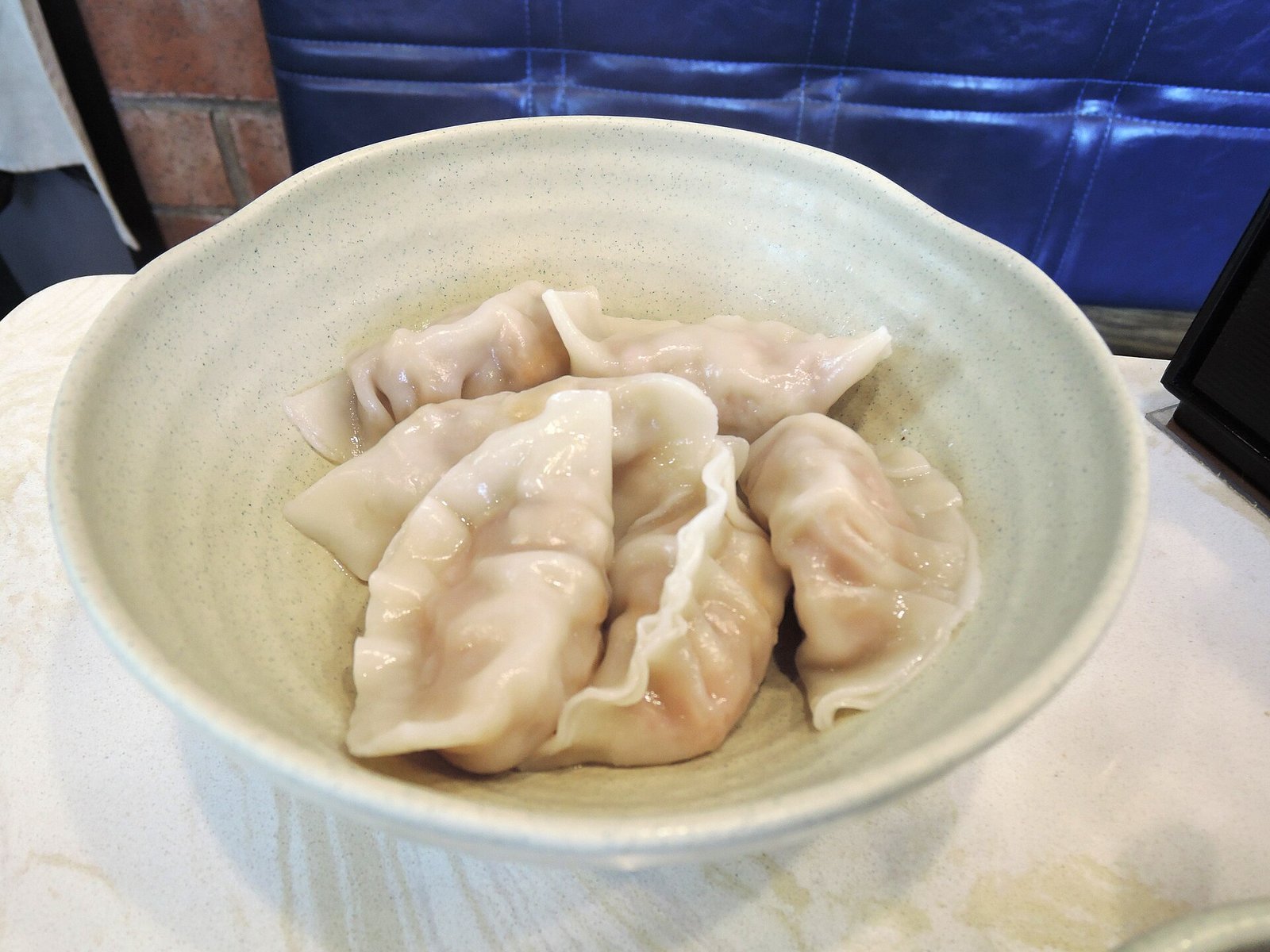
To close the argument: shiitake is wonderful, but it costs three times as much and gives its best aromatically, which high wok heat largely destroys. Enoki is a texture, not a flavour. The oyster mushroom gives you four distinct dishes from one cheap, universally available ingredient, and it forgives clumsy heat handling in a way that delicate mushrooms never will. Laid side by side, the repertoire explains itself:
| Method | Rough time | Texture you get | Where it shines |
|---|---|---|---|
| Dry-pan sear, then quick stir-fry | ~11 minutes | Chewy edges, concentrated flavour | The weeknight garlic-green stir-fry |
| Braise or clay pot | 15–25 minutes | Dense and genuinely meaty | Saucy dishes, tofu skin, winter bamboo shoots |
| Deep-fry at 180°C | 2–3 minutes | Shatter-crisp outside, juicy within | Restaurant-style snack with vinegar dip |
| Blanch, then dress cold | 3 minutes | Springy and light | Summer cold plates, century egg partners |
That is what a weeknight mushroom is for. Buy the big ugly cluster. Tear it. Dry-pan it. Build the habit, and your Tuesday dinners get measurably better for about a pound.
Frequently Asked Questions
Are oyster mushrooms and oyster sauce related?
Only by name and, faintly, by shared umami character. Oyster sauce is made from oyster extracts — the shellfish — while the oyster mushroom is a fungus named for its shell-like shape. They combine well in cooking, but neither contains the other.
Do I really need to dry-pan them first?
Strictly, no — you can stir-fry them straight in oil. But you’ll get a wetter, greyer, less flavourful result, and the mushrooms will shrink far more. Four dry minutes up front is the difference between adequate and excellent.
Why do my oyster mushrooms go slimy?
Usually one of three things: you washed them and they absorbed water, you crowded the pan so they steamed instead of seared, or they were old when you bought them. Buy dry clusters, skip the rinse, cook in two batches if your pan is small.
Can I eat oyster mushroom stems?
The individual stems attached to the caps are fine, though they cook slightly slower. The dense central trunk where the whole cluster was cut from the growing block is woody and should be discarded or saved for stock.
How do oyster mushrooms compare to shiitake for Chinese cooking?
They solve different problems. Shiitake brings deep aroma and is best in long-simmered dishes where that aroma infuses. Oyster mushrooms bring texture and heat tolerance, and cost far less. Serious Chinese home kitchens use both, but the oyster mushroom appears far more often because it is always in the fridge.
What is the Chinese name to look for at the market?
Look for 平菇 (píng gū), literally “flat mushroom”. You may also see 凤尾菇 (fèngwěi gū, “phoenix-tail mushroom”) for a paler, smaller variant — it cooks the same way. Pointing works too; the clusters are unmistakable.