Edible Bird’s Nest: The Delicacy That Costs More Than Silver
A kilogram of clean, white, cup-shaped bird’s nest changes hands for two to three thousand US dollars. On the same day, a kilogram of silver trades for roughly a thousand. The substance outranking a precious metal is not saffron, not caviar, not truffle. It is hardened swiftlet saliva, scraped from cave walls or farmed off concrete, soaked, picked clean of feathers and simmered into a sweet soup that tastes of very little.
I have written about expensive Chinese ingredients long enough to distrust most of them, and bird’s nest is the one I defend most awkwardly. It is not delicious in the way people expect expensive things to be delicious. It is a texture, a ritual, a status object, and one of the strangest foods on earth.
A nest built from nothing but spit
Swiftlets are small, dark, fast-flying birds that live across Southeast Asia, from Indonesia and Malaysia up through Thailand, Vietnam and the Philippines. What makes them remarkable is their construction method. During breeding season, the male secretes a thick glue from a pair of salivary glands under his tongue and lays it down strand by strand, anchoring each thread to the wall until the whole thing forms a half-cup bracket about the width of a human palm. No twigs. No mud. In the best commercial species, almost no feathers.
The nests of only a few species qualify as edible in the trade sense. The black-nest swiftlet’s contains too much feather matter and sells at a discount; the white-nest swiftlet, Aerodramus fuciphagus, is the prize. A male needs roughly thirty-five days to finish a nest; once the chicks fledge, the abandoned cup is harvested, and the birds build another.
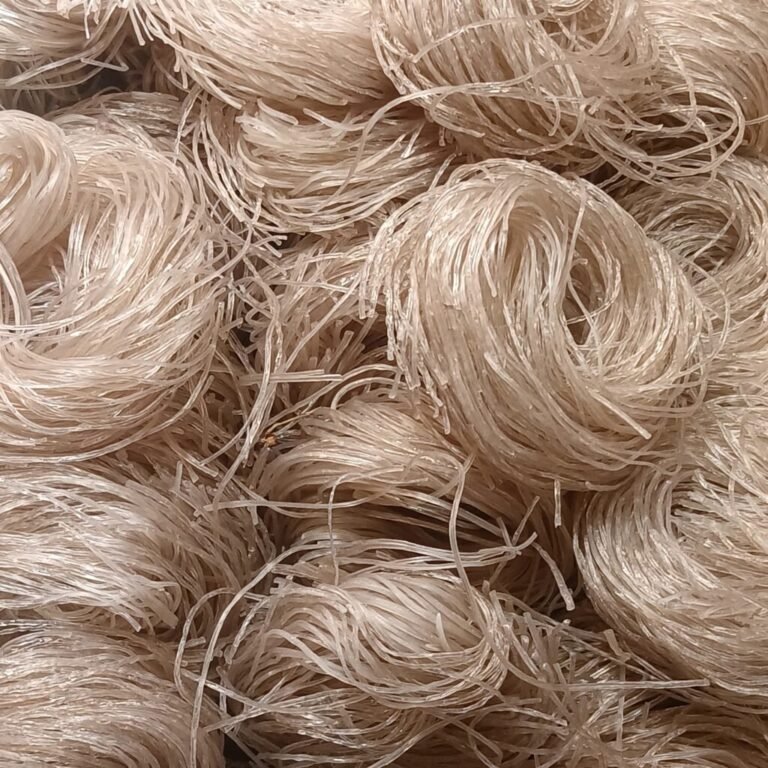
Chemically, the stuff is mucin: glycoproteins rich in sialic acid, the same family of compounds found in human saliva. Dry, it looks like a piece of off-white plastic mesh. Rehydrated and gently heated, the strands swell and turn translucent, dissolving partway into the liquid like the finest vermicelli.
From cave wall to the Chinese pantry
Nests travelled into Chinese cuisine by sea. As Wikipedia notes, consumption is traced back over a thousand years, and by the imperial period nests were formal tribute goods carried by maritime merchant networks into southern Chinese ports. Those routes ran through Fujian, and the ingredient never lost its prestige along that coast – it still turns up in the celebratory dishes described in our Fujian Cuisine guide. The harvest is older than the trade: in Borneo’s Niah and Gomantong caves, generations of climbers have worked from bamboo poles and rope ladders to cut nests off ceilings thirty metres up. Since the 1990s, though, purpose-built swiftlet houses – humid, dark, concrete buildings piped with recorded swiftlet calls – have come to produce most of the world’s nests, with Indonesia the dominant supplier. “House nests” dominate the mid-market; “cave nests” carry the romance and the premium.
White, red, and the grading game
Colour is the first thing a dealer assesses, and the vocabulary around it is where the mythology lives.
| Type | Colour and source | Typical price band (per kg) | What you get |
|---|---|---|---|
| White house nest | Off-white, farmed | US$1,500-3,000 | Clean, consistent, the sensible buy |
| White cave nest | Cream to grey-white, wild | US$2,500-4,000 | Slightly more mineral, more feather debris |
| Red “blood” nest | Rust to brick red, cave only | US$4,000 and up | The collector’s item; often over-priced |
| Nest strips and broken pieces | Any colour, fragments | US$400-900 | Same material, no cup shape |
| Moulded “cake” nest | Pressed fragments, often glued | Cheapest | Buyer beware: additives common |
The famous story about red nests is that the bird bleeds onto the nest, or builds it from blood-tinted saliva. Dealers repeat it because it justifies the price. The likelier explanation, supported by chemical analysis, is that red colour comes from oxidation and minerals absorbed over long contact with cave walls – weathering, not blood. Red nests are genuinely scarcer, because swiftlet houses cannot produce them; whether that scarcity justifies a triple price, I would answer no to, but collectors keep disagreeing with me.
Grading beyond colour concerns shape and cleanliness. Whole, unbroken cups command the highest tiers; letters and numbers (AAA, 6A, and so on) vary by dealer and region, so treat them as marketing rather than standard. Feather content matters most in practice: a cheap nest riddled with pinfeathers costs you an hour of tweezering.
Soaking, picking and the double boiler
The technique is simple to describe and maddening to get right the first time. Soak the dry nest in cold water for six to eight hours – overnight is fine. It will swell to several times its weight and soften into separated strands. Spread the wet nest on a white plate with a little water, and pick out the pinfeathers and specks with tweezers. This is tedious. Do it anyway; nobody wants feathers in the bowl.
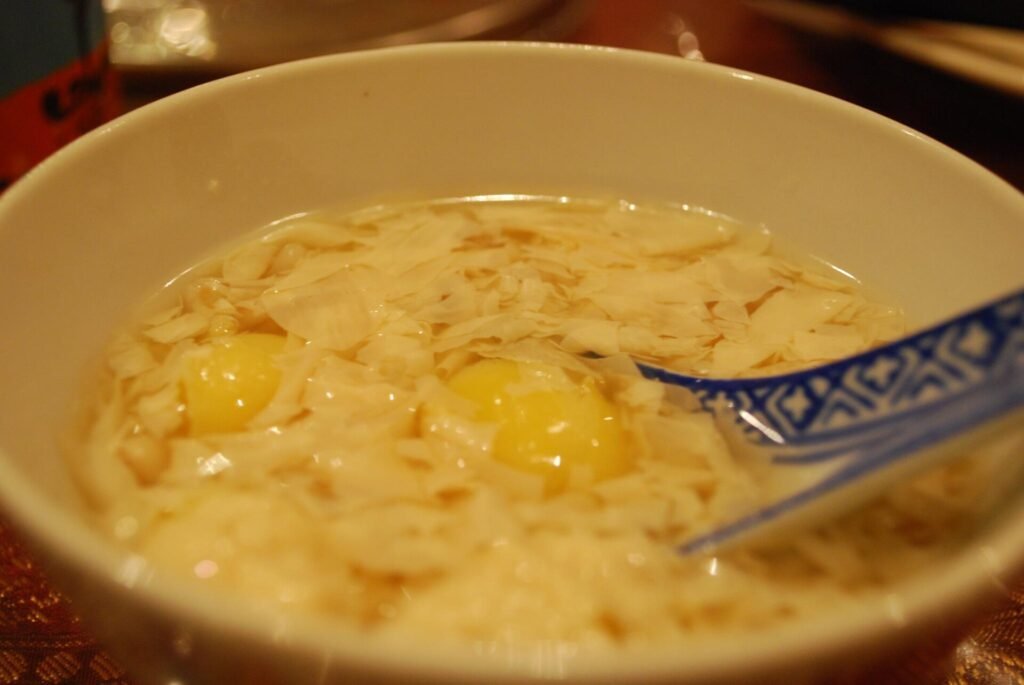
Then the cooking, where my first attempt failed properly. I simmered the nest directly in a saucepan and ended up with cloudy water and strands gone to nothing. High heat destroys the gelatinous structure – the nest needs a double boil, the Cantonese dun method. Put the nest and just-covering water in a small ceramic bowl, sit the bowl inside a pot of barely simmering water, cover, and leave it for forty-five minutes to two hours. The liquid should tremble, never roll. Add rock sugar only in the last ten minutes, so the soup stays clear.
Thirty grams of dry nest is a generous portion for four to six people, which is how you should do the arithmetic when comparing prices. Per serving, good house nest often works out cheaper than a mediocre restaurant dessert. It is only expensive in bulk.
The Cantonese way to eat it: rock sugar, ginkgo, red dates
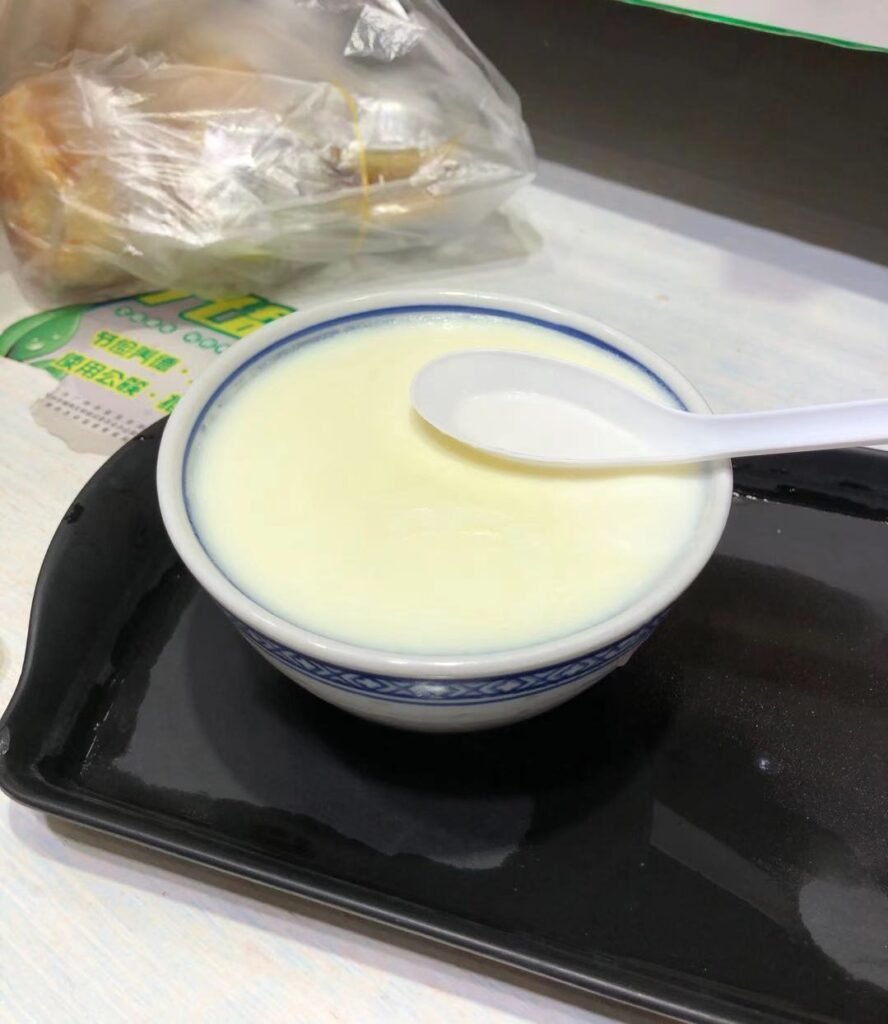
In the everyday tradition, bird’s nest is a tong sui – a sweet soup – and the classic version is aggressively plain: nest, water, rock sugar, warmth. The nest supplies texture; the sugar supplies a clean, round sweetness without flavour of its own; that is the entire point. Dessert houses in Guangzhou serve small bowls of it warm in winter and chilled in summer, and our Guangzhou Food guide will point you to the right streets.
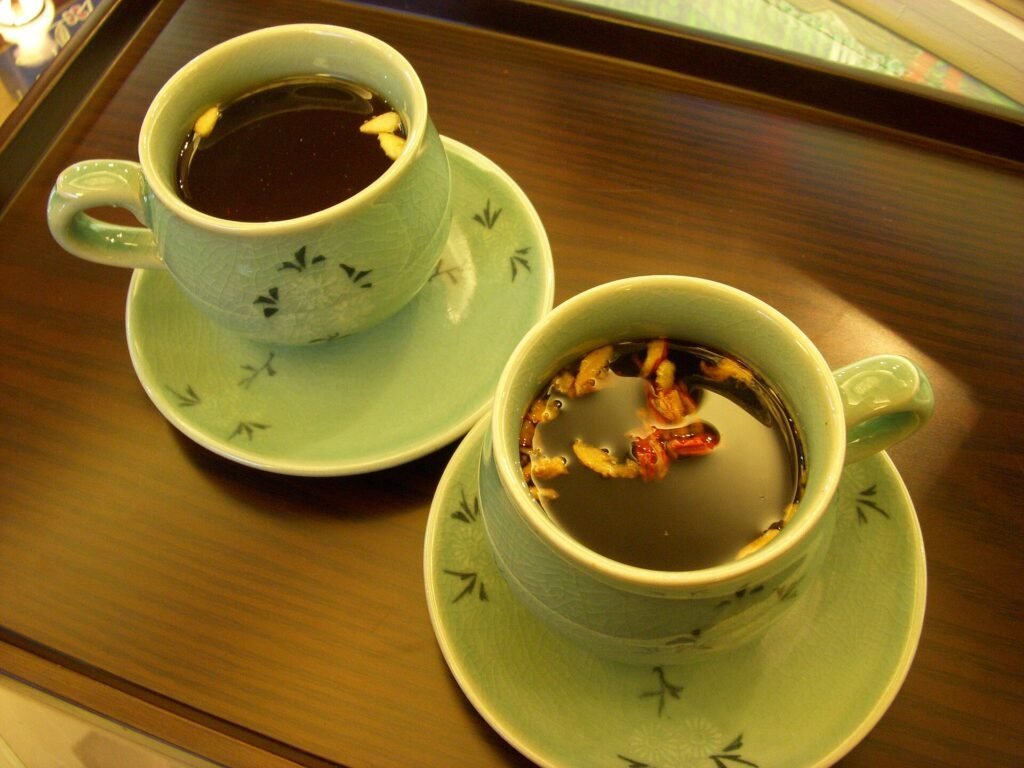
Beyond the plain version, the additions follow the logic of the Cantonese pantry. Split and skinned ginkgo nuts add a faint bitterness and a firm bite against the soft strands. Red dates and dried longan deepen the sweetness and colour the soup amber. What you will not find is anything assertive – no ginger fire, no spice – because the whole performance collapses if the broth carries a strong flavour. Chinese sweet cookery has its own restrained logic, quite different from the sticky savoury-sweet end of the pantry – I’ve written all about hoisin sauce for that corner – and the nest sits at the quietest pole of it.
At banquets, bird’s nest also appears savoury – the famous congee-like nest served in superior stock – but those versions belong to restaurant kitchens. At home, the sweet soup is the entry point.
What it actually tastes like, and what the evidence says
Here is the honest answer most sellers avoid. Bird’s nest tastes faintly eggy, faintly mineral, and mostly of whatever it is cooked with – in the classic soup, of sugar and warm water. What you pay for is texture: strands that are slippery, soft yet with a residual spring, dissolving as you eat. Chinese cuisine prizes kou gan – mouthfeel – as seriously as it prizes flavour, which is why ingredients like wood ear, lotus root and bamboo shoots hold the positions they do; our Bamboo Shoots Guide covers one of the firmer ends of that same texture obsession. The nest is the softest member of the family, closer in mouthfeel to a proper take on century egg than to anything crunchy, and at the opposite pole from everything you need to know about chili crisp – a matter of heat and snap, where the nest is silence and slip.
And the health claims? The nests do contain sialic acid, and it is plausible that some of it is digestible. But the grander claims – skin rejuvenation, immune boosting, accelerated growth – rest on small studies, cell experiments and a great deal of marketing. As Wikipedia summarises, there is no robust clinical evidence for the medicinal benefits. Eat it as a dessert and a cultural experience, not as medicine.
The question nobody at the dessert house asks
The sustainability picture is mixed, and it deserves saying plainly. Cave harvesting, unmanaged, has historically killed swiftlet chicks: if nests are taken before the chicks fledge, the brood is lost, and some caves were once stripped on exactly that schedule. Today, well-managed caves enforce harvesting seasons and take only empty nests. Purpose-built swiftlet houses remove the cave pressure almost entirely – the birds colonise the buildings voluntarily and are not harmed by collection – though ecologists debate whether dense house clusters distort local ecosystems.
What you can do as a buyer is modest: buy from reputable dealers, be sceptical of bargain “cakes” (glues and bleaching agents are a genuine problem at the cheap end), and treat the red-nest premium as a collector’s tax. The ingredient is not endangered by the soup itself; it is endangered by careless harvesting, and the two are separable.## Frequently Asked Questions
Is edible bird’s nest really made of spit?
Yes, entirely and unapologetically. The nest is built from the hardened saliva of male swiftlets, secreted from glands under the tongue during breeding season. Call it “swiftlet saliva” and you are being accurate, not rude – that is literally the product.
Why does bird’s nest soup cost so much?
Three reasons stacking on each other. Supply is limited: each bird builds one nest per season, by hand, over about a month. Cleaning is labour-intensive, done strand by strand. And demand is cultural – the ingredient carries centuries of status as tribute food and banquet showpiece. None of these reasons involves rarity of flavour, which is why the economics feel strange.
What does bird’s nest soup actually taste like?
Barely anything, in the best sense. Expect a faint eggy-mineral note, the clean sweetness of rock sugar, and a texture of soft, slippery, gelatinous strands. Expecting a revelation of flavour, you will be disappointed; expecting a texture and a ritual, you will understand the price.
Does bird’s nest have proven health benefits?
Not in the clinical sense. It contains sialic acid and other glycoproteins, but claims about skin, immunity and recovery lack robust human trial evidence. Eat it for enjoyment and culture, not therapy.
Can you cook bird’s nest at home without a double boiler?
You need the double-boil principle even if not the equipment. A heatproof bowl set in a pot of barely simmering water, covered, does the job. What fails is direct boiling: high heat breaks down the gelatinous strands within half an hour and you end up with sweet cloudy water.
Are red “blood nests” worth the premium?
Almost certainly not for eating. The red colour most likely comes from oxidation and mineral absorption in caves, not from the bird’s blood – the popular story is marketing. Red nests are genuinely scarcer because swiftlet houses cannot produce them, but the same texture is available in a clean white house nest at a fraction of the price.