Edible Rose: Where Flower Petals Become Filling
The rose in a Chinese mooncake has almost nothing to do with the roses sold in a garden centre. That was the mistake I made in my first year of cooking with petals: I stripped a florist’s bouquet, sugared it, and produced a jar that smelled like a perfume counter and tasted of nothing at all. Roses bred for looks have been selected for petal count and vase life, not flavour, and most carry enough spray residue to end the experiment early. Chinese kitchens never used those. They use a specific, plump, once-blooming rose — above all Rosa rugosa, the rugosa rose whose thick petals carry real oil and real tartness — and they treat it as a seasonal raw material with a shelf life measured in hours.
The numbers from the fields in Pingyin, Shandong, where much of China’s edible rose is grown, explain the urgency better than any recipe can. Petals are picked before the morning sun gets high, ideally before ten o’clock, because heat and light strip the aromatic oils out of the flower faster than anything else. From field to sugar jar, the good operations manage four hours. My own first batch, picked at a relaxed midday pace from a friend’s rugosa hedge, went into the sugar at six in the evening, and the jam was noticeably duller than the one I made two weeks later from petals that hit the jar before noon. Same hedge, same sugar. The difference was entirely about time.
The rose China actually eats
Two plants dominate. The first is Rosa rugosa, called mei gui hua, which grows along the northern coast and in Shandong’s inland plantations; its petals are thick, a deep magenta, and faintly astringent, which is exactly what you want for cooking because the astringency mellows into body once sugar is involved. The second is the Yunnan rose cluster — heavy-petalled cultivars of Rosa chinensis hybrids grown around Kunming and in Dali — which perfumes the flower cakes that have conquered most of the country’s airport shops.
What both have in common is that nobody eats them raw for pleasure. A fresh petal straight off the flower is faintly bitter, tannic and slightly sour, with a scent that feels closer to lychee and honey than to anything you would call “rose” in a Western dessert. The flavour we recognise as rose filling is manufactured by sugar and time. This is the point where the ingredient stops being a curiosity and starts being a technique, and it is also the point where most Western attempts at Chinese flower cookery fail — people expect the petal to carry the dish, when in fact the petal only carries the aroma.
Picking and the race against the clock
In Pingyin the season is short — the rugosa roses bloom mainly in May, with a smaller autumn flush — and the picking is done by hand, petal by petal, discarding the bitter white base of each petal, where most of the harshness lives. That base-removal step matters more than any luxury sugar ever will. When I skipped it, my jam had a green, stalky edge that no amount of lemon could hide.
Speed is the second half of the job. The petals bruise easily, and bruised cells leak their oils onto the bag instead of into your jar. If you ever pick your own, take a wide shallow basket, never a plastic bag, and get them into processing the same morning. The same logic applies to other fast-fading Chinese ingredients — the whole logic of why all about bamboo shoots starts in the digging rather than the kitchen — freshness is the recipe’s first and least negotiable step.
Sugaring the petals: meigui tang
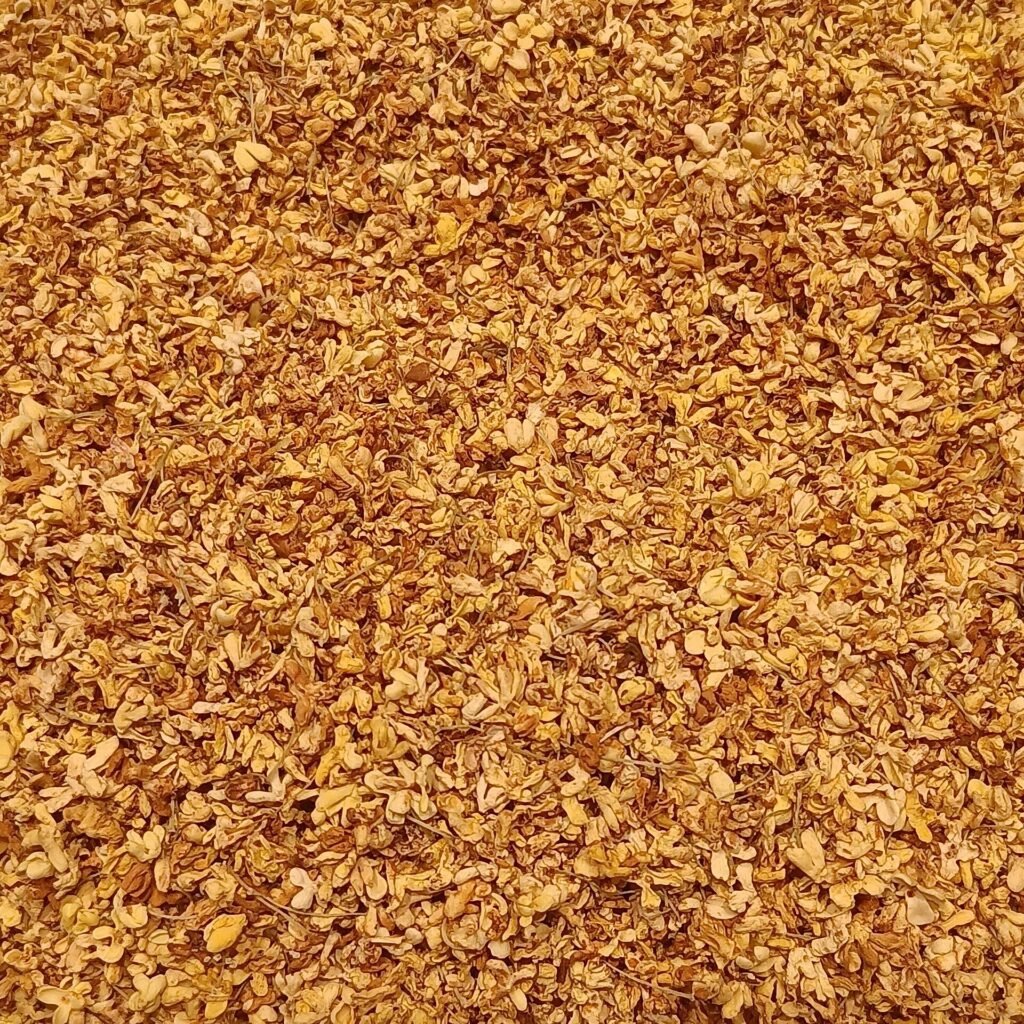
The foundational preparation is meigui tang, rose sugar, which is barely a recipe and entirely a discipline. Petals are cleaned and dried of surface water, then layered into a sterilised jar with a roughly equal weight of sugar — most Yunnan home cooks use white sugar, one kilogram per kilogram of petals. Each layer gets pressed down hard with a wooden spoon until the bruised petals release juice that dissolves the sugar around them. The jar is sealed and left alone for at least two weeks, longer if you can wait; the sugar pulls the remaining water out of the petals and the mixture settles into a thick, dark, intensely aromatic sludge.
Three things go wrong, and I have managed all of them. Water on the petals leads to fermentation — a lid that hisses when you open it means the batch is gone. Too little sugar, below about 80 per cent of the petal weight, does the same thing more slowly. And leaving the white petal bases in gives a bitter finish that sugar cannot cover. Get those three right and the mixture keeps for months in the fridge, darkening and deepening the whole time. A jam made this way, spooned over vanilla ice cream or stirred into black tea, is the most reliable way I know to make people understand what Chinese rose cookery is about.
Rose jam, the Yunnan way
Cooked rose jam — meigui jiang — trades some of the raw scent for depth and shelf life. The sugared petals or a petal-sugar mix go into a wide pan over low heat with a squeeze of lemon or, in more traditional kitchens, a small splash of acid from the pantry; a few drops drawn from what I learned about how chinese black vinegar is really done work in a pinch, since its malty sharpness rounds out the tartness without adding its own loud personality. The jam barely simmers — five to ten minutes, never a rolling boil — until the liquid turns glossy and coats a spoon. Overcooked rose jam loses the top notes entirely and becomes simply sweet and red.
The finished jam is a versatile thing. It goes onto toast, into milk and crêpes, and in Kunming it is thinned with hot water as a winter drink. It also pairs better with savoury-adjacent flavours than most fruit jams do, which is a quiet signature of the Chinese pantry — the same culinary confidence that puts fermented black beans next to sweet dishes, the territory covered by everything you need to know about chinese black bean sauce. A thin ribbon of rose jam over a salty, crumbly cheese or a salted pastry is not a gimmick; it is the same sweet-against-salt logic the cuisine applies everywhere else.
From jar to filling: mooncakes and xianhua bing
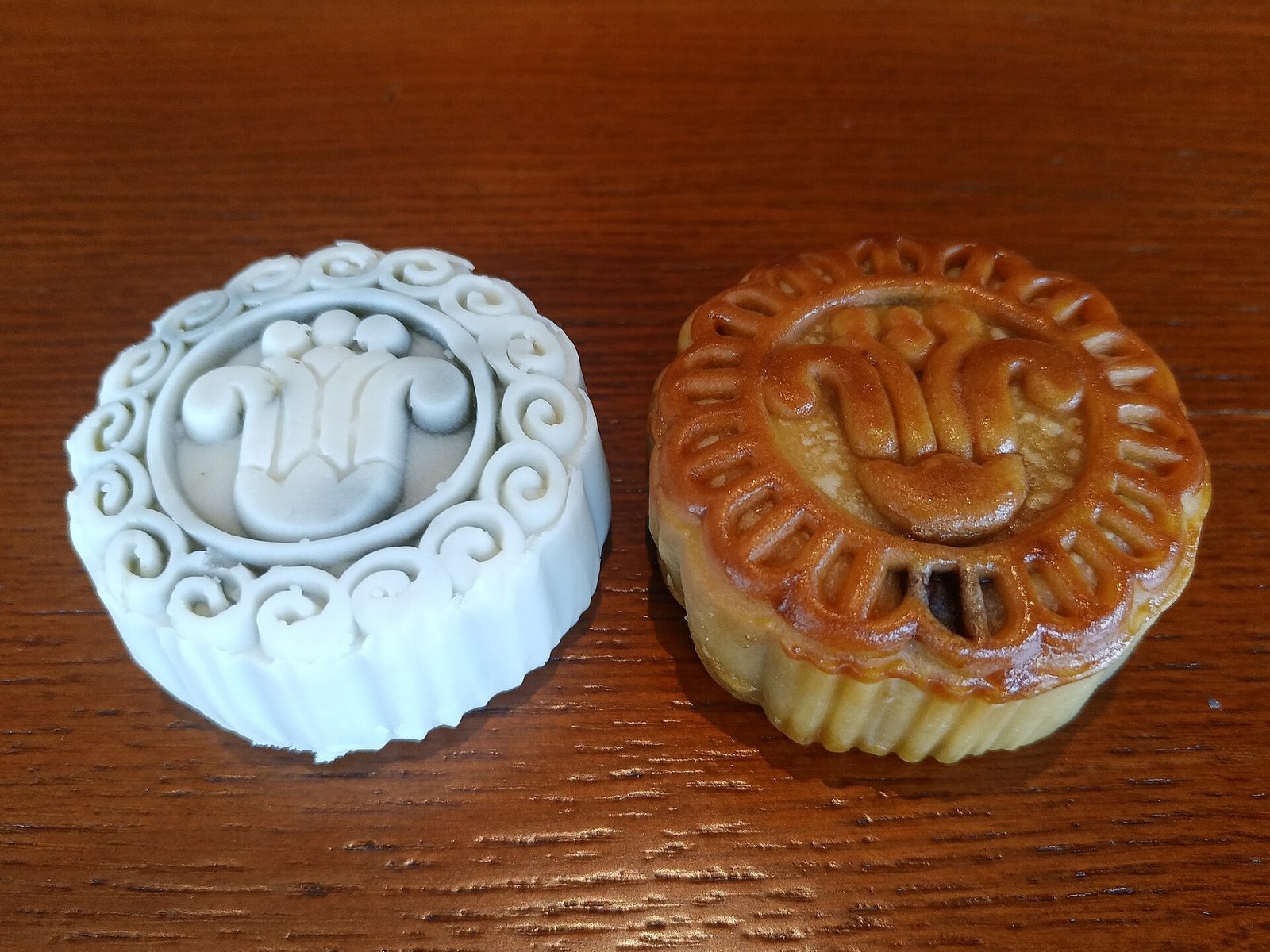
The jam becomes filling by being thickened. For Yunnan xianhua bing, the flaky flower cakes, jam is cooked further with a little rice flour or wheat flour and often a spoonful of lard or honey until it holds a shape; the paste is then wrapped in an oil-dough pastry and baked until the skin is in thin, shattering layers. For Mid-Autumn rose mooncakes, the jam itself — sometimes with chopped nuts or candied fruit through it — sits inside the classic golden syrup dough and takes the pattern of the mould. The difference between a good and a mediocre filling is concentration: a filling that still spreads is a jam in disguise and will weep out of the pastry in the oven.
The comparison below is how I keep the four rose preparations straight in my own kitchen, because they overlap and get confused constantly.
| Preparation | How it is made | Where you meet it | Keeps |
|---|---|---|---|
| Meigui tang (rose sugar) | Petals layered raw with sugar, uncooked | Home jars, stirred into tea or milk | Months refrigerated |
| Meigui jiang (rose jam) | Petals and sugar briefly cooked with acid | Toast, desserts, thinned as a drink | Around six months |
| Flower-cake filling | Jam cooked down with flour and fat until stiff | Xianhua bing, rose mooncakes | Days, once baked |
| Dried rosebuds | Whole buds air-dried, unsugared | Teahouses, gift boxes, infusion | A year or more |
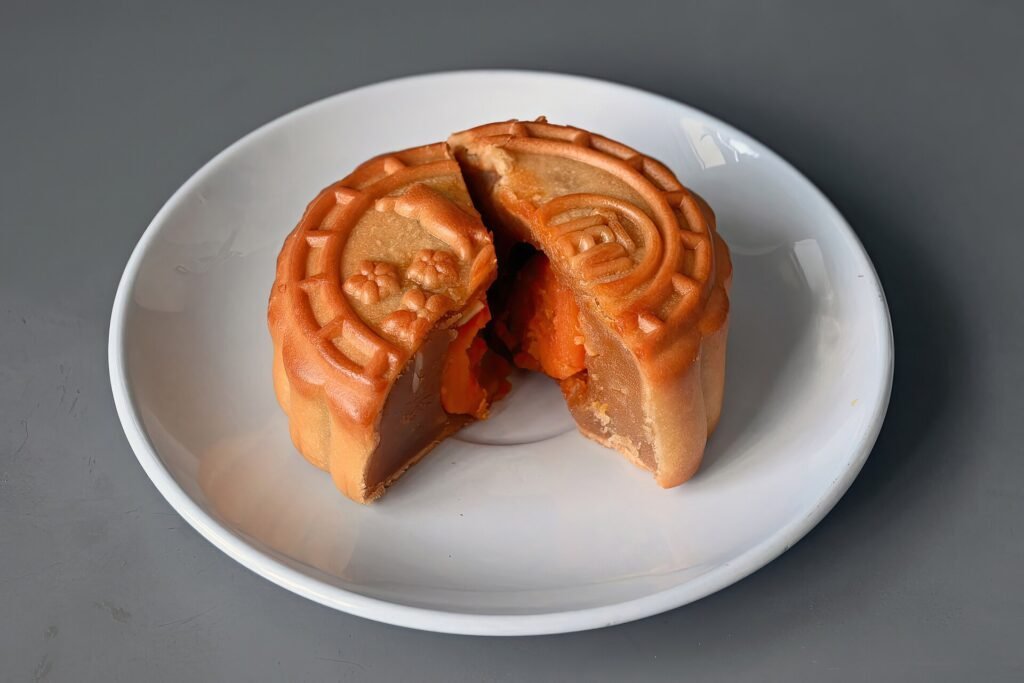
Beijing has its own rose-pastry tradition, distinct from the Yunnan cake: the rose cakes of Miaofengshan and the old Beijing snack shops use local rugosa petals sugared in spring and baked into small round pastries that are a fixture of any serious Beijing Food itinerary. The Beijing version is drier and more perfumed; the Yunnan version is juicier and more assertive. Try both before you decide which camp you are in — I went in believing Yunnan would win and came out ordering Beijing ones by mail.
Where the petals do not go
It is just as useful to know the boundaries. Rose does not feature in the cooking of the south-east coast: in the great tradition of Cantonese Cuisine you will search in vain for flower-petal fillings, because the Cantonese palate spends its sweetness budget on egg custard, lotus paste and taro instead. Rose also does not do well against heat and chilli — a spicy rose anything is a Frankenstein dish, not a tradition, despite how tempting the sweet-heat experiments look after reading Chili Crisp explained.
Chinese cooks place rose in a specific flavour lane alongside other divisive sweet aromatics. If your palate enjoys one strongly perfumed corner of the cuisine, you will probably enjoy the others — the readers of this Century Egg Guide and the fans of sugared rose petals are, in my experience, substantially the same people. Both ask you to accept an aroma first and decode the flavour afterwards. In more decorative cooking, a pinch of something warm and woody — the ground bark covered in my notes on chinese cassia bark — can deepen a rose jam used in baked goods, in the same restrained way a bay leaf deepens a custard.
Questions about edible roses
Can I eat the roses growing in my garden?
Only if you know the variety and its spray history. Food-safe choices are rugosa, damask, centifolia and some untreated Rosa chinensis cultivars. Florist roses and anything from a garden centre treated with systemic pesticides are out. Buy petals sold explicitly as food-grade, from a herbalist, a Persian or Middle Eastern grocer, or an online supplier, and confirm they are grown for eating.
What does rose filling actually taste like?
Sweet first, then floral, then faintly tart with a lychee-like undertone and a slight tannic grip at the end. The scent is louder than the taste. If it tastes of potpourri or perfume, the petals were decorative-grade or overcooked.
Can I substitute rosewater for petals?
Not directly. Rosewater is a fragrance, not a filling; it carries no body. Use it to perfume a syrup or cream, and use jam or sugared petals wherever the recipe needs mass and texture. A teaspoon of rosewater per hundred grams of jam will boost a weak batch.
How do I store sugared rose petals and jam?
Sterilised jars, filled with a visible layer of sugar or a clean surface, refrigerated. Unopened and properly sugared, the mixture keeps for many months; once opened, use a clean dry spoon every time, because introduced moisture is what starts fermentation. Discard anything that fizzes, smells of alcohol, or grows mould.
Is eating roses a modern health-food trend?
No — sugared rose in Chinese kitchens predates the trend economy by centuries, appearing in Ming-era records of flower cookery and in Beijing’s snack tradition long before anyone called it superfood. The airport-shop explosion of flower cakes is new; the technique underneath them is not.