Jasmine Tea: Scented Leaves in the Kitchen and the Cup
By most industry counts, jasmine accounts for the overwhelming majority of all scented tea produced in China — nine cups of flavoured tea out of every ten are jasmine, and most of them are drunk in places that never discuss the matter. Fujian and Guangxi grow the flowers, Sichuan and the north drink the results, and Cantonese teahouses pour it by the thermos. Yet on English menus it usually appears as one undifferentiated line: jasmine tea. That single line hides a manufacturing process unlike anything else in the tea trade, a grading system built on how many nights a leaf spent with fresh flowers, and a genuine kitchen role that has nothing to do with sipping politely between courses.
I came to jasmine tea backwards. I used it in cooking first — tea eggs, a smoked duck, rice cooked in the second infusion — and only later learned to drink it properly, which meant learning why the tea I had been buying was cheap for a reason. What follows is the corrected version of that education.
How scenting actually works
Jasmine tea is not tea with flowers mixed in. It is tea that has been made to absorb the scent of flowers, and then mostly separated from them. The base — usually a green tea, sometimes white or darker grades — is dried until it is thirsty enough to drink in aroma. Fresh jasmine buds are picked at midday when they are still closed, because the flowers open and release their perfume only after dark. In the evening, layers of buds and tea are stacked and mixed; the buds open through the night, releasing heat and scent, and the dry leaf takes it in. Before dawn the spent flowers are picked out, the tea is re-dried to halt moisture damage, and the whole cycle begins again with fresh buds.
Each repetition is called a “scenting round”, or pi. An ordinary commercial jasmine tea may go through two or three rounds; good ones five; the top grades, the yin hao and gong style teas, seven or more, sometimes finished with a scatter of whole flowers purely for looks. The Wikipedia overview of jasmine tea lays out the same process for anyone who wants the full history of the technique from the Song dynasty scented teas onwards. The practical takeaway is simple: more rounds mean a deeper, less one-note scent, because the aroma has been absorbed into the leaf itself rather than resting on it. Flowers left inside cheap tea are usually there to disguise the absence of real scenting rounds.
What the grades actually mean
The grading of jasmine tea confuses buyers because the price is driven by two separate things: the quality of the base tea and the number of scenting rounds. A jasmine made from fine early-spring buds and scented five times is a different product from the same-shaped leaf scented twice with garden-grade material. The table below is how I sort the market into usable categories.
| Grade band | Scenting rounds | Base tea | Best used for | Typical tells |
|---|---|---|---|---|
| Everyday restaurant tea | 1–2 | Coarse green, sometimes dark | Thermos service, cooking liquid | Visible spent flowers, flat scent |
| Mid-grade commercial | 3 | Decent green, second flush | Daily drinking, iced tea | Sweet top note, short finish |
| Premium bud-based | 5–6 | Young buds, clean leaf | Straight sipping, gaiwan brewing | No flowers visible, scent from the leaf |
| Yin hao / gong style | 7+ | Top bud grades | Sipping and ceremonial use | Perfume depth that survives a second infusion |
One honest warning from my own shelf: the prettiest packet is often the weakest tea. Whole blossoms scattered through the leaf look generous and cost little; the scent they carry is superficial and fades within months. Leaf that smells intensely of jasmine while completely flower-free has been properly scented and will hold for most of a year if stored airtight, away from light.
Brewing it without cooking the perfume
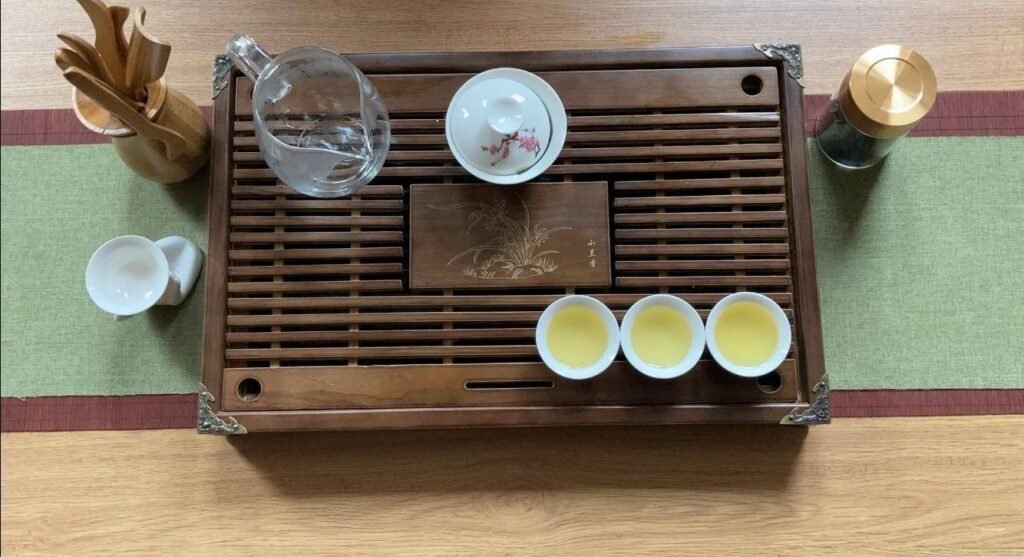
Jasmine’s aroma compounds are volatile, which is a polite way of saying they boil away. Water just off the boil extracts a bitter, flat cup from exactly the same leaf that makes a gorgeous one at a lower temperature. My working numbers: 85–90°C water, three grams of leaf per 150 millilitres, first infusion around ninety seconds in a gaiwan or small pot, and short increments after that. In a big Western mug the same leaf wants four minutes at the lower temperature, or it never shows anything at all.
Second and third infusions are where premium jasmine earns its price. The scent of a well-scented tea climbs back up on the second pour, because the aroma was absorbed deep into the leaf rather than sitting on the surface. Cheap tea gives everything in the first cup and a wet-paper taste in the second. If your jasmine is boring by infusion three, you have learned its grade better than any label could tell you.
Jasmine in the Sichuan kitchen
Sichuan drinks more jasmine than any other province, and the connection runs through its teahouses rather than its recipe books. In Chengdu, a covered bowl of jasmine — the local favourite, bi tan piao xue, with its floating “snow” of buds — arrives with everything, alongside bowls of noodles and plates of snacks; it is the default accompaniment to a proper session spent working through all about dan dan noodles, cutting through chilli oil and sesame in a way plain green tea never quite manages. The tea is treated as part of the meal’s architecture, not as a separate ceremony.
The kitchen use is older and quieter. Tea-smoked dishes — the classic smoked duck of Sichuan banquet cooking — traditionally build their smoking mix from tea leaves, rice and sugar, and jasmine is a common choice because its absorbed aroma comes back out again under dry heat. The result is a bird with a delicate floral smoke over the deeper spice notes; sliced and dipped into a sauce built on what I cover in Chinese Black Vinegar, it is one of the dishes I make every winter. Jasmine also earns its place in spice blends for tea eggs — the same spice backbone you would build with Five Spice Powder, but brewed as a strong liquid with the tea doing double duty as tanning agent and perfume.
Jasmine in the Cantonese kitchen and the pot at yum cha
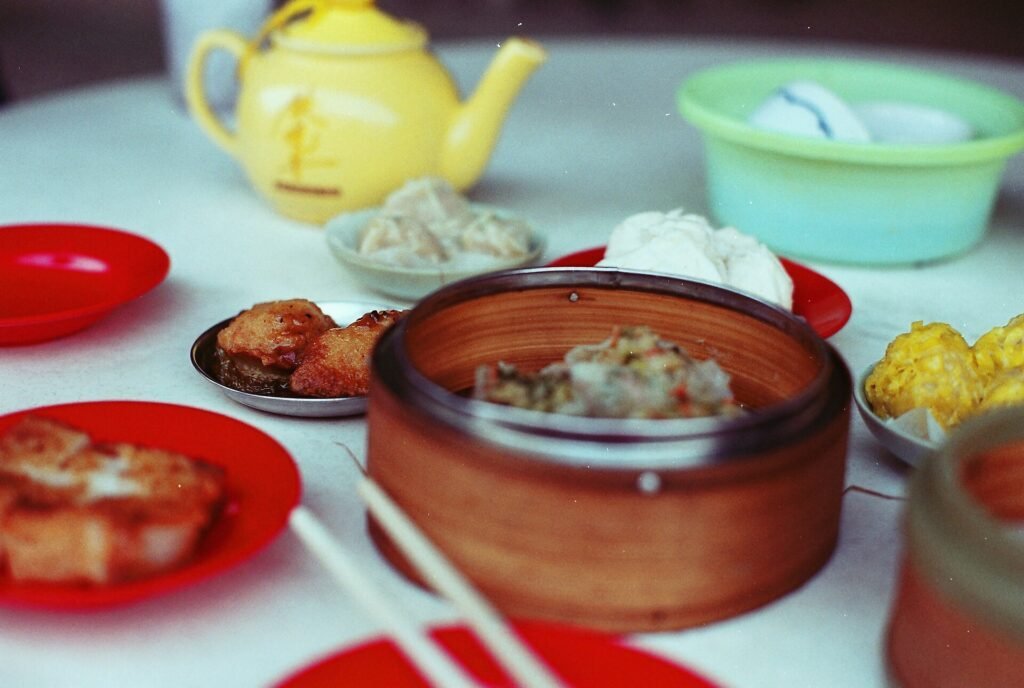
In Cantonese tea culture jasmine occupies the everyday slot that pu-erh occupies for the heavy eaters. At dim sum, the standard pot of hei moon lum chung — “fragrant jasmine” on the menu card — exists to reset the palate between fried and sweet dishes, and it does that job superbly: the floral note washes off the richness of salted egg yolk custard buns in a way that water cannot. Anyone who wants the fuller story of that pairing’s key ingredient should read this Chinese Salted Duck Egg Guide; a jasmine pour afterwards is the traditional recovery.
At home in Guangdong, the leaves work their way into poaching liquids and steamed dishes. A handful of jasmine in the water for poached chicken, or tucked under a fish before steaming, is a common enough household move that it rarely makes it into cookbooks. The tea also does quiet duty at breakfast: a pot of jasmine beside rice congee loaded with a proper take on century egg and pork is an entirely ordinary Cantonese morning, the tea’s perfume lifting a dish that is dense and mineral. That balance-between-strong-flavours habit runs deep in the south — the same instinct that makes cooks reach for the fermented notes covered in everything you need to know about chinese black bean sauce — strong food, then tea, then strong food again.
Cooking with the leaves: what works and what does not
Three methods cover most of it. Strong brewed jasmine, reduced to a concentrate, braises eggs into the marbled tea eggs everyone knows from night markets. Dry leaves scattered over rice, sugar and flour in the bottom of a wok or steamer make a fast cold-smoke for duck, chicken or tofu. And a lightly brewed infusion can replace part of the water in plain steamed rice, giving a scent that arrives without any sweetness at all.
What fails: reducing jasmine tea hard on the stove, which turns it tannic and hay-like; and adding buds directly to dough or custard, where they contribute bitterness rather than the scent they only release at scented-tea temperatures. The rule I work by is that jasmine behaves like a spice, not like sugar — it wants brief contact and moderate heat, and it punishes laziness by turning bitter.
Frequently asked questions
Does jasmine tea contain actual jasmine flowers?
Usually not, and that is normal. The scent is absorbed during the night-time scenting rounds and the spent flowers are removed. Whole flowers in the packet are either a finishing garnish on premium tea or a disguise on cheap tea; the leaf itself should smell strongly of jasmine.
Is jasmine tea green tea?
The base is usually a green tea, so the caffeine and character are broadly green-tea territory, but the scenting rounds change the aroma profile completely. Some jasmine is built on white or darker bases, so always read the packet rather than assuming.
Why does my jasmine tea taste bitter?
Almost always water temperature. Boiling water strips the volatile aromatics and pulls heavy tannins; use 85–90°C and shorten the steep. If bitterness persists at that temperature, the leaf is likely a low grade with little scenting investment.
Can I cook with cheap jasmine tea?
Yes — and for cooking it is often the sensible choice. Smoking, braising liquid and rice infusions all need quantity and strength rather than nuance. Save the seven-round yin hao for drinking, where its cost is actually audible in the cup.
How should jasmine tea be stored?
Airtight, opaque, away from heat and strong smells; it absorbs neighbouring aromas almost as eagerly as it absorbed the jasmine once. Properly stored premium tea holds its scent for most of a year; everyday grades are best finished within six months.