Salted Duck Eggs: The Brine Cure and the Oily Yolk
Fact-checked and reviewed 31 October 2026 · China Food Way editorial team
The first salted duck egg I ever bought was a failure of expectation rather than of the egg. I boiled it, cut it in half, and found a pale yolk the texture of chalk and a white so salty it was inedible on its own. I assumed I did not like salted eggs.
Then a friend in Guangzhou cut one open at breakfast and orange oil ran across the plate. Same product, completely different object. The difference was freshness, cure time and the fact that hers had come from a proper cure rather than a long sit in a warehouse. I went home and cured thirty of my own to find out what the variable actually was.
Why are duck eggs better than chicken eggs for curing?
Three concrete reasons, none of them tradition for its own sake. A duck egg has a higher yolk-to-white ratio and that yolk carries more fat; during the cure, salt draws water out and the fat globules coalesce into the grainy, oil-leaking texture you are paying for, while a chicken egg cured the same way goes firm and crumbly instead. Duck shells are also thicker and less porous, which suits a cure measured in weeks rather than days — chicken eggs overshoot before you notice. Third, the size: a duck yolk is big enough to sit at the centre of a mooncake, which is how most Chinese salted yolks are actually used. Chicken eggs do cure, just to a lesser thing.
Why Duck Eggs, Not Chicken
咸鸭蛋 (xián yā dàn) uses duck eggs for three reasons, and none of them is tradition for its own sake.
First, the yolk. A duck egg has a higher proportion of yolk to white than a chicken egg, and that yolk carries more fat. During the cure, salt draws water out of the yolk and the fat globules are released and begin to coalesce — which is exactly the grainy, glossy, oil-leaking texture you are paying for. A chicken egg cured the same way goes firm and crumbly instead.
Second, the shell. Duck eggshells are thicker and less porous, which suits a cure measured in weeks rather than days. Chicken eggs cure faster and overshoot before you notice.
Third, size. A duck egg gives you a yolk big enough to be the centre of a mooncake, which is how most of China’s salted yolks are actually used.
You can cure chicken eggs. I have, at about fifteen to eighteen days rather than twenty-five. They are perfectly pleasant and nobody will mistake them for the real thing.
Should I use a brine or a salt crust to cure the eggs?
Use the brine if it is your first time — it is the one you can check. Submerge the eggs in saturated salted water, often with a splash of Shaoxing wine or baijiu and a few Sichuan peppercorns, weight them under a plate so none float, and leave them at cool room temperature for 25 to 35 days. The salt-crust method — eggs rolled in damp salt, sometimes with ash, then wrapped — runs 35 to 45 days and gives a firmer, more concentrated yolk, but you cannot test without unwrapping. Commercial eggs are brined or injected, cooked and vacuum-packed, and often over-salted with an unknown cure date. One honest caveat: if the brine is not strong enough the eggs spoil, so keep it saturated — undissolved crystals at the bottom are your sign it is right.
The Two Cures
There are two home methods, and a commercial third.
| Brine cure (水腌) | Salt crust (裹盐) | Commercial | |
|---|---|---|---|
| How | Eggs submerged in salted water, often with spirits and spices | Eggs rolled in damp salt, sometimes with ash, then wrapped | Brine or injection, then cooked and vacuum-packed |
| Time | 25–35 days | 35–45 days | Weeks, then cooked |
| Control | High — pull an egg and test at any point | Lower — you cannot check without unwrapping | None |
| Texture | Even cure, good oil | Firmer white, very concentrated yolk | Variable; often over-salted |
| Risk | Spoiling if the brine is not strong enough | Uneven salt contact | Over-salted, unknown cure date |
| Best for | Anyone doing this for the first time | Warm climates, traditionalists | Convenience |
I use the brine. It is a single jar, it can be checked without destroying anything, and if an egg cracks you can fish it out and cook it that day.
The Brine Method
- Saturated brine. Roughly 350g of fine sea salt to 1 litre of water, warmed and stirred until no more dissolves. When it cools, a few undissolved crystals at the bottom mean you got it right.
- Optional additions. A good splash of Shaoxing wine or baijiu (the alcohol is said to help the yolk release its oil), a few Sichuan peppercorns, a slice of ginger.
- The jar. Scalded glass or a food-grade plastic bucket with a lid. Weight the eggs down with a small plate so nothing floats above the surface — an exposed egg is a spoiled egg.
- The conditions. Cool room temperature, out of direct sun, for 25 to 35 days.
How do I know when the yolk is oily enough?
Pull one egg and cut it open rather than trusting the calendar. At 15 days in brine the white is barely salted and the yolk firm with no oil; at 20 it is salted but soft with only faint oil; the target is around 25 days, where the white is pleasant in small amounts and the yolk is orange, granular and visibly oily; by 32 days the white is very salty though the yolk deepens further. The brine method lets you fish one out and test at any point, which is its great advantage over the salt crust. One honest caveat: a cooler room slows the cure, so in winter expect to add a week, and always weight the eggs so none sit above the surface and spoil.
The Timing That Decides the Yolk
Timing is the whole game, and it is worth testing rather than trusting a date.
| Days in brine | White | Yolk |
|---|---|---|
| 15 | Barely salted | Firm, pale, no oil |
| 20 | Salted, still soft | Starting to firm, faint oil |
| 25 | Salty, pleasant in small amounts | Orange, granular, oil visible — the target |
| 32 | Very salty | Deep orange, oily, slightly firm centre |
| 45 | Almost too salty to eat alone | Firm, oily, crumbly — good for baking fillings |
My own test batch was thirty eggs pulled one at a time on days 18, 21, 25, 28, 32 and 40. Day 25 was the one I would serve with congee; day 32 was the one I would bake into a pastry. Day 18 was a waste of an egg, and day 40 was a waste of six.
The trick, once you are past day 20, is to boil one egg every three or four days and cut it open. Everything else in the jar waits.
What the Salt Is Doing
Salted eggs belong to the same family of Chinese preserved foods as the century egg — salt or alkali doing the work that heat usually does — and the mechanism for both is the same. The salted duck egg is cured in brine or a salt paste; the century egg is cured in alkali. Different chemistry, same idea: preserve, and transform at the same time.
Salt moves into the egg by osmosis and water moves out. In the white, the salt dissolves the proteins that hold it together, which is why a cured egg white is thinner and saltier than a fresh one. In the yolk, salt dehydrates the protein network holding the fat in place; the fat is freed and pools. That is the oil on the plate, and it is the single clearest marker of a cure that has gone right.
Cooking matters too. A salted egg boiled hard for twelve minutes comes out with a firm, fully set yolk; eight minutes gives you a slightly molten centre that is much better on rice. Steaming whole eggs for fifteen minutes is gentler and, in my experience, less likely to crack the shell.
How to Buy and Store Them
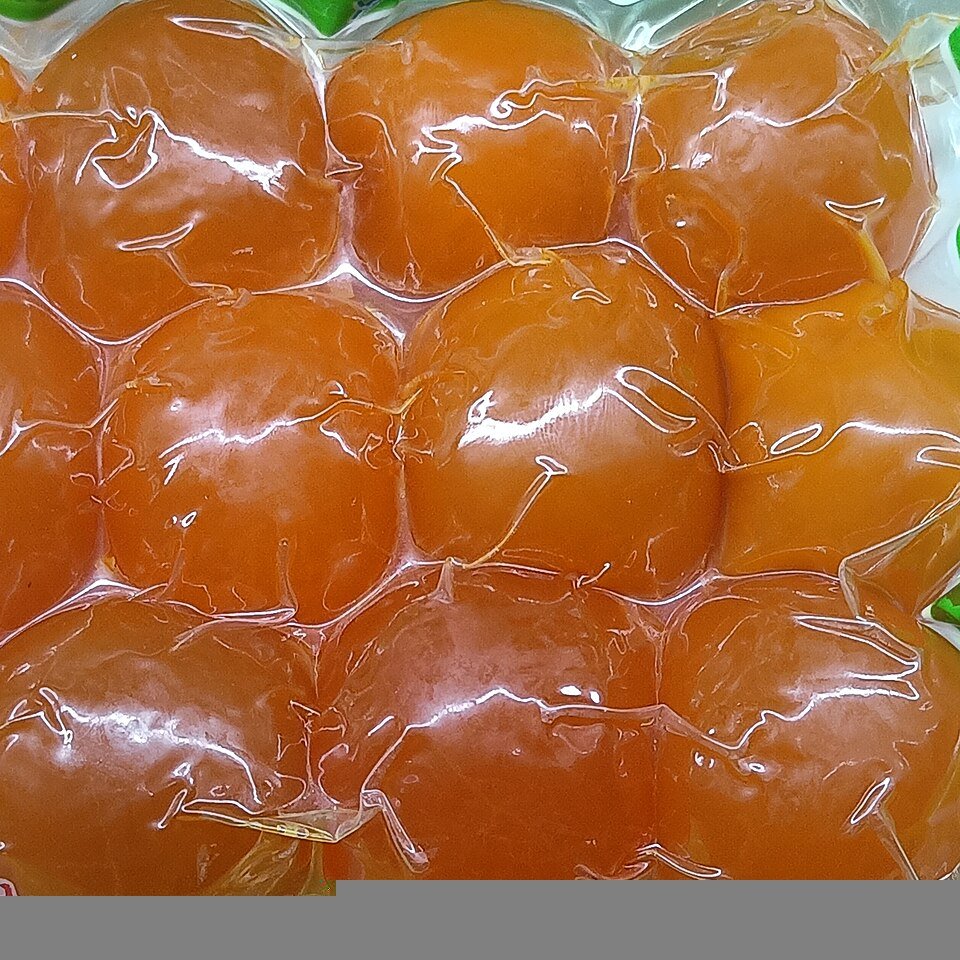
In a Chinese supermarket you will see two kinds: pale blue-grey raw duck eggs in trays, often stacked next to the preserved duck eggs, and vacuum-packed cooked ones in boxes.
- Raw eggs. Uncracked shells, no hairline fractures, no muddy smell. Shake one gently — you should not hear anything sloshing.
- Cooked, vacuum-packed. Check the date and expect a saltier, firmer product. Convenient, and fine for baking.
- The black ones. Eggs with a dark, charcoal-grey coating have been cured in a salt-and-ash paste rather than brine. Not spoilt, just a different method, and often excellent.
- Avoid anything with a cracked shell, a swollen pack, or a sulphur smell.
Raw, cured eggs in the fridge keep for a month or so, and the cure does not stop — it slows. If you leave them in the brine past their moment they will keep getting saltier, so the practical move is to pull them all out at day 25, rinse, dry, and refrigerate.
Cooked salted eggs keep about a week in the fridge, in the shell. Vacuum-packed ones keep for months at room temperature until the pack is opened, then a few days refrigerated.
Raw salted yolks, separated from the whites and wrapped tightly, freeze well for several months — this is what I do with the surplus from a big batch, and they go straight from the freezer into a steamer for pastry fillings.
What is the easiest way to eat a salted duck egg?
Boil it for ten minutes, then cut it in half and eat the yolk with plain congee or steamed rice — that is the breakfast habit across much of southern China. The white is intensely salty, so most people eat little of it and let the yolk do the work, or chop the white finely into a stir-fry where its salt replaces the seasoning. The oily yolk also melts into a filling, sits at the heart of a mooncake, or gets crumbled over a bowl of noodles. One honest caveat: a pale, chalky yolk means it was under-cured or old — the orange, leaking version is the one worth having, so judge by the cut, not the shell.
How They Are Eaten

- With congee. The classic. Half an egg alongside a bowl of century egg congee, where the salt of the egg does the seasoning for the whole bowl.
- Steamed with minced pork. 咸蛋蒸肉饼: a whole raw salted egg cracked over seasoned minced pork and steamed for fifteen minutes. The white sets around the meat and the yolk stays molten.
- In zongzi. A halved yolk buried in the rice of a zongzi, so that every slice through the leaf bundle has orange in the middle.
- In mooncakes. The whole point of a Chinese mooncake with a double yolk: lotus paste wrapped around one or two salted yolks, which cut the sweetness and give the filling its savoury edge.
- Salted yolk sauce. Steamed yolks mashed and fried with pumpkin strips, prawns or crab — 金沙 — where the yolk turns into a golden, sandy coating.
The white is the awkward half. It is far too salty to eat on its own, so use it chopped into fried rice, stirred into congee, or crumbled into a stir-fry where it replaces some of the salt.
Substitutions
| You need | Use | Honest verdict |
|---|---|---|
| A salted yolk in a savoury dish | A hard-boiled chicken yolk plus ¼ teaspoon salt per yolk | Passable in a sauce, meaningless in a pastry |
| A salted yolk in a baked filling | Nothing really; use a second yolk of a different sweet filling | Accept the change |
| Salted egg for congee | A soft-boiled fresh egg, with salt added at the table | Different dish, still good |
| Duck eggs for curing | Chicken eggs, 15–18 days | Works, less oil |
| The granular yolk texture | Crumbled firm feta, in a fried dish only | Sounds odd, tastes closer than you would think |
The feta suggestion came out of an experiment I would not repeat in public, but it does produce the salty-granular note in a fried pumpkin dish when there is no egg in the house. In baking, there is no substitute and you should change the recipe instead.
Frequently Asked Questions
How long does a salted duck egg take to cure?
Twenty-five to thirty-five days in a saturated brine, depending on temperature and how you like the yolk. Start testing at day 20 and boil one every few days.
Can I use chicken eggs?
Yes, for fifteen to eighteen days. The yolk will be firmer and less oily because chicken yolks carry less fat.
Why is my yolk not oily?
Either the cure was too short, the brine was too weak, or the eggs were old to begin with. Saturated brine, fresh eggs, three weeks minimum.
Can I eat a raw salted egg?
No — curing is not cooking. Boil or steam it. The yolk inside a raw cured egg is still raw egg.
Is the black coating on some eggs mould?
No. It is the ash or charcoal paste from the dry cure. Rinse it off. Actual mould would be fuzzy, coloured and on the shell surface.
How salty is the white?
Very. Most people eat the yolk and use the white to season something else. I chop it into congee or fried rice rather than eating it straight.
What does the alcohol in the brine do?
It is a traditional addition — a splash of spirits in the jar — and it is widely believed to help the yolk release oil. I have never run a controlled test, and I add it because my mother-in-law does.
Thirty Eggs Is Not Too Many
Curing your own sounds like a project and turns out to be twenty minutes of work and a month of forgetting about a jar. What you get is an egg you cannot buy: a yolk that is exactly as salty as you like, oil that runs, and the pleasant problem of having twenty-eight spare yolks to bake into something. Start with six if you are nervous. You will not be, the second time.